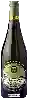
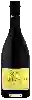
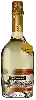
The flavor of citrus fruit in wine of Emilia-Romagna
Discover the of Emilia-Romagna wines revealing the of citrus fruit flavor during the olphactive analysis (nose) and during the gustative analysis (mouth).
Romagna/emilia">Emilia-Romagna is a Rich and fertile region in Northern Italy, and one of the country's most prolific wine-producing regions, with over 58,000 hectares (143,320 acres) of vines in 2010. It is 240 kilometers (150 miles) wide and stretches across almost the entire northern Italian peninsula, sandwiched between Tuscany to the South, Lombardy and Veneto to the north and the Adriatic Sea to the east. Nine miles of Liguria is all that separates Emilia-Romagna from the Ligurian Sea, and its uniqueness as the only Italian region with both an east and west coast. Emilia-Romagna's wine-growing heritage dates back to the seventh century BC, making it one of the oldest wine-growing regions in Italy.
Vines were introduced here by the Etruscans and then adopted by the Romans, who used the Via Aemilia (after which the region is named) to transport wine between towns. The Grape varieties used here for many centuries were of the Vitis labrusca species rather than the Vitis vinifera used worldwide today. The famous Lambrusco varieties of Emilia Romagna are derived from the Vitis labrusca species. Today, about 15 percent of the wine produced in Emilia-Romagna comes from the region's 20 or so DOCs, and only a tiny fraction from its two DOCGs (Albana di Romagna and Colli Bolognesi Classico Pignoletto).
A very astringent and somewhat coarse tannic wine.