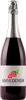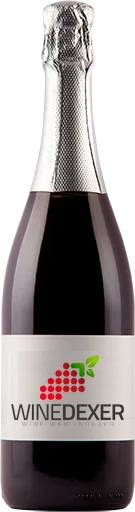
Winery Formigine PedemontanaTramontino Lambrusco di Sorbara Rosato
 Sparkling wine



This wine generally goes well with pork, poultry or rich fish (salmon, tuna etc).
Food and wine pairings with Tramontino Lambrusco di Sorbara Rosato
Pairings that work perfectly with Tramontino Lambrusco di Sorbara Rosato



Original food and wine pairings with Tramontino Lambrusco di Sorbara Rosato


The Tramontino Lambrusco di Sorbara Rosato of Winery Formigine Pedemontana matches generally quite well with dishes of pork, rich fish (salmon, tuna etc) or mature and hard cheese such as recipes of ideas for savoury pancake toppings, marmite dieppoise or golden apple and bacon gratin with spices.
Details and technical informations about Winery Formigine Pedemontana's Tramontino Lambrusco di Sorbara Rosato.
Discover the grape variety: Gros Colman
From the South Caucasus, perhaps in Georgia, some writings give it as coming from Russia, a country close to the previous one. For a long time, it was grown in greenhouses, particularly in Belgium, but also in England, France, Holland and Japan. It was rarely cultivated in the field, but a few attempts were made without much success on the banks of the Rhine, in the Tarn et Garonne region and in Thomery in the Seine et Marne region. Today, it is no longer multiplied in nurseries and is therefore in danger of extinction. It is thought to be the result of a natural intraspecific cross between white tigvoasa or furjmony feher - a Romanian variety with female flowers - and black kadarka. There is a clone that takes on a very characteristic purple color in the fall, with larger berries, larger bunches and later ripening.
Last vintages of this wine
The best vintages of Tramontino Lambrusco di Sorbara Rosato from Winery Formigine Pedemontana are 2018, 0
Informations about the Winery Formigine Pedemontana
The Winery Formigine Pedemontana is one of of the world's greatest estates. It offers 28 wines for sale in the of Lambrusco di Sorbara to come and discover on site or to buy online.

The wine region of Lambrusco di Sorbara
The wine region of Lambrusco di Sorbara is located in the region of Émilie-Romagne of Italy. Wineries and vineyards like the Domaine Piccini or the Domaine Cantina di Sorbara produce mainly wines sparkling, red and pink. The most planted grape varieties in the region of Lambrusco di Sorbara are Sangiovese et Chardonnay, they are then used in wines in blends or as a single variety. On the nose of Lambrusco di Sorbara often reveals types of flavors of cream, honey or cranberry and sometimes also flavors of wild strawberries, lemon or chocolate.
The wine region of Emilia-Romagna
Romagna/emilia">Emilia-Romagna is a Rich and fertile region in Northern Italy, and one of the country's most prolific wine-producing regions, with over 58,000 hectares (143,320 acres) of vines in 2010. It is 240 kilometers (150 miles) wide and stretches across almost the entire northern Italian peninsula, sandwiched between Tuscany to the South, Lombardy and Veneto to the north and the Adriatic Sea to the east. Nine miles of Liguria is all that separates Emilia-Romagna from the Ligurian Sea, and its uniqueness as the only Italian region with both an east and west coast. Emilia-Romagna's wine-growing heritage dates back to the seventh century BC, making it one of the oldest wine-growing regions in Italy.
The word of the wine: PDO
Protected Designation of Origin - equivalent to the term "controlled designation of origin" in European regulations.