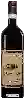
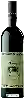
The Winery Castello di Neive of Barbera d'Alba of Piedmont
Winery Castello di Neive
The winery offers 26 different wines
3.9


Note - 1Note - 1Note - 1Note - 1Note - 0
Its wines get an average rating of 3.9.
It is ranked in the top 351 of the estates of Piedmont.
It is located in Barbera d'Alba in the region of Piedmont

The Winery Castello di Neive is one of the best wineries to follow in Barbera d'Alba.. It offers 26 wines for sale in of Barbera d'Alba to come and discover on site or to buy online.
Top Winery Castello di Neive wines

Looking for the best Winery Castello di Neive wines in Barbera d'Alba among all the wines in the region? Check out our tops of the best red, white or effervescent Winery Castello di Neive wines. Also find some food and wine pairings that may be suitable with the wines from this area. Learn more about the region and the Winery Castello di Neive wines with technical and enological descriptions.

The top red wines of Winery Castello di Neive

Food and wine pairings with a red wine of Winery Castello di Neive

How Winery Castello di Neive wines pair with each other generally quite well with dishes of pasta, veal or pork such as recipes of express beef cannelloni, stuffed quails or soft and inexpensive pasta gratin.

Organoleptic analysis of red wines of Winery Castello di Neive

On the nose the red wine of Winery Castello di Neive. often reveals types of flavors of cherry, oaky or smoke and sometimes also flavors of earthy, blackberry or red fruit. In the mouth the red wine of Winery Castello di Neive. is a powerful with a nice balance between acidity and tannins.

The best vintages in the red wines of Winery Castello di Neive

  • 1999With an average score of 4.50/5
  • 1998With an average score of 4.50/5
  • 2001With an average score of 4.40/5
  • 2006With an average score of 4.18/5
  • 2021With an average score of 4.10/5
  • 2020With an average score of 4.10/5

The grape varieties most used in the red wines of Winery Castello di Neive.

  • Barbera
  • Nebbiolo
  • Dolcetto
  • Pinot Noir
  • Albarossa
  • Grignolino

Discovering the wine region of Barbera d'Alba

The wine region of Barbera d'Alba is located in the region of Piémont of Italy. Wineries and vineyards like the Domaine Bospoeper or the Domaine Roberto Voerzio produce mainly wines red and sweet. The most planted grape varieties in the region of Barbera d'Alba are Nebbiolo, they are then used in wines in blends or as a single variety. On the nose of Barbera d'Alba often reveals types of flavors of cream, stone or tree fruit and sometimes also flavors of oil, pomegranate or sage.

In the mouth of Barbera d'Alba is a powerful with a nice freshness. We currently count 714 estates and châteaux in the of Barbera d'Alba, producing 1241 different wines in conventional, organic and biodynamic agriculture. The wines of Barbera d'Alba go well with generally quite well with dishes of pasta, veal or pork.

The top white wines of Winery Castello di Neive

Food and wine pairings with a white wine of Winery Castello di Neive

How Winery Castello di Neive wines pair with each other generally quite well with dishes of vegetarian, poultry or pasta such as recipes of spinach and goat cheese quiche, express chicken skewers with spices or express beef cannelloni.

Organoleptic analysis of white wines of Winery Castello di Neive

On the nose the white wine of Winery Castello di Neive. often reveals types of flavors of cream, cherry or oaky and sometimes also flavors of earthy, red fruit or tobacco. In the mouth the white wine of Winery Castello di Neive. is a powerful with a nice freshness.

The best vintages in the white wines of Winery Castello di Neive

  • 2020With an average score of 4.40/5
  • 2021With an average score of 4.30/5
  • 2010With an average score of 4.15/5
  • 2018With an average score of 4.06/5
  • 2019With an average score of 3.93/5
  • 2017With an average score of 3.89/5

The grape varieties most used in the white wines of Winery Castello di Neive.

  • Arneis
  • Viognier
  • Grenache Blanc
  • Vermentino
  • Petit Manseng
  • Riesling

Discover the grape variety: Nebbiolo

A very old grape variety grown in the Italian Piedmont. It has a great resemblance with the Freisa, which also comes from the same Italian region. Among the various massal selections made in Italy, we find lampia, michet and rosé. It can be found in Italy, Austria, Bulgaria, Cyprus, Greece, Mexico, the United States (California), Australia, etc. In France, it is practically unknown, perhaps because it is a delicate and demanding grape variety with, among other things, a fairly long phenological cycle.

The top sparkling wines of Winery Castello di Neive

Food and wine pairings with a sparkling wine of Winery Castello di Neive

How Winery Castello di Neive wines pair with each other generally quite well with dishes of beef, lamb or pork such as recipes of sweet and sour turkish dumpling soup (eksili köfte), lamb tagine with apricots or braised (green) cabbage.

Organoleptic analysis of sparkling wines of Winery Castello di Neive

On the nose the sparkling wine of Winery Castello di Neive. often reveals types of flavors of tree fruit.

The best vintages in the sparkling wines of Winery Castello di Neive

  • 2013With an average score of 3.90/5
  • 2011With an average score of 3.90/5
  • 0With an average score of 3.85/5
  • 2014With an average score of 3.80/5
  • 2012With an average score of 3.80/5
  • 2016With an average score of 3.80/5

The grape varieties most used in the sparkling wines of Winery Castello di Neive.

  • Pinot Nero
  • Moscato

The word of the wine: Hautain (en)

Pruning of the vine in height.

The top sweet wines of Winery Castello di Neive

Food and wine pairings with a sweet wine of Winery Castello di Neive

How Winery Castello di Neive wines pair with each other generally quite well with dishes of pasta, shellfish or mature and hard cheese such as recipes of macaroni and cheese gratin, scupion (small cuttlefish) in hot sauce or beet greens and black sesame seeds pie.

The best vintages in the sweet wines of Winery Castello di Neive

  • 0With an average score of 3.60/5

The grape varieties most used in the sweet wines of Winery Castello di Neive.

  • Arneis

Discover the grape variety: Vermentino

The vermentino grape variety was widespread in Italy, Sardinia and Corsica. Today, Vermentino is grown in the regions bordering the Mediterranean, mainly in Provence (Côtes de Provence, Bellet), Corsica (Corse Calvi), Languedoc (Côtes du Roussillon, Costières de Nîmes) and the Rhône Valley (Côtes du Luberon). Because it ripens late, Vermentino requires a warm climate for its development and can only be grown in regions with good sun exposure. Conversely, cold or temperate climates do not allow it to ripen properly. Vermentino is only susceptible to powdery mildew. When vinified on its own, Vermentino produces a single-variety dry white wine that is light and full-bodied with a pale yellow color. It can also be blended with other grape varieties such as Ugni Blanc, Cinsault and Grenache, in which case its low acidity makes it light and fresh. Vermentino belongs to the grape varieties of Ajaccio, Corsica and Corbières. The aromas released by this variety are multiple. One can detect notes of fresh apple, green almond, sweet spices, hawthorn, ripe pear and fresh pineapple.

Discover other wineries and winemakers neighboring the Winery Castello di Neive

Planning a wine route in the of Barbera d'Alba? Here are the wineries to visit and the winemakers to meet during your trip in search of wines similar to Winery Castello di Neive.

Discover the grape variety: Petit Manseng

Petit Manseng is a white grape variety of Pyrenean origin. Its small berries have a hard, well-ventilated skin, which allows Petit Manseng to resist grey rot. On the other hand, this variety is very sensitive to noble rot, which concentrates the aromas and makes it possible to produce remarkable sweet wines with flavours of exotic fruits, grapefruit, honey, gingerbread, etc. Rich in alcohol and acidity, these wines are very well balanced and very fine. petit manseng also produces fruity dry white wines. It is also used in the AOC Béarn, Jurançon, Pacherenc-du-Vic-Bilh, Tursan...