The Winery Cantina di Dolianova of Cannonau di Sardegna of Sardinia
The Winery Cantina di Dolianova is one of the world's great estates. It offers 70 wines for sale in of Cannonau di Sardegna to come and discover on site or to buy online.
Looking for the best Winery Cantina di Dolianova wines in Cannonau di Sardegna among all the wines in the region? Check out our tops of the best red, white or effervescent Winery Cantina di Dolianova wines. Also find some food and wine pairings that may be suitable with the wines from this area. Learn more about the region and the Winery Cantina di Dolianova wines with technical and enological descriptions.
How Winery Cantina di Dolianova wines pair with each other generally quite well with dishes of beef, lamb or poultry such as recipes of sautéed pork with pineapple, sweet and sour braised leg of lamb or genuine chicken tagine olive and lemon confit tagine with argan oil.
On the nose the red wine of Winery Cantina di Dolianova. often reveals types of flavors of cherry, oaky or earthy and sometimes also flavors of blackberry, minerality or tobacco. In the mouth the red wine of Winery Cantina di Dolianova. is a powerful.
The wine region of Cannonau di Sardegna is located in the region of Sardaigne of Italy. Wineries and vineyards like the Domaine Giovanni Montisci or the Domaine Fratelli Puddu produce mainly wines red, pink and sweet. On the nose of Cannonau di Sardegna often reveals types of flavors of cherry, baking spice or truffle and sometimes also flavors of sour cherry, rubber or grilled meat. In the mouth of Cannonau di Sardegna is a powerful with a nice freshness.
We currently count 243 estates and châteaux in the of Cannonau di Sardegna, producing 458 different wines in conventional, organic and biodynamic agriculture. The wines of Cannonau di Sardegna go well with generally quite well with dishes of beef, pasta or lamb.
How Winery Cantina di Dolianova wines pair with each other generally quite well with dishes of shellfish, vegetarian or appetizers and snacks such as recipes of fish and shrimp curry, light tuna-tomato quiche (without cream) or baked tortilla.
On the nose the white wine of Winery Cantina di Dolianova. often reveals types of flavors of pineapple, cream or tropical and sometimes also flavors of citrus, apples or peach. In the mouth the white wine of Winery Cantina di Dolianova. is a powerful.
The vermentino grape variety was widespread in Italy, Sardinia and Corsica. Today, Vermentino is grown in the regions bordering the Mediterranean, mainly in Provence (Côtes de Provence, Bellet), Corsica (Corse Calvi), Languedoc (Côtes du Roussillon, Costières de Nîmes) and the Rhône Valley (Côtes du Luberon). Because it ripens late, Vermentino requires a warm climate for its development and can only be grown in regions with good sun exposure. Conversely, cold or temperate climates do not allow it to ripen properly. Vermentino is only susceptible to powdery mildew. When vinified on its own, Vermentino produces a single-variety dry white wine that is light and full-bodied with a pale yellow color. It can also be blended with other grape varieties such as Ugni Blanc, Cinsault and Grenache, in which case its low acidity makes it light and fresh. Vermentino belongs to the grape varieties of Ajaccio, Corsica and Corbières. The aromas released by this variety are multiple. One can detect notes of fresh apple, green almond, sweet spices, hawthorn, ripe pear and fresh pineapple.
How Winery Cantina di Dolianova wines pair with each other generally quite well with dishes of beef, lamb or veal such as recipes of shoulder of suckling lamb confit with herbs, shoulder of lamb on a bed of potatoes or escalope cordon bleu.
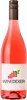
On the nose the pink wine of Winery Cantina di Dolianova. often reveals types of flavors of microbio, vegetal or tree fruit and sometimes also flavors of red fruit.
Altered by oxidation.
How Winery Cantina di Dolianova wines pair with each other generally quite well with dishes of pork, rich fish (salmon, tuna etc) or vegetarian such as recipes of leek, goat cheese and bacon quiche, tuna flan with leek coulis or vegan leek and tofu quiche.
On the nose the sparkling wine of Winery Cantina di Dolianova. often reveals types of flavors of tree fruit, earth or microbio.
A very old variety grown in Italy, where it still plays an important role, particularly in Sardinia. - Synonyms: meragus, abbondosa, bruscu biancu, axina, garnaccia, granazza, burdu, malvasia di tura (for all the synonyms of the varieties). - Description: medium to large bunches, conical, voluminous, compact, short strong stems, often with a lignified part; medium-sized, spherical or slightly elongated berries, greenish-yellow to golden-yellow skin, sometimes amber with a pink tinge when fully ripe, soft pulp with a simple taste. - Production potential: late budding. Quite vigorous and very productive, suitable for almost all types of soil. Hardy, it resists well to the various cryptogamic diseases. Maturity: 3rd period average. - Wine type/Aromas: gives a heady wine of yellow straw color with sometimes golden reflections, provided in the majority of the cases with a good acidity.
How Winery Cantina di Dolianova wines pair with each other generally quite well with dishes of sweet desserts such as recipes of king's cake with frangipane.
On the nose the sweet wine of Winery Cantina di Dolianova. often reveals types of flavors of earth, spices.
This period varies greatly depending on the type of wine and the vintage, and corresponds to the optimum quality of a wine. After the peak comes the decline.

Planning a wine route in the of Cannonau di Sardegna? Here are the wineries to visit and the winemakers to meet during your trip in search of wines similar to Winery Cantina di Dolianova.

Originally from Italy, it is the famous Sangiovese of Tuscany producing the famous wines of Brunello de Montalcino and Chianti. This variety is registered in the Official Catalogue of Wine Grape Varieties, list A1. According to recent genetic analysis, it is the result of a natural cross between the almost unknown Calabrese di Montenuovo (mother) and Ciliegiolo (father).