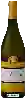
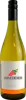
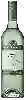
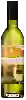
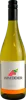
The Winery Lindeman's of Australie du Sud-Est
The Winery Lindeman's is one of the largest wineries in the world. It offers 250 wines for sale in of Australie du Sud-Est to come and discover on site or to buy online.
Looking for the best Winery Lindeman's wines in Australie du Sud-Est among all the wines in the region? Check out our tops of the best red, white or effervescent Winery Lindeman's wines. Also find some food and wine pairings that may be suitable with the wines from this area. Learn more about the region and the Winery Lindeman's wines with technical and enological descriptions.
How Winery Lindeman's wines pair with each other generally quite well with dishes of pork, rich fish (salmon, tuna etc) or mature and hard cheese such as recipes of baked pork chops, baked sardines with garlic or farfalle à la montagnarde.
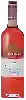
On the nose the pink wine of Winery Lindeman's. often reveals types of flavors of red fruit, strawberries or honey and sometimes also flavors of earth, microbio or red fruit.
South East Australia is a geographical indication (GI) covering the entire south-eastern third of Australia. The western boundary of this area extends 2,000 kilometres (1,250 miles) across the Australian continent from the Pacific coast of Queensland to the Southern Ocean coast of South Australia. This vast wine 'super zone' effectively encompasses all the major Australian wine regions outside Western Australia. Rainforest, mountain ranges, scrubland, desert and Dry riverbeds occupy the majority of the land in the South East Australian area.
Only in the cooler coastal areas do vineyards play a significant role in the landscape. The GI covers the states of New South Wales, Victoria and Tasmania in their entirety, as well as the south-eastern halves of Queensland and South Australia. The sheer Size of this area - and the diversity of its climates, topography and latitudes - makes it a GI of rather limited significance. Even the largest AVAs in the United States do not represent half of the area called South Eastern Australia.
How Winery Lindeman's wines pair with each other generally quite well with dishes of beef, lamb or veal such as recipes of hungarian goulash, lamb tagine with apricots or potjevlesch (northern france).
On the nose the red wine of Winery Lindeman's. often reveals types of flavors of cherry, plum or spices and sometimes also flavors of red fruit, black fruit or earth. In the mouth the red wine of Winery Lindeman's. is a powerful with a nice balance between acidity and tannins.
The white Chardonnay is a grape variety that originated in France (Burgundy). It produces a variety of grape specially used for wine making. It is rare to find this grape to eat on our tables. This variety of grape is characterized by small bunches, and small grapes. White Chardonnay can be found in many vineyards: South West, Burgundy, Jura, Languedoc & Roussillon, Cognac, Bordeaux, Beaujolais, Savoie & Bugey, Loire Valley, Champagne, Rhone Valley, Armagnac, Lorraine, Alsace, Provence & Corsica.
How Winery Lindeman's wines pair with each other generally quite well with dishes of veal, pork or game (deer, venison) such as recipes of veal blanquette à l'ancienne, capellini with prosciutto or rabbit leg in foil on the barbecue.
On the nose the sparkling wine of Winery Lindeman's. often reveals types of flavors of pineapple, cream or citrus and sometimes also flavors of apples, peach or lime.
Operation consisting in sanitizing a barrel by introducing a wick of ignited sulphur which produces a release of sulphurous gas.
How Winery Lindeman's wines pair with each other generally quite well with dishes of pork, rich fish (salmon, tuna etc) or shellfish such as recipes of ham with leek fondue, tuna flan with leek coulis or brochette of scallops and prawns.
On the nose the white wine of Winery Lindeman's. often reveals types of flavors of citrus fruit, microbio or citrus and sometimes also flavors of lime, minerality or lemon. In the mouth the white wine of Winery Lindeman's. is a powerful with a nice freshness.
The white Verdelho is a grape variety that originated in Portugal. It produces a variety of grape specially used for the elaboration of wine. It is rare to find this grape to eat on our tables. This variety of grape is characterized by small bunches, and grapes of medium size. The white Verdelho can be found cultivated in these vineyards: Languedoc & Roussillon, Rhone Valley, South West.
How Winery Lindeman's wines pair with each other generally quite well with dishes of beef, mature and hard cheese or lamb such as recipes of seven o'clock leg of lamb, real savoyard fondue or mamyjaja lamb mouse tagine.
On the nose the natural sweet wine of Winery Lindeman's. often reveals types of flavors of oak.
A physiological and chemical phenomenon that occurs in wine in the absence of oxygen. The smell of reduction is characterized by animal and sometimes fetid notes that disappear in principle with aeration. It is recommended to decant reduced wines.
How Winery Lindeman's wines pair with each other generally quite well with dishes of sweet desserts, fruity desserts or blue cheese such as recipes of very simple muffins, express cherry clafoutis or lamb's lettuce, avocado and blue cheese salad.
Petit Verdot noir is a grape variety that originated in France (southwest). It produces a variety of grape specially used for wine making. It is rare to find this grape to eat on our tables. This variety of grape is characterized by small bunches and small grapes. Petit Verdot noir can be found in several vineyards: South-West, Languedoc & Roussillon, Cognac, Bordeaux, Rhone valley, Provence & Corsica, Loire valley, Savoie & Bugey, Beaujolais, Armagnac.
Planning a wine route in the of Australie du Sud-Est? Here are the wineries to visit and the winemakers to meet during your trip in search of wines similar to Winery Lindeman's.
White muscat is a white grape variety of Greek origin. Present in several Mediterranean vineyards, it has several synonyms such as muscat de Die, muscat blanc and frontignac. In France, it occupies a little less than 7,000 ha out of a total of 45,000 ha worldwide. Its young shoots are downy. Its youngest leaves are shiny, bronzed and scabrous. The berries and bunches of this variety are all medium-sized. The flesh of the berries is juicy, sweet and firm. Muscat à petits grains has a second ripening period and buds early in the year. It is moderately vigorous and must be pruned short. It likes poor, stony slopes. This variety is often exposed to spring frosts. It fears mildew, wasps, grape worms, court-noué, grey rot and powdery mildew. Muscat à petits grains is used to make rosé wines and dry white wines. Orange, brown sugar, barley sugar and raisins are the known aromas of these wines.