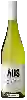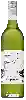
Winery Lindeman'sBin 8850 Reserve Semillon
 White wine
This wine generally goes well with poultry, rich fish (salmon, tuna etc) or shellfish.
Food and wine pairings with Bin 8850 Reserve Semillon
Pairings that work perfectly with Bin 8850 Reserve Semillon



Original food and wine pairings with Bin 8850 Reserve Semillon

The Bin 8850 Reserve Semillon of Winery Lindeman's matches generally quite well with dishes of rich fish (salmon, tuna etc), shellfish or poultry such as recipes of tuna provencal style, three ways to prepare chinese noodles or couscous chicken and merguez.
Details and technical informations about Winery Lindeman's's Bin 8850 Reserve Semillon.
Discover the grape variety: Dimiat
This variety is cultivated in practically all of Bulgaria, much more so in the region around the Black Sea. Among white varieties, it is still the most widely planted in this country, just ahead of rkatziteli. It is also found in the former Yugoslavia, Albania, Romania, Hungary, Turkey and Greece. It is believed to be the result of a natural intraspecific cross between coarna alba - a Romanian variety - and white gouais.
Informations about the Winery Lindeman's
The Winery Lindeman's is one of of the world's greatest estates. It offers 227 wines for sale in the of Nouvelle-Galles du Sud to come and discover on site or to buy online.

The wine region of Nouvelle-Galles du Sud
The NewSouthWales wine appellation is made up of 16 different regions and covers approximately 810,000 square kilometres (312,000 square miles). This is the Size of the state of New South Wales, one of the six that make up the federal Commonwealth of Australia. Although it is one of the smallest Australian states geographically, it has been the most populous since the first European settlements in the 18th century. The South East Australia GI area is the largest in Australia and can include any wine produced in New South Wales as well as Victoria, Tasmania and Parts of South Australia.
The word of the wine: Overmaturation
When the grapes reach maturity, the skin becomes permeable and progressively loses water, which causes a concentration phenomenon inside the berry. This is called over-ripening or passerillage.