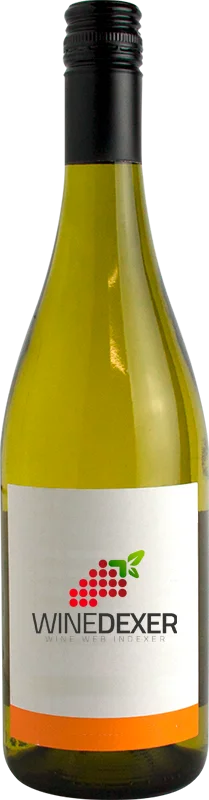
Winery Lindeman'sGriffith Botrytis Sémillon
 Sweet wine
This wine generally goes well with poultry, rich fish (salmon, tuna etc) or shellfish.
Food and wine pairings with Griffith Botrytis Sémillon
Pairings that work perfectly with Griffith Botrytis Sémillon



Original food and wine pairings with Griffith Botrytis Sémillon

The Griffith Botrytis Sémillon of Winery Lindeman's matches generally quite well with dishes of rich fish (salmon, tuna etc), shellfish or sweet desserts such as recipes of sea bream with sweet spices, sauerkraut of the sea in casserole or rice with milk.
Details and technical informations about Winery Lindeman's's Griffith Botrytis Sémillon.
Discover the grape variety: Varousset
Varousset noir is a grape variety that originated in . This variety is the result of a cross between the same species (interspecific hybridization). It produces a variety of grape specially used for wine making. It is rare to find this grape to eat on our tables. The Varousset noir can be found cultivated in the following vineyards: Provence & Corsica, Rhône Valley, Loire Valley, Savoie & Bugey, Beaujolais.
Informations about the Winery Lindeman's
The Winery Lindeman's is one of wineries to follow in Australie du Sud-Est.. It offers 227 wines for sale in the of Australie du Sud-Est to come and discover on site or to buy online.

The wine region of Australie du Sud-Est
South East Australia is a geographical indication (GI) covering the entire south-eastern third of Australia. The western boundary of this area extends 2,000 kilometres (1,250 miles) across the Australian continent from the Pacific coast of Queensland to the Southern Ocean coast of South Australia. This vast wine 'super zone' effectively encompasses all the major Australian wine regions outside Western Australia. Rainforest, mountain ranges, scrubland, desert and Dry riverbeds occupy the majority of the land in the South East Australian area.
The word of the wine: Astringency
Chemical stimulation that tightens the mucous membranes of the mouth and causes a sensation of harshness, which is characteristic of the presence of tannins. With time, the tannins lose their harshness and become softer.