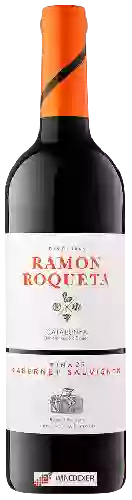
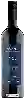
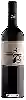
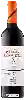
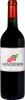
The Winery Ramón Roqueta of Catalogne

Winery Ramón Roqueta
The winery offers 52 different wines
3.4


Note - 1Note - 1Note - 1Note - 0Note - 0
Its wines get an average rating of 3.4.
This estate is part of the Roqueta Origen.
It is ranked in the top 840 of the estates of Catalogne.
It is located in Catalogne

The Winery Ramón Roqueta is one of the best wineries to follow in Catalogne.. It offers 52 wines for sale in of Catalogne to come and discover on site or to buy online.

Top Winery Ramón Roqueta wines

Looking for the best Winery Ramón Roqueta wines in Catalogne among all the wines in the region? Check out our tops of the best red, white or effervescent Winery Ramón Roqueta wines. Also find some food and wine pairings that may be suitable with the wines from this area. Learn more about the region and the Winery Ramón Roqueta wines with technical and enological descriptions.

The top red wines of Winery Ramón Roqueta

Food and wine pairings with a red wine of Winery Ramón Roqueta

How Winery Ramón Roqueta wines pair with each other generally quite well with dishes of beef, lamb or poultry such as recipes of navarin of the sea da gigi, lamb with ginger honey or chicken curry samoussas.

Organoleptic analysis of red wines of Winery Ramón Roqueta

On the nose the red wine of Winery Ramón Roqueta. often reveals types of flavors of oaky, non oak or earth and sometimes also flavors of oak, spices or red fruit. In the mouth the red wine of Winery Ramón Roqueta. is a powerful with a nice balance between acidity and tannins.

The best vintages in the red wines of Winery Ramón Roqueta

  • 2000With an average score of 4.00/5
  • 2001With an average score of 3.90/5
  • 2005With an average score of 3.87/5
  • 2003With an average score of 3.70/5
  • 2006With an average score of 3.65/5
  • 2009With an average score of 3.65/5

The grape varieties most used in the red wines of Winery Ramón Roqueta.

  • Tempranillo
  • Cabernet Sauvignon
  • Garnacha
  • Grenache
  • Merlot
  • Samsó

Discovering the wine region of Catalogne

Catalonia (Catalunya in Catalan and Cataluña in Spanish) is an autonomous community in the Northeast of Spain. It extends from the historic county (comarca) of Montsia in the South to the border with France in the north. The Mediterranean Sea forms its eastern border and offers 580 km of coastline. The Catalunya D.

O. C. was the first regional D. O.

C. in Spain. Created in 1999, it covers all the scattered vineyards that were not covered by one of the other 11 DOs in the region. The capital of Catalonia is the bustling Barcelona, Spain's second largest city and one of the largest ports on the Mediterranean.

The top pink wines of Winery Ramón Roqueta

Food and wine pairings with a pink wine of Winery Ramón Roqueta

How Winery Ramón Roqueta wines pair with each other generally quite well with dishes of beef, lamb or spicy food such as recipes of vegetable noddles, mouse of lamb with honey and thyme or chicken tagine with apricots.

Organoleptic analysis of pink wines of Winery Ramón Roqueta

On the nose the pink wine of Winery Ramón Roqueta. often reveals types of flavors of red fruit.

The best vintages in the pink wines of Winery Ramón Roqueta

  • 2018With an average score of 3.41/5
  • 2013With an average score of 3.40/5
  • 2009With an average score of 3.40/5
  • 0With an average score of 3.23/5
  • 2019With an average score of 3.20/5
  • 2012With an average score of 3.20/5

The grape varieties most used in the pink wines of Winery Ramón Roqueta.

  • Tempranillo
  • Cabernet Sauvignon
  • Garnacha
  • Grenache

Discover the grape variety: Garnacha

The top white wines of Winery Ramón Roqueta

Food and wine pairings with a white wine of Winery Ramón Roqueta

How Winery Ramón Roqueta wines pair with each other generally quite well with dishes of pork, rich fish (salmon, tuna etc) or vegetarian such as recipes of leek, goat cheese and bacon quiche, smoked salmon sandwich or zucchini quiche.
Organoleptic analysis of white wines of Winery Ramón Roqueta

On the nose the white wine of Winery Ramón Roqueta. often reveals types of flavors of microbio, vegetal or tree fruit and sometimes also flavors of tropical fruit, citrus fruit or non oak. In the mouth the white wine of Winery Ramón Roqueta. is a with a nice freshness.
The best vintages in the white wines of Winery Ramón Roqueta

  • 2018With an average score of 3.41/5
  • 2013With an average score of 3.40/5
  • 2014With an average score of 3.35/5
  • 2015With an average score of 3.34/5
  • 2019With an average score of 3.31/5
  • 2006With an average score of 3.30/5

The grape varieties most used in the white wines of Winery Ramón Roqueta.

  • Chardonnay
  • Macabeo
  • Garnacha Blanca
  • Moscatel de Alejandría
  • Xarel-lo

The word of the wine: Broker

In the past, he was a sort of fraud control agent who had to watch over the quality of merchant wines (he could carry a sword!). His function has evolved towards expertise (it was the brokers who established the famous 1855 classification in Bordeaux) and today he puts the producer in contact with the merchant.

The top sweet wines of Winery Ramón Roqueta

Food and wine pairings with a sweet wine of Winery Ramón Roqueta

How Winery Ramón Roqueta wines pair with each other generally quite well with dishes of spicy food, sweet desserts or pork such as recipes of chicken massala, very simple muffins or brazilian feijoada.

The best vintages in the sweet wines of Winery Ramón Roqueta

  • 2019With an average score of 3.60/5
  • 0With an average score of 3.57/5

The grape varieties most used in the sweet wines of Winery Ramón Roqueta.

  • Macabeo
  • Muscat Blanc
  • Chardonnay
  • Moscatel de Alejandría

Discover the grape variety: Garnacha Tinta

Discover other wineries and winemakers neighboring the Winery Ramón Roqueta

Planning a wine route in the of Catalogne? Here are the wineries to visit and the winemakers to meet during your trip in search of wines similar to Winery Ramón Roqueta.

Discover the grape variety: White muscat

White muscat is a white grape variety of Greek origin. Present in several Mediterranean vineyards, it has several synonyms such as muscat de Die, muscat blanc and frontignac. In France, it occupies a little less than 7,000 ha out of a total of 45,000 ha worldwide. Its young shoots are downy. Its youngest leaves are shiny, bronzed and scabrous. The berries and bunches of this variety are all medium-sized. The flesh of the berries is juicy, sweet and firm. Muscat à petits grains has a second ripening period and buds early in the year. It is moderately vigorous and must be pruned short. It likes poor, stony slopes. This variety is often exposed to spring frosts. It fears mildew, wasps, grape worms, court-noué, grey rot and powdery mildew. Muscat à petits grains is used to make rosé wines and dry white wines. Orange, brown sugar, barley sugar and raisins are the known aromas of these wines.