The Winery Friedrich Becker of Pfalz
The Winery Friedrich Becker is one of the world's great estates. It offers 137 wines for sale in of Pfalz to come and discover on site or to buy online.
Looking for the best Winery Friedrich Becker wines in Pfalz among all the wines in the region? Check out our tops of the best red, white or effervescent Winery Friedrich Becker wines. Also find some food and wine pairings that may be suitable with the wines from this area. Learn more about the region and the Winery Friedrich Becker wines with technical and enological descriptions.
How Winery Friedrich Becker wines pair with each other generally quite well with dishes of beef, veal or poultry such as recipes of beef with balsamic sauce, grenadins of veal with ceps or chicken on a bed of summer vegetables.
On the nose the red wine of Winery Friedrich Becker. often reveals types of flavors of cherry, oaky or earthy and sometimes also flavors of strawberries, vanilla or raspberry. In the mouth the red wine of Winery Friedrich Becker. is a with a nice freshness.
Pfalz is a key wine producing region in western Germany, located between the Rhein/Rhine river and the low-lying Haardt mountain range (a natural continuation of the Alsatian Vosges). It covers a rectangle of land 45 miles (75km) Long and 15 miles (25km) wide. To the NorthLiesRheinhessen; to the South, the French border and Alsace.
In terms of both quality and quantity, Pfalz is one of Germany's most important regions, and one which shows great promise for the future.
An increasing proportion of Germany's finest Riesling and Pinot Noir (Spätburgunder) come from Pfalz Vineyards, and the region generates more everyday Landwein and Deutscher Wein than any other region by far (see German Wine Label Information).
With roughly 23,500 hectares (58,000 acres) of land planted to grapevines, Pfalz is the second-largest of Germany's 13 Anbaugebeite wine regions. Only its northern neighbor Rheinhessen has more vines. The region is home to some 10,000 vine growers, half of whom work as contractors, and is so densely planted that vines outnumber inhabitants 600 to one.
Pfalz's Vineyards produce both white wines (60 percent) and red (40 percent). The whites have long been the most successful and, as is standard almost everywhere in the Rheinland, Riesling dominates the local vineyards and wines. In 2013 the region had 14,000 acres (5,600 ha) of Riesling vines, accounting for roughly a quarter of its entire vineyard area.
Riesling is easily Germany's most successful grape variety, from the perspectives of both quality and quantity.
How Winery Friedrich Becker wines pair with each other generally quite well with dishes of pork, rich fish (salmon, tuna etc) or vegetarian such as recipes of pulled pork (us pulled pork ), salmon burger or cream and tuna quiche.
On the nose the white wine of Winery Friedrich Becker. often reveals types of flavors of cream, oaky or butter and sometimes also flavors of lime, minerality or almonds. In the mouth the white wine of Winery Friedrich Becker. is a powerful with a nice freshness.
White Riesling is a grape variety that originated in France (Alsace). It produces a variety of grape specially used for the elaboration of wine. It is rare to find this grape to eat on our tables. This variety of grape is characterized by small bunches, and small grapes. White Riesling can be found in many vineyards: Alsace, Loire Valley, Languedoc & Roussillon, Lorraine, Provence & Corsica, Rhone Valley, Savoie & Bugey, Beaujolais, South West.
How Winery Friedrich Becker wines pair with each other generally quite well with dishes of vegetarian such as recipes of salmon and goat cheese quiche.
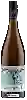
On the nose the pink wine of Winery Friedrich Becker. often reveals types of flavors of cherry, citrus or strawberries and sometimes also flavors of raspberry, earth or tree fruit.
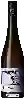
Corkscrew of the wine waiter equipped with a small blade allowing to cut the capsule, a worm and a system of rack allowing to extract the cork easily.
How Winery Friedrich Becker wines pair with each other generally quite well with dishes of veal, pork or game (deer, venison) such as recipes of shoulder of lamb stuffed with cognac, tartiflette or roast duck in the oven.
On the nose the sparkling wine of Winery Friedrich Becker. often reveals types of flavors of non oak, earth or microbio and sometimes also flavors of vegetal, oak or tree fruit.
The sylvaner is grown mainly in Germany and Alsace. The buds are somewhat cottony and the young leaves are green. The same applies to the ribbed branches. Once mature, the dominant colour is golden-green and small elliptical berries with small to medium-sized bunches can be seen. The ripe fruit is then adorned by five-lobed leaves. This variety is susceptible to chlorosis, gray mold, powdery mildew and mildew. It is also sensitive to frost and wind because of its long branches. It can be grown in any kind of soil, although it prefers stony, sandy and light soils. It is indeed moderately acidic and offers a complex set of aromas such as bitter almond, fruity and floral background. The taste has an excellent mixture of honey and candied or dried fruits.
How Winery Friedrich Becker wines pair with each other generally quite well with dishes of veal, pork or game (deer, venison) such as recipes of gizzards in sauce, meatloaf with lovage (perpetual celery) or duck aiguillettes with apples.
Botanical term for the interval between two nodes or between two leaf insertions on a branch (see internode).
Planning a wine route in the of Pfalz? Here are the wineries to visit and the winemakers to meet during your trip in search of wines similar to Winery Friedrich Becker.
White muscat is a white grape variety of Greek origin. Present in several Mediterranean vineyards, it has several synonyms such as muscat de Die, muscat blanc and frontignac. In France, it occupies a little less than 7,000 ha out of a total of 45,000 ha worldwide. Its young shoots are downy. Its youngest leaves are shiny, bronzed and scabrous. The berries and bunches of this variety are all medium-sized. The flesh of the berries is juicy, sweet and firm. Muscat à petits grains has a second ripening period and buds early in the year. It is moderately vigorous and must be pruned short. It likes poor, stony slopes. This variety is often exposed to spring frosts. It fears mildew, wasps, grape worms, court-noué, grey rot and powdery mildew. Muscat à petits grains is used to make rosé wines and dry white wines. Orange, brown sugar, barley sugar and raisins are the known aromas of these wines.