The Winery Sivipa of Península de Setúbal
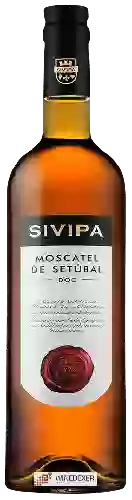
The Winery Sivipa is one of the world's great estates. It offers 40 wines for sale in of Península de Setúbal to come and discover on site or to buy online.
Looking for the best Winery Sivipa wines in Península de Setúbal among all the wines in the region? Check out our tops of the best red, white or effervescent Winery Sivipa wines. Also find some food and wine pairings that may be suitable with the wines from this area. Learn more about the region and the Winery Sivipa wines with technical and enological descriptions.
How Winery Sivipa wines pair with each other generally quite well with dishes of sweet desserts, blue cheese or beef such as recipes of chocolate mousse, provencal-inspired salad or beef strogonoff.
On the nose the natural sweet wine of Winery Sivipa. often reveals types of flavors of vanilla, lemon or chocolate and sometimes also flavors of tangerine, caramel or raisin. In the mouth the natural sweet wine of Winery Sivipa. is a powerful mainly marked by the residual sugar.
Setúbal Peninsula (also known as Península de Setúbal) is the Portuguese wine region immediately southeast of Lisbon, across the Tejo estuary. The Terroir in the area ranges from sandy coastal plains to the craggy, limestone-rich Serra Arribida hills. The area is known for its Dry red wines made from Castelão, and for its fortified wines and Sweet Moscatel de Setúbal.
The wines produced here are made under three titles: two DOCs, Palmela and Setúbal, and one IGP.
The IGP (formerly VR, or Vinho Regional) has been officially named "Peninsula de Setúbal" since 2008, but before that was known as VR Terras do Sado, meaning "lands of the river Sado". The Sado is one of Portugal's major rivers, and flows North from the Caldeirão hills to Setúbal city, on the southern edge of the eponymous peninsula.
The Setúbal Peninsula's two DOC titles cover a similar area, but encompass different styles of wine. Palmela covers both the sandy plains and the hills, while Setúbal covers the land on the hills.
The Castelão Grape which comprises the majority of Palmela wines performs admirably on the dry, sandy soils, which is one of the few terroirs in Portugal where it can reach Full ripeness. Other Portuguese and international varieties like Cabernet Sauvignon, Touriga Nacional and Syrah are planted on the slopes hills.
The other DOC covering the peninsula, Setúbal, is for sweet fortified wines made from Muscat of Alexandria, here known as Moscatel de Setúbal. These are made slightly differently from Portugal's most famous fortified wine, Port, in that leftover grape skins are added to the wine after Mutage.
How Winery Sivipa wines pair with each other generally quite well with dishes of beef, pasta or veal such as recipes of beef tagine with prunes and almonds, pasta with boursin or veal meatballs with curry.
On the nose the red wine of Winery Sivipa. often reveals types of flavors of microbio, non oak or earth and sometimes also flavors of oak, red fruit or black fruit. In the mouth the red wine of Winery Sivipa. is a powerful with a lot of tannins present in the mouth.
How Winery Sivipa wines pair with each other generally quite well with dishes such as recipes .
Said of wines from the last vintage and, by extension, wines of the year, fruity and easy-drinking, put on sale on the third Thursday in November. The AOC regulations specify that a wine is said to be primeur if it is bottled before the spring, and nouveau if it is bottled before the following harvest. Beaujolais Nouveau is therefore a vin primeur.
How Winery Sivipa wines pair with each other generally quite well with dishes of pasta, pork or shellfish such as recipes of spaghetti with tuna (real italian recipe), chicken in red wine or creamy tomato squid.
On the nose the white wine of Winery Sivipa. often reveals types of flavors of tropical fruit, non oak or oak and sometimes also flavors of spices. In the mouth the white wine of Winery Sivipa. is a .
Most certainly Portuguese, not to be confused with the Touriga Franca also of the same origin. In Portugal, where it is widely cultivated, it is used to produce, among other things, the famous red Porto. It is also found in Uzbekistan, Australia, South Africa, Cyprus, Spain, etc... very little known in France, although it is listed in the Official Catalogue of A1 vines.
How Winery Sivipa wines pair with each other generally quite well with dishes such as recipes .
Often obtained by adding red wines (from Champagne), it is even the only vineyard where this practice is allowed. Some producers prefer the practice used in other regions, i.e. a short maceration to extract sufficient colouring matter. This results in winey rosés for meals. Elegant aperitif rosé is more often made from red wine coloured Chardonnay. Rosés can be vintage or non vintage.
Planning a wine route in the of Península de Setúbal? Here are the wineries to visit and the winemakers to meet during your trip in search of wines similar to Winery Sivipa.