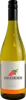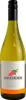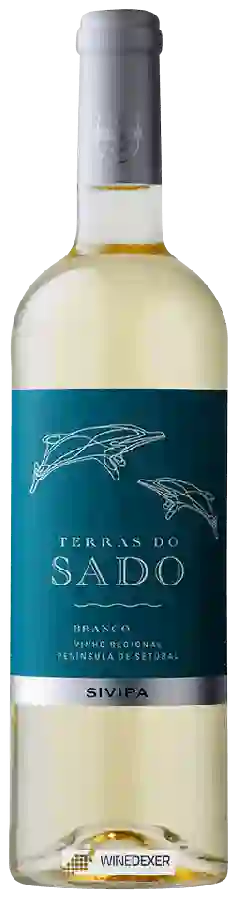
Winery SivipaTerras do Sado Branco
 White wine


In the mouth this white wine is a .
This wine generally goes well with pork, lean fish or shellfish.
Taste structure of the Terras do Sado Branco from the Winery Sivipa
Light | Bold | |
Dry | Sweet | |
Soft | Acidic |
In the mouth the Terras do Sado Branco of Winery Sivipa in the region of Península de Setúbal is a .
Food and wine pairings with Terras do Sado Branco
Pairings that work perfectly with Terras do Sado Branco



Original food and wine pairings with Terras do Sado Branco

The Terras do Sado Branco of Winery Sivipa matches generally quite well with dishes of pasta, pork or shellfish such as recipes of trofie ( pasta ) paradiso, texas style ribs / loin ribs or chinese fried shrimp ravioli.
Details and technical informations about Winery Sivipa's Terras do Sado Branco.
Discover the grape variety: Fernao Pires
In Portugal, it is one of the most planted white grape varieties, and we have found it to be very similar to the torrontés grown in Spain (Galicia). It can be found in Australia and South Africa, but is almost unknown in France.
Last vintages of this wine
The best vintages of Terras do Sado Branco from Winery Sivipa are 2019, 2015, 2017, 0 and 2016.
Informations about the Winery Sivipa
The Winery Sivipa is one of of the world's great estates. It offers 39 wines for sale in the of Península de Setúbal to come and discover on site or to buy online.

The wine region of Península de Setúbal
Setúbal Peninsula (also known as Península de Setúbal) is the Portuguese wine region immediately southeast of Lisbon, across the Tejo estuary. The Terroir in the area ranges from sandy coastal plains to the craggy, limestone-rich Serra Arribida hills. The area is known for its Dry red wines made from Castelão, and for its fortified wines and Sweet Moscatel de Setúbal. The wines produced here are made under three titles: two DOCs, Palmela and Setúbal, and one IGP.
The word of the wine: Leaf removal
Operation that consists in removing the leaves that form a screen between the sun and the grape.