The Winery Marco Bonfante of Piedmont
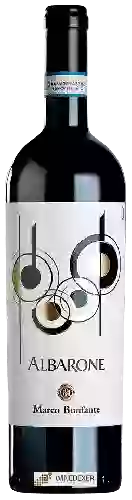
The Winery Marco Bonfante is one of the best wineries to follow in Piémont.. It offers 57 wines for sale in of Piedmont to come and discover on site or to buy online.
Looking for the best Winery Marco Bonfante wines in Piedmont among all the wines in the region? Check out our tops of the best red, white or effervescent Winery Marco Bonfante wines. Also find some food and wine pairings that may be suitable with the wines from this area. Learn more about the region and the Winery Marco Bonfante wines with technical and enological descriptions.
How Winery Marco Bonfante wines pair with each other generally quite well with dishes of beef, pasta or lamb such as recipes of tanjia, express beef cannelloni or lamb tagine with dried fruits and herbs.
On the nose the red wine of Winery Marco Bonfante. often reveals types of flavors of non oak, earth or microbio and sometimes also flavors of oak, spices or red fruit. In the mouth the red wine of Winery Marco Bonfante. is a powerful with a nice balance between acidity and tannins.
Piedmont (Piemonte) holds an unrivalled place among the world's finest wine regions. Located in northwestern Italy, it is home to more DOCG wines than any other Italian region, including such well-known and respected names as Barolo, Barbaresco and Barbera d'Asti. Though famous for its Austere, Tannic, Floral">floral reds made from Nebbiolo, Piedmont's biggest success story in the past decade has been Moscato d'Asti, a Sweet, Sparkling white wine. Piedmont Lies, as its name suggests, at the foot of the Western Alps, which encircle its northern and western sides and form its naturally formidable border with Provence, France.
To the southeast are the Apennines, the most northerly. These low coastal hills separate Piedmont from its Long, thin neighbour, Liguria, and from the Mediterranean beyond. The Alps and the Apennines are important here in many ways. They are largely responsible for the region's favourable climate and for many centuries they provided a degree of protection against invasion.
How Winery Marco Bonfante wines pair with each other generally quite well with dishes of fruity desserts or aperitif such as recipes of rice with milk or kale chips.
On the nose the sparkling wine of Winery Marco Bonfante. often reveals types of flavors of non oak, red fruit or tree fruit. In the mouth the sparkling wine of Winery Marco Bonfante. is a .
Most certainly from the Italian Piedmont. It is also found in Argentina. We have noted that this variety has a great resemblance with the nebbiolo, also from the Italian Piedmont. According to genetic analyses published in Switzerland, Freisa is a descendant of Viognier and a half-sister of Rèze.
How Winery Marco Bonfante wines pair with each other generally quite well with dishes of pasta, shellfish or appetizers and snacks such as recipes of pasta carbonara almost like the real thing, mussels spanish style or baked vegetable chips.
On the nose the white wine of Winery Marco Bonfante. often reveals types of flavors of earth, microbio or vegetal and sometimes also flavors of tree fruit, citrus fruit or non oak. In the mouth the white wine of Winery Marco Bonfante. is a powerful with a nice freshness.
Organisation for the defence and management of wine, set up following the reform of the "syndicats de crus". The ODG is the collective organisation responsible for the defence and management of a product under an official sign of identification and quality and between wine appellations.
Planning a wine route in the of Piedmont? Here are the wineries to visit and the winemakers to meet during your trip in search of wines similar to Winery Marco Bonfante.
A very old grape variety grown in the Italian Piedmont. It has a great resemblance with the Freisa, which also comes from the same Italian region. Among the various massal selections made in Italy, we find lampia, michet and rosé. It can be found in Italy, Austria, Bulgaria, Cyprus, Greece, Mexico, the United States (California), Australia, etc. In France, it is practically unknown, perhaps because it is a delicate and demanding grape variety with, among other things, a fairly long phenological cycle.