The Cave de Jolimont of La Côte of Vaud
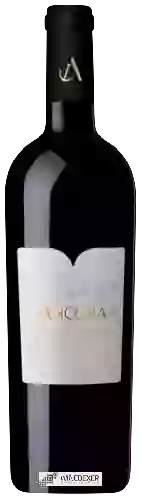
Cave de Jolimont
The winery offers 77 different wines
3.6


Note - 1Note - 1Note - 1Note - 0.5Note - 0
Its wines get an average rating of 3.6.
It is ranked in the top 1 of the estates of Vaud.
It is located in La Côte in the region of Vaud

The Cave de Jolimont is one of the largest wineries in the world. It offers 77 wines for sale in of La Côte to come and discover on site or to buy online.
Top Cave de Jolimont wines

Looking for the best Cave de Jolimont wines in La Côte among all the wines in the region? Check out our tops of the best red, white or effervescent Cave de Jolimont wines. Also find some food and wine pairings that may be suitable with the wines from this area. Learn more about the region and the Cave de Jolimont wines with technical and enological descriptions.

The top red wines of Cave de Jolimont

Food and wine pairings with a red wine of Cave de Jolimont

How Cave de Jolimont wines pair with each other generally quite well with dishes of beef, game (deer, venison) or veal such as recipes of hungarian goulash, saddle of venison with fresh cream or curried veal roulades.

Organoleptic analysis of red wines of Cave de Jolimont

On the nose the red wine of Cave de Jolimont. often reveals types of flavors of black fruit, oaky or cheese and sometimes also flavors of earth, microbio or oak. In the mouth the red wine of Cave de Jolimont. is a with a nice freshness.

The best vintages in the red wines of Cave de Jolimont

  • 2019With an average score of 4.10/5
  • 2005With an average score of 4.10/5
  • 2018With an average score of 3.94/5
  • 2017With an average score of 3.86/5
  • 2016With an average score of 3.82/5
  • 2015With an average score of 3.61/5

The grape varieties most used in the red wines of Cave de Jolimont.

  • Gamay
  • Pinot Noir
  • Gamaret
  • Garanoir
  • Merlot
  • Galotta

Discovering the wine region of La Côte

The wine region of La Côte is located in the region of Vaud of Switzerland. Wineries and vineyards like the Cave de la Côte - Cave Cidis or the Cave de Jolimont produce mainly wines white, red and sweet. The most planted grape varieties in the region of La Côte are Chasselas, Gamaret and Pinot noir, they are then used in wines in blends or as a single variety. On the nose of La Côte often reveals types of flavors of black fruit, pear or vegetal and sometimes also flavors of tropical fruit, apples or cream.

In the mouth of La Côte is a with a nice freshness. We currently count 163 estates and châteaux in the of La Côte, producing 561 different wines in conventional, organic and biodynamic agriculture. The wines of La Côte go well with generally quite well with dishes of beef, veal or pork.

The top pink wines of Cave de Jolimont

Food and wine pairings with a pink wine of Cave de Jolimont

How Cave de Jolimont wines pair with each other generally quite well with dishes of veal, pork or game (deer, venison) such as recipes of pork chops with veal stock sauce, quiche with bacon and gruyère cheese or pheasant in a casserole with white wine.
The best vintages in the pink wines of Cave de Jolimont

  • 2014With an average score of 3.80/5
  • 2018With an average score of 3.50/5

The grape varieties most used in the pink wines of Cave de Jolimont.

  • Gamay
  • Pinot Noir
  • Gamaret
  • Garanoir

Discover the grape variety: Doral

The top white wines of Cave de Jolimont

Food and wine pairings with a white wine of Cave de Jolimont

How Cave de Jolimont wines pair with each other generally quite well with dishes of poultry, lean fish or mild and soft cheese such as recipes of nachos (chicken), adapted vietnamese fondue or pizza cone.
Organoleptic analysis of white wines of Cave de Jolimont

On the nose the white wine of Cave de Jolimont. often reveals types of flavors of apples, peach or butter and sometimes also flavors of pear, honey or earth. In the mouth the white wine of Cave de Jolimont. is a with a nice freshness.

The best vintages in the white wines of Cave de Jolimont

  • 0With an average score of 3.90/5
  • 2015With an average score of 3.60/5
  • 2016With an average score of 3.56/5
  • 2018With an average score of 3.41/5
  • 2008With an average score of 2.70/5
  • 2017With an average score of 2.69/5

The grape varieties most used in the white wines of Cave de Jolimont.

  • Chasselas
  • Chardonnay
  • Charmont
  • Doral
  • Pinot Blanc
  • Müller-Thurgau

The word of the wine: Pagan

See savagnin.

The top sweet wines of Cave de Jolimont

Food and wine pairings with a sweet wine of Cave de Jolimont

How Cave de Jolimont wines pair with each other generally quite well with dishes of beef such as recipes of kamounia : tunisian beef stew.

Organoleptic analysis of sweet wines of Cave de Jolimont

On the nose the sweet wine of Cave de Jolimont. often reveals types of flavors of red fruit.

The best vintages in the sweet wines of Cave de Jolimont

  • 2016With an average score of 3.90/5
  • 2018With an average score of 3.80/5

The grape varieties most used in the sweet wines of Cave de Jolimont.

  • Gamaret
  • Gamay
  • Garanoir

Discover the grape variety: Chasselas

Chasselas rosé is a grape variety that originated in France. It produces a variety of grape used to make wine. However, it can also be found eating on our tables! This variety of vine is characterized by medium-sized bunches and medium-sized grapes. Chasselas rosé can be found in several vineyards: Alsace, South-West, Cognac, Bordeaux, Loire Valley, Rhone Valley, Languedoc & Roussillon, Provence & Corsica, Savoie & Bugey, Beaujolais.
Discover other wineries and winemakers neighboring the Cave de Jolimont

Planning a wine route in the of La Côte? Here are the wineries to visit and the winemakers to meet during your trip in search of wines similar to Cave de Jolimont.

Discover the grape variety: Pinot blanc

Pinot Blanc is a grape variety that originated in Burgundy, mutated from Pinot Gris. Today, it is grown in Alsace where it is called klevner when blended with auxerrois. The continental climate, with its cold winters and hot summers, is particularly suited to pinot blanc. It is resistant to frost in winter and in summer, the roots draw the minerals it needs from the warm soil. Its bunches are made up of small berries with thick skins and melting pulp that produce fruity, spicy wines, balanced between acidity and alcohol. pinot blanc is also used for crémants and sparkling wines. Pinot Blanc is also used for Crémant and sparkling wines. It is widely grown in Italy, where it covers almost 7,000 hectares, and is also found in Germany, Austria, Canada and South Africa.