The Winery Sartirano Figli Cantine e Vigneti of Langhe of Piedmont
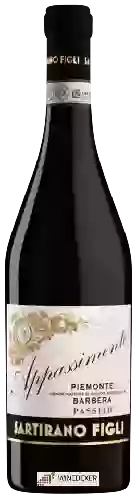
Winery Sartirano Figli Cantine e Vigneti
The winery offers 35 different wines
3.7


Note - 1Note - 1Note - 1Note - 0.5Note - 0
Its wines get an average rating of 3.7.
This estate is part of the Sartirano.
It is ranked in the top 150 of the estates of Piedmont.
It is located in Langhe in the region of Piedmont

The Winery Sartirano Figli Cantine e Vigneti is one of the best wineries to follow in Langhe.. It offers 35 wines for sale in of Langhe to come and discover on site or to buy online.
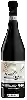
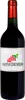
Top Winery Sartirano Figli Cantine e Vigneti wines

Looking for the best Winery Sartirano Figli Cantine e Vigneti wines in Langhe among all the wines in the region? Check out our tops of the best red, white or effervescent Winery Sartirano Figli Cantine e Vigneti wines. Also find some food and wine pairings that may be suitable with the wines from this area. Learn more about the region and the Winery Sartirano Figli Cantine e Vigneti wines with technical and enological descriptions.

The top sweet wines of Winery Sartirano Figli Cantine e Vigneti

Food and wine pairings with a sweet wine of Winery Sartirano Figli Cantine e Vigneti

How Winery Sartirano Figli Cantine e Vigneti wines pair with each other generally quite well with dishes of pork, spicy food or poultry such as recipes of ollada (catalonia), chili con carne or oven roasted chicken.

Organoleptic analysis of sweet wines of Winery Sartirano Figli Cantine e Vigneti

On the nose the sweet wine of Winery Sartirano Figli Cantine e Vigneti. often reveals types of flavors of earth, oak or red fruit.

The best vintages in the sweet wines of Winery Sartirano Figli Cantine e Vigneti

  • 2016With an average score of 4.40/5
  • 2015With an average score of 4.40/5
  • 0With an average score of 4.20/5
  • 2018With an average score of 4.10/5
  • 2017With an average score of 4.00/5

The grape varieties most used in the sweet wines of Winery Sartirano Figli Cantine e Vigneti.

  • Barbera

Discovering the wine region of Langhe

The wine region of Langhe is located in the region of Piémont of Italy. We currently count 1082 estates and châteaux in the of Langhe, producing 2506 different wines in conventional, organic and biodynamic agriculture. The wines of Langhe go well with generally quite well with dishes .

The top red wines of Winery Sartirano Figli Cantine e Vigneti

Food and wine pairings with a red wine of Winery Sartirano Figli Cantine e Vigneti

How Winery Sartirano Figli Cantine e Vigneti wines pair with each other generally quite well with dishes of beef, pasta or lamb such as recipes of roast monkfish with bacon, meat lasagna or oriental lamb skewers.

Organoleptic analysis of red wines of Winery Sartirano Figli Cantine e Vigneti

On the nose the red wine of Winery Sartirano Figli Cantine e Vigneti. often reveals types of flavors of non oak, earth or oak and sometimes also flavors of spices, red fruit or black fruit. In the mouth the red wine of Winery Sartirano Figli Cantine e Vigneti. is a powerful with a nice balance between acidity and tannins.

The best vintages in the red wines of Winery Sartirano Figli Cantine e Vigneti

  • 2005With an average score of 4.13/5
  • 2017With an average score of 3.75/5
  • 2006With an average score of 3.67/5
  • 2015With an average score of 3.67/5
  • 2011With an average score of 3.66/5
  • 0With an average score of 3.63/5

The grape varieties most used in the red wines of Winery Sartirano Figli Cantine e Vigneti.

  • Nebbiolo
  • Barbera
  • Dolcetto
  • Cortese
  • Grenache

Discover the grape variety: Arneis

The top white wines of Winery Sartirano Figli Cantine e Vigneti

Food and wine pairings with a white wine of Winery Sartirano Figli Cantine e Vigneti

How Winery Sartirano Figli Cantine e Vigneti wines pair with each other generally quite well with dishes of pasta, shellfish or mature and hard cheese such as recipes of spaghetti carbonara, pike dumplings with shrimp sauce or morteau sausage with brioche.

Organoleptic analysis of white wines of Winery Sartirano Figli Cantine e Vigneti

On the nose the white wine of Winery Sartirano Figli Cantine e Vigneti. often reveals types of flavors of tree fruit, citrus fruit. In the mouth the white wine of Winery Sartirano Figli Cantine e Vigneti. is a powerful.

The best vintages in the white wines of Winery Sartirano Figli Cantine e Vigneti

  • 2012With an average score of 4.40/5
  • 0With an average score of 3.97/5
  • 2015With an average score of 3.80/5
  • 2019With an average score of 3.70/5
  • 2018With an average score of 3.60/5
  • 2017With an average score of 3.60/5

The grape varieties most used in the white wines of Winery Sartirano Figli Cantine e Vigneti.

  • Cortese
  • Grenache Blanc
  • Moscato
  • Arneis

The word of the wine: Maccabeo

See macabeu.

The top sparkling wines of Winery Sartirano Figli Cantine e Vigneti

Food and wine pairings with a sparkling wine of Winery Sartirano Figli Cantine e Vigneti

How Winery Sartirano Figli Cantine e Vigneti wines pair with each other generally quite well with dishes of fruity desserts or aperitif such as recipes of apple cake or lebanese hummus.

The best vintages in the sparkling wines of Winery Sartirano Figli Cantine e Vigneti

  • 0With an average score of 4.30/5

The grape varieties most used in the sparkling wines of Winery Sartirano Figli Cantine e Vigneti.

  • Moscato

Discover the grape variety: Grenache Blanc

Discover other wineries and winemakers neighboring the Winery Sartirano Figli Cantine e Vigneti

Planning a wine route in the of Langhe? Here are the wineries to visit and the winemakers to meet during your trip in search of wines similar to Winery Sartirano Figli Cantine e Vigneti.

Discover the grape variety: Nebbiolo

A very old grape variety grown in the Italian Piedmont. It has a great resemblance with the Freisa, which also comes from the same Italian region. Among the various massal selections made in Italy, we find lampia, michet and rosé. It can be found in Italy, Austria, Bulgaria, Cyprus, Greece, Mexico, the United States (California), Australia, etc. In France, it is practically unknown, perhaps because it is a delicate and demanding grape variety with, among other things, a fairly long phenological cycle.