The Bodega del Fin del Mundo of Patagonia
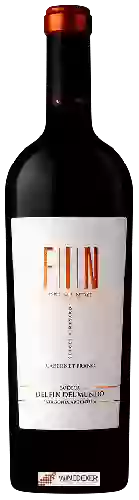
The Bodega del Fin del Mundo is one of the largest wineries in the world. It offers 101 wines for sale in of Patagonia to come and discover on site or to buy online.
Looking for the best Bodega del Fin del Mundo wines in Patagonia among all the wines in the region? Check out our tops of the best red, white or effervescent Bodega del Fin del Mundo wines. Also find some food and wine pairings that may be suitable with the wines from this area. Learn more about the region and the Bodega del Fin del Mundo wines with technical and enological descriptions.
How Bodega del Fin del Mundo wines pair with each other generally quite well with dishes of beef, pork or game (deer, venison) such as recipes of beef bourguignon in the oven of nanou, meatloaf with lovage (perpetual celery) or saddle of hare jura style.
On the nose the red wine of Bodega del Fin del Mundo. often reveals types of flavors of cherry, oaky or smoke and sometimes also flavors of red fruit, vanilla or leather. In the mouth the red wine of Bodega del Fin del Mundo. is a powerful with a nice freshness.
Patagonia is South America's southernmost wine-producing region. Despite being one of the world's least-obvious places for quality viticulture, this desert region – with its cool, DryClimate – has proved itself well suited to producing Elegant red wines from Pinot Noir and Malbec.
The geographical region covers a vast area – around twice the Size of California – across southern Argentina and Chile. Patagonia is more closely associated with dinosaurs and desert than with fine wine, but it has a viticultural zone that stretches 300 kilometers (200 miles) along the Neuquen and Rio Negro rivers, from Anelo in the west to Choele Choel in the east.
The zone is closer to the Andes Mountains than to the Atlantic Ocean, but is at a much lower altitude than its northern cousin of Mendoza, averaging about 300m (1,000ft) above sea level.
Patagonia is a desert, and viticulture is possible only near the rivers, where meltwater from the Andes is abundant for irrigation. The classic desert climate of Warm days and cold nights extends the growing season in the region, slowing ripening in the grapes and letting them develop RichVarietal character while retaining acidity.
Patagonia has gained recognition within the wine world due to the two viticultural regions located in its northern section: the more-established Rio Negro and the newer, still developing Neuquen.
Wines from these two zones are traditionally more European in style than those from the Central and northern regions of Argentina, as a result of the areas' cooler climate and higher latitude. While Malbec still plays a central role in Patagonian wine, it is Pinot Noir that has become the region's iconic grape variety. Excellent white wines made from Chardonnay, Sauvignon Blanc and Riesling also showcase the freshness of the region's climate.
How Bodega del Fin del Mundo wines pair with each other generally quite well with dishes of veal, pork or game (deer, venison) such as recipes of roasted stuffed goose with mushroom sauce, capellini with prosciutto or alsatian wine pie.
On the nose the sparkling wine of Bodega del Fin del Mundo. often reveals types of flavors of strawberries, orange or non oak and sometimes also flavors of microbio, citrus fruit or red fruit.
Tannat is a red grape variety from Béarn which belongs to the cotoïdes family. Present in several vineyards of France, it occupies nearly 3,000 ha. Its leaves are reddish with tan patches. Its bunches are either of normal size or larger. Its berries have a thin skin and are rounded. Its foliage has a swarthy appearance. This variety must be pruned long because it is vigorous. It likes sandy and gravelly soils. Tannat is often exposed to leafhoppers and mites. It is also somewhat susceptible to grey rot. It has 11 approved clones, including 474, 717 and 794. Once mature, this variety produces acidic, fruity, tannic, acidic and full-bodied wines. Various aromas emerge, notably tobacco, cinnamon and exotic wood. Tannat is rarely used alone. It is combined with iron-servadou to obtain a fruitier taste or with cabernet sauvignon to be more rounded.
How Bodega del Fin del Mundo wines pair with each other generally quite well with dishes of rich fish (salmon, tuna etc), shellfish or sweet desserts such as recipes of sardines with escabeche, samoussa 3 reunionese cheeses or pancakes.
On the nose the white wine of Bodega del Fin del Mundo. often reveals types of flavors of microbio, vegetal or oak and sometimes also flavors of tree fruit, earth or tropical fruit. In the mouth the white wine of Bodega del Fin del Mundo. is a powerful with a nice freshness.
Visual aspect of the wine. The colour is defined by its intensity, clarity, brilliance and colour, which indicate the level of evolution of the wine, thus giving an indication of its vintage.
How Bodega del Fin del Mundo wines pair with each other generally quite well with dishes of beef, spicy food or mature and hard cheese such as recipes of fondue vigneronne au vin rouge, fish and shrimp curry or truffle with cantal and saint-nectaire cheese.
Malbec, a high-yielding red grape variety, produces tannic and colourful wines. It is produced in different wine-growing regions and changes its name according to the grape variety. Called Auxerrois in Cahors, Malbec in Bordeaux, it is also known as Côt. 6,000 hectares of the Malbec grape are grown in France (in decline since the 1950s). Malbec is also very successful in Argentina. The country has become the world's leading producer of Malbec and offers wines with great potential.
Planning a wine route in the of Patagonia? Here are the wineries to visit and the winemakers to meet during your trip in search of wines similar to Bodega del Fin del Mundo.
Originally from Bordeaux, Sauvignon, or Sauvignon Blanc, is reputed to be one of the best French grape varieties for white wine. It is a white grape variety, not to be confused with Sauvignon Gris and its pale yellow color, or with Cabernet Sauvignon which produces red wines. Particularly famous thanks to Sancerre, Sauvignon Blanc is cultivated as far as New Zealand, where it produces great wines whose reputation is well established.


