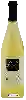
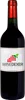
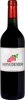
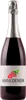
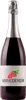
The Philip Jamison Jones Winery of Connecticut
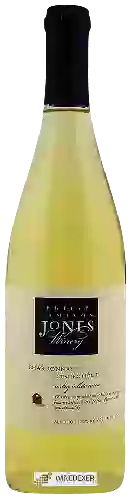
Philip Jamison Jones Winery
The winery offers 18 different wines
3.9


Note - 1Note - 1Note - 1Note - 1Note - 0
Its wines get an average rating of 3.9.
It is ranked in the top 2 of the estates of Connecticut.
It is located in Connecticut
Find the Philip Jamison Jones Winery on Facebook and on Twitter

The Philip Jamison Jones Winery is one of the largest wineries in the world. It offers 18 wines for sale in of Connecticut to come and discover on site or to buy online.
Top Philip Jamison Jones Winery wines

Looking for the best Philip Jamison Jones Winery wines in Connecticut among all the wines in the region? Check out our tops of the best red, white or effervescent Philip Jamison Jones Winery wines. Also find some food and wine pairings that may be suitable with the wines from this area. Learn more about the region and the Philip Jamison Jones Winery wines with technical and enological descriptions.

The top white wines of Philip Jamison Jones Winery

Food and wine pairings with a white wine of Philip Jamison Jones Winery

How Philip Jamison Jones Winery wines pair with each other generally quite well with dishes of pork, rich fish (salmon, tuna etc) or vegetarian such as recipes of pulled pork (us pulled pork ), skate wings with capers or light tuna-tomato quiche (without cream).

The best vintages in the white wines of Philip Jamison Jones Winery

  • 0With an average score of 3.89/5

The grape varieties most used in the white wines of Philip Jamison Jones Winery.

  • Seyval Blanc
  • Vidal Blanc
  • Cayuga White
  • Chardonnay
  • Muscat Ottonel
  • Pinot Gris

Discovering the wine region of Connecticut

Connecticut is a state located in the Southern NewEngland region of the United States, bordering the Long Island Sound to the south and Massachusetts to the North. Although it is not known for its wine production, Connecticut is nevertheless home to a craft wine industry that has grown steadily since the 1970s. Vitis vinifera and Hybrid grapes are planted throughout the state, and the best wines are made from Riesling, Chardonnay, St. Croix, Cabernet Franc and Vidal.

Sweet wines are traditionally popular in Connecticut, often made from Vidal and consumed by the locals. However, the fashion for Dry white wines established in neighboring New York is having a profound effect on Connecticut wine styles. Currently, about 25 wineries produce Connecticut wine from grapes and other fruits, including blackberries, raspberries and blueberries. The CT Wine Trail is well established; wine tourists receive a passport in which they can collect stamps at various Tasting rooms.

As in many U. S. states, craft brewing is booming in Connecticut.

The top red wines of Philip Jamison Jones Winery

Food and wine pairings with a red wine of Philip Jamison Jones Winery

How Philip Jamison Jones Winery wines pair with each other generally quite well with dishes of beef, pork or game (deer, venison) such as recipes of beef colombo bourguignon style, turkey stuffed with chestnuts or rabbit leg in foil on the barbecue.

Organoleptic analysis of red wines of Philip Jamison Jones Winery

On the nose the red wine of Philip Jamison Jones Winery. often reveals types of flavors of red fruit, non oak or earth and sometimes also flavors of oak, black fruit. In the mouth the red wine of Philip Jamison Jones Winery. is a powerful with a nice balance between acidity and tannins.

The best vintages in the red wines of Philip Jamison Jones Winery

  • 2008With an average score of 3.90/5
  • 0With an average score of 3.83/5
  • 2016With an average score of 3.70/5
  • 2017With an average score of 3.60/5

The grape varieties most used in the red wines of Philip Jamison Jones Winery.

  • Cabernet Franc
  • Merlot
  • Sangiovese
  • Petit Verdot
  • Montepulciano

Discover the grape variety: Cabernet franc

Cabernet Franc is one of the oldest red grape varieties in Bordeaux. The Libourne region is its terroir where it develops best. The terroirs of Saint-Emilion and Fronsac allow it to mature and develop its best range of aromas. It is also the majority in many blends. The very famous Château Cheval Blanc, for example, uses 60% Cabernet Franc. The wines produced with Cabernet Franc are medium in colour with fine tannins and subtle aromas of small red fruits and spices. When blended with Merlot and Cabernet Sauvignon, it brings complexity and a bouquet of aromas to the wine. It produces fruity wines that can be drunk quite quickly, but whose great vintages can be kept for a long time. It is an earlier grape variety than Cabernet Sauvignon, which means that it is planted as far north as the Loire Valley. In Anjou, it is also used to make sweet rosé wines. Cabernet Franc is now used in some twenty countries in Europe and throughout the world.

The top sparkling wines of Philip Jamison Jones Winery

Food and wine pairings with a sparkling wine of Philip Jamison Jones Winery

How Philip Jamison Jones Winery wines pair with each other generally quite well with dishes of shellfish, lean fish or fruity desserts such as recipes of cuttlefish armorican style (morgate), angry fried whiting or rice with milk.

Organoleptic analysis of sparkling wines of Philip Jamison Jones Winery

On the nose the sparkling wine of Philip Jamison Jones Winery. often reveals types of flavors of red fruit.

The best vintages in the sparkling wines of Philip Jamison Jones Winery

  • 0With an average score of 4.02/5

The grape varieties most used in the sparkling wines of Philip Jamison Jones Winery.

  • Chenin Blanc
  • Vidal Blanc

The word of the wine: Double magnum (or Marie-Jeanne)

Bottle with a capacity of 3 litres.

Discover other wineries and winemakers neighboring the Philip Jamison Jones Winery

Planning a wine route in the of Connecticut? Here are the wineries to visit and the winemakers to meet during your trip in search of wines similar to Philip Jamison Jones Winery.

Discover the grape variety: Cayuga

Complex interspecific cross between white seyval (5-276 Seyve-Villard) and schuyler obtained in 1945 by Robinson Willard B. and Einset John at Cornell University in Geneva (USA). It can also be found in Canada, almost unknown in France.