The Winery Mathis Bastian of Moselle
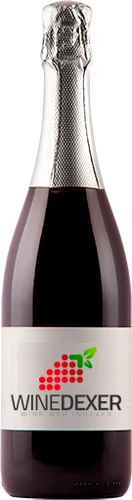
The Winery Mathis Bastian is one of the world's great estates. It offers 30 wines for sale in of Moselle to come and discover on site or to buy online.
Looking for the best Winery Mathis Bastian wines in Moselle among all the wines in the region? Check out our tops of the best red, white or effervescent Winery Mathis Bastian wines. Also find some food and wine pairings that may be suitable with the wines from this area. Learn more about the region and the Winery Mathis Bastian wines with technical and enological descriptions.
How Winery Mathis Bastian wines pair with each other generally quite well with dishes of shellfish, vegetarian or appetizers and snacks such as recipes of waterzooï of the sea, leek, goat cheese and bacon quiche or jars of sweet and sour pickles.
In the mouth the sparkling wine of Winery Mathis Bastian. is a powerful with a nice vivacity and a fine and pleasant bubble.
The wine region of Moselle of Luxembourg. Wineries and vineyards like the Domaine Les Vignerons de la Moselle or the Domaine Les Vignerons de la Moselle produce mainly wines white, pink and red. The most planted grape varieties in the region of Moselle are Gewurztraminer, Pinot blanc and Pinot gris, they are then used in wines in blends or as a single variety. In the mouth of Moselle is a powerful with a nice freshness.
We currently count 4 estates and châteaux in the of Moselle, producing 6 different wines in conventional, organic and biodynamic agriculture. The wines of Moselle go well with generally quite well with dishes of rich fish (salmon, tuna etc), spicy food or sweet desserts.
How Winery Mathis Bastian wines pair with each other generally quite well with dishes of veal, pork or game (deer, venison) such as recipes of escargots à la bordelaise, special' tagliatelle carbonara or rabbit with marengo sauce.
On the nose the red wine of Winery Mathis Bastian. often reveals types of flavors of raspberry, pepper or tree fruit and sometimes also flavors of spices, red fruit.
Pinot Blanc is a grape variety that originated in Burgundy, mutated from Pinot Gris. Today, it is grown in Alsace where it is called klevner when blended with auxerrois. The continental climate, with its cold winters and hot summers, is particularly suited to pinot blanc. It is resistant to frost in winter and in summer, the roots draw the minerals it needs from the warm soil. Its bunches are made up of small berries with thick skins and melting pulp that produce fruity, spicy wines, balanced between acidity and alcohol. pinot blanc is also used for crémants and sparkling wines. Pinot Blanc is also used for Crémant and sparkling wines. It is widely grown in Italy, where it covers almost 7,000 hectares, and is also found in Germany, Austria, Canada and South Africa.
How Winery Mathis Bastian wines pair with each other generally quite well with dishes of pork, rich fish (salmon, tuna etc) or spicy food such as recipes of sloth pork loin, baeckeoffe with fish or red wine fondue.
On the nose the white wine of Winery Mathis Bastian. often reveals types of flavors of citrus, citrus fruit or tree fruit and sometimes also flavors of earth, microbio or tropical fruit.
A full, complete and harmonious wine, offering a great wealth of flavours.
How Winery Mathis Bastian wines pair with each other generally quite well with dishes of veal, pork or game (deer, venison) such as recipes of filet mignon of veal with cider, chinchards with white wine and grapes or grandma melanie's cassoulet.
Pinot Gris is a grey grape variety mutated from Pinot Noir. It has its origins in Burgundy, where it is called pinot-beurot in reference to the colour of the grey robes worn by the monks of the region. Established in Alsace since the 17th century, pinot gris was called tokay until 2007. It is made up of bunches of small berries that vary in colour from pink to blue-grey. It is particularly well suited to the continental climate because it is resistant to the cold in winter and to spring frosts. This variety also likes dry limestone soils with plenty of sunshine in the summer. Pinot Gris is well suited to late harvesting or to the selection of noble grapes, depending on the year and the concentration of sugars in the berries. Pinot Gris wines are distinguished by their aromatic complexity of white fruits, mushrooms, honey, vanilla, cinnamon, etc., and their great finesse. In the Loire Valley, pinot gris is used in the Coteaux-d'Ancenis appellations. It gives dry or sweet wines with pear and peach aromas.
How Winery Mathis Bastian wines pair with each other generally quite well with dishes of pork, rich fish (salmon, tuna etc) or spicy food such as recipes of stuffed round zucchini, sliced tuna with tomato sauce or tripe in the style of caen.
In champagne and wines made according to the traditional method, wine is added before corking to fill the void in the bottle created by disgorging. This added wine is often sweetened by sugar incorporated in variable proportions according to the style of wine sought (see dosage). Syn.: liqueur de dosage.
Planning a wine route in the of Moselle? Here are the wineries to visit and the winemakers to meet during your trip in search of wines similar to Winery Mathis Bastian.
Auxerrois is a white grape variety native to Lorraine, which is also found in Alsace and in the Loire Valley, where it took off in 1950. Its name comes from the nurseries in Auxerre where it found refuge during the Second World War. Often called Pinot Auxerrois, it is part of the Moselle, Alsace and Côtes-de-Toul AOC grape varieties. Auxerrois should not be confused with côt or malbec, which are red grape varieties from the Cahors region and which may bear the same name. The bunches of Auxerrois are of medium size with small berries. It is a semi-late grape variety whose buds only come out when temperatures are well above 10°C. Auxerrois wines are characterized by finesse and acidity and subtle aromas of exotic fruits, fruits and white flowers. In France, it represents 1,600 hectares of production and some small parcels of Auxerrois are also present in Luxembourg, Germany, Canada and South Africa (2,300 hectares in total).