The Winery Gaía of Nemea of Peloponnesos
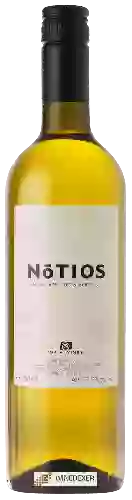
The Winery Gaía is one of the largest wineries in the world. It offers 27 wines for sale in of Nemea to come and discover on site or to buy online.
Looking for the best Winery Gaía wines in Nemea among all the wines in the region? Check out our tops of the best red, white or effervescent Winery Gaía wines. Also find some food and wine pairings that may be suitable with the wines from this area. Learn more about the region and the Winery Gaía wines with technical and enological descriptions.
How Winery Gaía wines pair with each other generally quite well with dishes of shellfish or lean fish such as recipes of cuttlefish armorican style (morgate) or bouillabaisse like in marseille.
On the nose the white wine of Winery Gaía. often reveals types of flavors of pineapple, cream or grapefruit and sometimes also flavors of oaky, tropical or citrus. In the mouth the white wine of Winery Gaía. is a powerful with a nice freshness.
The wine region of Nemea is located in the region of Argolida of Peloponnesos of Greece. Wineries and vineyards like the Aivalis Winery or the Domaine Papaioannou (Παπαϊωάννου) produce mainly wines red, white and pink. The most planted grape varieties in the region of Nemea are Agiorgitiko, Moschofilero and Assyrtiko, they are then used in wines in blends or as a single variety. On the nose of Nemea often reveals types of flavors of cherry, prune or cream and sometimes also flavors of oregano, almonds or mint.
In the mouth of Nemea is a powerful with a nice balance between acidity and tannins. We currently count 70 estates and châteaux in the of Nemea, producing 235 different wines in conventional, organic and biodynamic agriculture. The wines of Nemea go well with generally quite well with dishes of beef, lamb or veal.
How Winery Gaía wines pair with each other generally quite well with dishes such as recipes .
On the nose the pink wine of Winery Gaía. often reveals types of flavors of cherry, grapefruit or citrus and sometimes also flavors of peach, minerality or red fruit.
A very old variety cultivated in Greece, even today, especially in the Peloponnese region. It belongs to a large family called fileri or phileri, and the differences between the clones are sometimes quite marked. In France, it is almost unknown - however, it is registered in the Official Catalogue of wine grape varieties, list A1 - and plantations have been attempted in the United States, ... .
How Winery Gaía wines pair with each other generally quite well with dishes of beef, lamb or veal such as recipes of beef fillet in a crust, lamb tagine with peppers and artichoke bottoms or oven-baked veal cutlets.
On the nose the red wine of Winery Gaía. often reveals types of flavors of cream, cherry or oaky and sometimes also flavors of smoke, earthy or blackberry. In the mouth the red wine of Winery Gaía. is a powerful with a nice balance between acidity and tannins.
Said of a wine unbalanced by its lack of acidity.
How Winery Gaía wines pair with each other generally quite well with dishes such as recipes .
On the nose the sweet wine of Winery Gaía. often reveals types of flavors of non oak, earth or oak and sometimes also flavors of red fruit, black fruit or dried fruit.
This is a very old grape variety grown in Greece, particularly in the southern Cyclades Islands in the Aegean Sea, and more specifically in the Santorini archipelago. It is related to gaidouria and platani. In this country, it is quite often "associated" with other grape varieties such as aïdani, athiri, malagousia, ... . Assyrtiko can be found in Germany, Spain, Italy, Greece, Cyprus, Bulgaria, Romania, the United States, Mexico, South Africa, etc. Little known in France, it is nevertheless registered in the Official Catalogue of wine grape varieties, list A.
Planning a wine route in the of Nemea? Here are the wineries to visit and the winemakers to meet during your trip in search of wines similar to Winery Gaía.
It is very old in Greece, most certainly originating from the Aegean islands of Santorini(i) to be precise, where it is still the second black variety cultivated today. It is found in Canada (Quebec), in France it is practically unknown, although it is registered in the Official Catalogue of wine grape varieties, list A1.