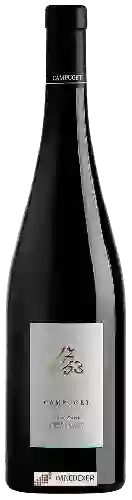
The Château de Campuget of Costières-de-Nîmes of Rhone Valley

Château de Campuget
The winery offers 38 different wines
3.7


Note - 1Note - 1Note - 1Note - 0.5Note - 0
Its wines get an average rating of 3.7.
It is ranked in the top 1 of the estates of Rhone Valley.
It is located in Costières-de-Nîmes in the region of Rhone Valley
Find the Château de Campuget on Twitter

The Château de Campuget is one of the largest wineries in the world. It offers 38 wines for sale in of Costières-de-Nîmes to come and discover on site or to buy online.

Top Château de Campuget wines

Looking for the best Château de Campuget wines in Costières-de-Nîmes among all the wines in the region? Check out our tops of the best red, white or effervescent Château de Campuget wines. Also find some food and wine pairings that may be suitable with the wines from this area. Learn more about the region and the Château de Campuget wines with technical and enological descriptions.

The top red wines of Château de Campuget

Food and wine pairings with a red wine of Château de Campuget

How Château de Campuget wines pair with each other generally quite well with dishes of beef, lamb or game (deer, venison) such as recipes of beef and spice stuffed peppers, royal couscous or rabbit on the barbecue.

Organoleptic analysis of red wines of Château de Campuget

On the nose the red wine of Château de Campuget. often reveals types of flavors of red fruit, cherry or oaky and sometimes also flavors of smoke, earthy or blackberry. In the mouth the red wine of Château de Campuget. is a powerful with a nice balance between acidity and tannins.

The best vintages in the red wines of Château de Campuget

  • 2007With an average score of 4.20/5
  • 2005With an average score of 4.00/5
  • 2017With an average score of 3.82/5
  • 2019With an average score of 3.80/5
  • 2018With an average score of 3.75/5
  • 2014With an average score of 3.74/5

The grape varieties most used in the red wines of Château de Campuget.

  • Shiraz/Syrah
  • Grenache
  • Saperavi
  • Mourvedre
  • Merlot

Discovering the wine region of Costières-de-Nîmes

The wine region of Costières-de-Nîmes is located in the region of Rhône méridional of Rhone Valley of France. Wineries and vineyards like the Domaine Scamandre or the Château d'Or et de Gueules produce mainly wines red, pink and white. The most planted grape varieties in the region of Costières-de-Nîmes are Mourvèdre, Roussanne and Viognier, they are then used in wines in blends or as a single variety. On the nose of Costières-de-Nîmes often reveals types of flavors of non oak, thyme or raisin and sometimes also flavors of clove, cocoa or coffee.

In the mouth of Costières-de-Nîmes is a powerful with a nice freshness. We currently count 316 estates and châteaux in the of Costières-de-Nîmes, producing 875 different wines in conventional, organic and biodynamic agriculture. The wines of Costières-de-Nîmes go well with generally quite well with dishes of beef, lamb or game (deer, venison).

The top pink wines of Château de Campuget

Food and wine pairings with a pink wine of Château de Campuget

How Château de Campuget wines pair with each other generally quite well with dishes of pork, rich fish (salmon, tuna etc) or shellfish such as recipes of pork cheeks confit in cider, bacalhau com natas or pike dumplings with shrimp sauce.

Organoleptic analysis of pink wines of Château de Campuget

On the nose the pink wine of Château de Campuget. often reveals types of flavors of cherry, grapefruit or citrus and sometimes also flavors of peach, minerality or strawberries. In the mouth the pink wine of Château de Campuget. is a powerful with a nice freshness.

The best vintages in the pink wines of Château de Campuget

  • 2017With an average score of 3.95/5
  • 2018With an average score of 3.92/5
  • 2019With an average score of 3.90/5
  • 2005With an average score of 3.90/5
  • 2016With an average score of 3.89/5
  • 2015With an average score of 3.71/5

The grape varieties most used in the pink wines of Château de Campuget.

  • Shiraz/Syrah
  • Grenache
  • Vermentino
  • Merlot
  • Carignan
  • Viognier

Discover the grape variety: Merlot

Merlot noir is a grape variety that originated in France (Bordeaux). It produces a variety of grape specially used for wine making. It is rare to find this grape to eat on our tables. This variety of grape is characterized by small to medium sized bunches, and medium sized grapes. Merlot noir can be found in many vineyards: South West, Languedoc & Roussillon, Cognac, Bordeaux, Loire Valley, Armagnac, Burgundy, Jura, Champagne, Rhone Valley, Beaujolais, Provence & Corsica, Savoie & Bugey.

The top white wines of Château de Campuget

Food and wine pairings with a white wine of Château de Campuget

How Château de Campuget wines pair with each other generally quite well with dishes of pork, rich fish (salmon, tuna etc) or spicy food such as recipes of salty crumble with courgettes, goat cheese and bacon, sea bass wrapped in salt crust or rougail sausage.

Organoleptic analysis of white wines of Château de Campuget

On the nose the white wine of Château de Campuget. often reveals types of flavors of pineapple, cream or oaky and sometimes also flavors of tropical, citrus or apples. In the mouth the white wine of Château de Campuget. is a powerful.

The best vintages in the white wines of Château de Campuget

  • 2019With an average score of 4.10/5
  • 1753With an average score of 4.00/5
  • 2018With an average score of 3.96/5
  • 2017With an average score of 3.80/5
  • 2016With an average score of 3.78/5
  • 2015With an average score of 3.77/5

The grape varieties most used in the white wines of Château de Campuget.

  • Viognier
  • Vermentino
  • Roussanne
  • Grenache Blanc
  • Colombard
  • Grenache

The word of the wine: Late harvest

A name historically used in Alsace, late harvest refers to grapes harvested during over-ripening for the production of sweet and syrupy wines.

The top sweet wines of Château de Campuget

Food and wine pairings with a sweet wine of Château de Campuget

How Château de Campuget wines pair with each other generally quite well with dishes of spicy food or sweet desserts such as recipes of tunisian mloukia of grandmother mimi or the coughing cat's apple crumble.

The best vintages in the sweet wines of Château de Campuget

  • 0With an average score of 3.90/5
  • 2019With an average score of 3.70/5

The grape varieties most used in the sweet wines of Château de Campuget.

  • Muscat Blanc

Discover the grape variety: Carignan

Mainly cultivated in the Languedoc region, carignan originates from Spain. Because of its very resistant branches, it is often called hardwood. Its bunches are quite large. They are compact and winged with a lignified stalk. The berries are spherical in shape and take on a bluish-black colour. Carignan has a total of 25 approved clones, the best known of which are 274, 65 and 9. The carignan buds at the beginning of June and is protected from spring frosts. It does not reach maturity until the third period. Also, this grape variety needs warmth and sunshine. It appreciates dry and not very fertile soils. Carignan vines can live for more than 100 years. Those that are more than 30 years old produce a better wine. This wine is well coloured. It is generous and powerful at the same time. Pepper, cherry, blackberry, banana, raspberry, almond, prune and violet are some of the aromas that this grape variety gives off.

Discover other wineries and winemakers neighboring the Château de Campuget

Planning a wine route in the of Costières-de-Nîmes? Here are the wineries to visit and the winemakers to meet during your trip in search of wines similar to Château de Campuget.

Discover the grape variety: White muscat

White muscat is a white grape variety of Greek origin. Present in several Mediterranean vineyards, it has several synonyms such as muscat de Die, muscat blanc and frontignac. In France, it occupies a little less than 7,000 ha out of a total of 45,000 ha worldwide. Its young shoots are downy. Its youngest leaves are shiny, bronzed and scabrous. The berries and bunches of this variety are all medium-sized. The flesh of the berries is juicy, sweet and firm. Muscat à petits grains has a second ripening period and buds early in the year. It is moderately vigorous and must be pruned short. It likes poor, stony slopes. This variety is often exposed to spring frosts. It fears mildew, wasps, grape worms, court-noué, grey rot and powdery mildew. Muscat à petits grains is used to make rosé wines and dry white wines. Orange, brown sugar, barley sugar and raisins are the known aromas of these wines.