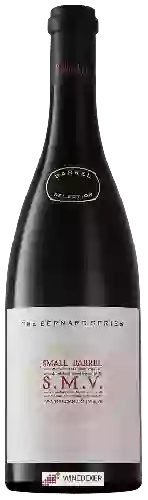
The Winery Bellingham of Franschhoek of Western Cape

The Winery Bellingham is one of the world's great estates. It offers 70 wines for sale in of Franschhoek to come and discover on site or to buy online.
Looking for the best Winery Bellingham wines in Franschhoek among all the wines in the region? Check out our tops of the best red, white or effervescent Winery Bellingham wines. Also find some food and wine pairings that may be suitable with the wines from this area. Learn more about the region and the Winery Bellingham wines with technical and enological descriptions.
How Winery Bellingham wines pair with each other generally quite well with dishes of beef, lamb or pork such as recipes of flemish beer stew, moroccan lamb stew or magic cake cheese quiche.
On the nose the red wine of Winery Bellingham. often reveals types of flavors of cherry, oaky or smoke and sometimes also flavors of earthy, blackberry or blueberry. In the mouth the red wine of Winery Bellingham. is a powerful with a nice balance between acidity and tannins.
The wine region of Franschhoek is located in the region of Coastal Region of Western Cape of South Africa. Wineries and vineyards like the Domaine Anthonij Rupert or the Domaine Holden Manz produce mainly wines red, white and sparkling. The most planted grape varieties in the region of Franschhoek are Cabernet-Sauvignon, Chardonnay and Merlot, they are then used in wines in blends or as a single variety. On the nose of Franschhoek often reveals types of flavors of cream, dried fruit or ash and sometimes also flavors of bell pepper, ripe blackberries or cigar.
In the mouth of Franschhoek is a powerful with a nice freshness. We currently count 78 estates and châteaux in the of Franschhoek, producing 472 different wines in conventional, organic and biodynamic agriculture. The wines of Franschhoek go well with generally quite well with dishes of beef, lamb or game (deer, venison).
How Winery Bellingham wines pair with each other generally quite well with dishes of shellfish, spicy food or lean fish such as recipes of knife feet, kefta or fish soup.
On the nose the white wine of Winery Bellingham. often reveals types of flavors of pineapple, cream or grapefruit and sometimes also flavors of oaky, tropical or citrus. In the mouth the white wine of Winery Bellingham. is a with a nice freshness.
Cabernet Franc is one of the oldest red grape varieties in Bordeaux. The Libourne region is its terroir where it develops best. The terroirs of Saint-Emilion and Fronsac allow it to mature and develop its best range of aromas. It is also the majority in many blends. The very famous Château Cheval Blanc, for example, uses 60% Cabernet Franc. The wines produced with Cabernet Franc are medium in colour with fine tannins and subtle aromas of small red fruits and spices. When blended with Merlot and Cabernet Sauvignon, it brings complexity and a bouquet of aromas to the wine. It produces fruity wines that can be drunk quite quickly, but whose great vintages can be kept for a long time. It is an earlier grape variety than Cabernet Sauvignon, which means that it is planted as far north as the Loire Valley. In Anjou, it is also used to make sweet rosé wines. Cabernet Franc is now used in some twenty countries in Europe and throughout the world.
How Winery Bellingham wines pair with each other generally quite well with dishes of veal, pork or game (deer, venison) such as recipes of moroccan veal tagine from hanane, stuffed potatoes or cassoulet with duck confit.
On the nose the pink wine of Winery Bellingham. often reveals types of flavors of microbio, tree fruit or citrus fruit and sometimes also flavors of red fruit.
Quality wine produced in a specific region. European designation that groups together appellation wines, i.e., in France, AOC and VDQS.
Planning a wine route in the of Franschhoek? Here are the wineries to visit and the winemakers to meet during your trip in search of wines similar to Winery Bellingham.
Tannat is a red grape variety from Béarn which belongs to the cotoïdes family. Present in several vineyards of France, it occupies nearly 3,000 ha. Its leaves are reddish with tan patches. Its bunches are either of normal size or larger. Its berries have a thin skin and are rounded. Its foliage has a swarthy appearance. This variety must be pruned long because it is vigorous. It likes sandy and gravelly soils. Tannat is often exposed to leafhoppers and mites. It is also somewhat susceptible to grey rot. It has 11 approved clones, including 474, 717 and 794. Once mature, this variety produces acidic, fruity, tannic, acidic and full-bodied wines. Various aromas emerge, notably tobacco, cinnamon and exotic wood. Tannat is rarely used alone. It is combined with iron-servadou to obtain a fruitier taste or with cabernet sauvignon to be more rounded.