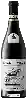
Winery BellinghamCabernet Sauvignon - Cabernet Franc
 Red wine



This wine is a blend of 2 varietals which are the Cabernet franc and the Cabernet-Sauvignon.
In the mouth this red wine is a powerful with a nice balance between acidity and tannins.
This wine generally goes well with poultry, beef or lamb.
Taste structure of the Cabernet Sauvignon - Cabernet Franc from the Winery Bellingham
Light | Bold | |
Smooth | Tannic | |
Dry | Sweet | |
Soft | Acidic |
In the mouth the Cabernet Sauvignon - Cabernet Franc of Winery Bellingham in the region of Western Cape is a powerful with a nice balance between acidity and tannins.
Wine flavors and olphactive analysis



On the nose the Cabernet Sauvignon - Cabernet Franc of Winery Bellingham in the region of Western Cape often reveals types of flavors of oaky, non oak or earth and sometimes also flavors of oak, spices or black fruit.
Food and wine pairings with Cabernet Sauvignon - Cabernet Franc
Pairings that work perfectly with Cabernet Sauvignon - Cabernet Franc



Original food and wine pairings with Cabernet Sauvignon - Cabernet Franc
The Cabernet Sauvignon - Cabernet Franc of Winery Bellingham matches generally quite well with dishes of beef, lamb or poultry such as recipes of venison stew to be prepared the day before, moroccan lamb shoulder or royal couscous (lamb, chicken, merguez).
Details and technical informations about Winery Bellingham's Cabernet Sauvignon - Cabernet Franc.
Discover the grape variety: Cabernet franc
Cabernet Franc is one of the oldest red grape varieties in Bordeaux. The Libourne region is its terroir where it develops best. The terroirs of Saint-Emilion and Fronsac allow it to mature and develop its best range of aromas. It is also the majority in many blends. The very famous Château Cheval Blanc, for example, uses 60% Cabernet Franc. The wines produced with Cabernet Franc are medium in colour with fine tannins and subtle aromas of small red fruits and spices. When blended with Merlot and Cabernet Sauvignon, it brings complexity and a bouquet of aromas to the wine. It produces fruity wines that can be drunk quite quickly, but whose great vintages can be kept for a long time. It is an earlier grape variety than Cabernet Sauvignon, which means that it is planted as far north as the Loire Valley. In Anjou, it is also used to make sweet rosé wines. Cabernet Franc is now used in some twenty countries in Europe and throughout the world.
Last vintages of this wine
The best vintages of Cabernet Sauvignon - Cabernet Franc from Winery Bellingham are 2013, 2011, 2009, 2004 and 2015.
Informations about the Winery Bellingham
The Winery Bellingham is one of of the world's great estates. It offers 84 wines for sale in the of Coastal Region to come and discover on site or to buy online.

The wine region of Coastal Region
The wine region of Coastal Region is located in the region of Western Cape of South Africa. Wineries and vineyards like the Domaine KWV or the Domaine KWV produce mainly wines red, white and sparkling. The most planted grape varieties in the region of Coastal Region are Pinotage, Cabernet-Sauvignon and Mourvèdre, they are then used in wines in blends or as a single variety. On the nose of Coastal Region often reveals types of flavors of cherry, orange or mango and sometimes also flavors of guava, gooseberry or passion fruit.
The wine region of Western Cape
The Western Cape is home to the vast majority of the South African wine industry, and the country's two most famous wine regions, Stellenbosch and Paarl. The city of Cape Town serves as the epicenter of the Cape Winelands, a mountainous, biologically diverse area in the south-western corner of the African continent. A wide variety of wines are produced here. Wines from the Shiraz and Pinotage">Pinotage grape varieties can be fresh and juicy or Full-bodied and gutsy.
The word of the wine: Ancestral method
A method of making certain sparkling wines such as blanquette de Limoux, sparkling gaillac or clairette de Die, which consists of a second fermentation in the bottle based on natural sugars and yeasts naturally brought by the grapes (unlike the méthode champenoise, which requires the addition of tirage liquor).