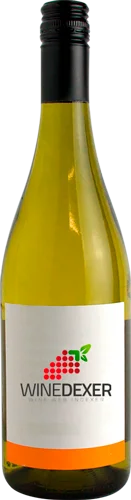
The Winery Poggio Argentale of Tuscany

The Winery Poggio Argentale is one of the best wineries to follow in Toscane.. It offers 7 wines for sale in of Tuscany to come and discover on site or to buy online.
Looking for the best Winery Poggio Argentale wines in Tuscany among all the wines in the region? Check out our tops of the best red, white or effervescent Winery Poggio Argentale wines. Also find some food and wine pairings that may be suitable with the wines from this area. Learn more about the region and the Winery Poggio Argentale wines with technical and enological descriptions.
How Winery Poggio Argentale wines pair with each other generally quite well with dishes of pasta, vegetarian or appetizers and snacks such as recipes of tagliatelle with seafood and saffron cream, leek, goat cheese and bacon quiche or tuna wraps.
Tuscany is one of the most famous and prolific wine regions in Europe. It is best known for its Dry red wines made from Sangiovese grapes, which dominate production. These include Chianti, Brunello di Montalcino and Vino Nobile di Montepulciano. The region's Vin Santo is also highly prized, as are its passito dessert wines, though these are produced in comparatively tiny quantities.
Dry whites are probably less familiar to most consumers - except perhaps Vernaccia di San Gimignano. Located in Central Italy, Tuscany borders Liguria and Emilia-Romagna to the North, Umbria and Marche to the east and Lazio to the South. Its western border is formed by the Tyrrhenian Sea. The picturesque rolling hills, medieval villages and cypress-lined avenues attract tourists and help promote the wines.
How Winery Poggio Argentale wines pair with each other generally quite well with dishes of beef, lamb or veal such as recipes of roast monkfish with bacon, oriental lamb skewers or alsatian fondue.
On the nose the red wine of Winery Poggio Argentale. often reveals types of flavors of red fruit. In the mouth the red wine of Winery Poggio Argentale. is a with a nice balance between acidity and tannins.
Originally from Italy, it is the famous Sangiovese of Tuscany producing the famous wines of Brunello de Montalcino and Chianti. This variety is registered in the Official Catalogue of Wine Grape Varieties, list A1. According to recent genetic analysis, it is the result of a natural cross between the almost unknown Calabrese di Montenuovo (mother) and Ciliegiolo (father).
How Winery Poggio Argentale wines pair with each other generally quite well with dishes of shellfish, vegetarian or appetizers and snacks such as recipes of spanish seafood paella, tuna, pepper and tomato quiche or beet hummus dip.
A tender wine with little tannin.
How Winery Poggio Argentale wines pair with each other generally quite well with dishes of beef, veal or pork such as recipes of tata simone's dumplings, pork shank stew or basque chicken with chorizo.
The vermentino grape variety was widespread in Italy, Sardinia and Corsica. Today, Vermentino is grown in the regions bordering the Mediterranean, mainly in Provence (Côtes de Provence, Bellet), Corsica (Corse Calvi), Languedoc (Côtes du Roussillon, Costières de Nîmes) and the Rhône Valley (Côtes du Luberon). Because it ripens late, Vermentino requires a warm climate for its development and can only be grown in regions with good sun exposure. Conversely, cold or temperate climates do not allow it to ripen properly. Vermentino is only susceptible to powdery mildew. When vinified on its own, Vermentino produces a single-variety dry white wine that is light and full-bodied with a pale yellow color. It can also be blended with other grape varieties such as Ugni Blanc, Cinsault and Grenache, in which case its low acidity makes it light and fresh. Vermentino belongs to the grape varieties of Ajaccio, Corsica and Corbières. The aromas released by this variety are multiple. One can detect notes of fresh apple, green almond, sweet spices, hawthorn, ripe pear and fresh pineapple.
Planning a wine route in the of Tuscany? Here are the wineries to visit and the winemakers to meet during your trip in search of wines similar to Winery Poggio Argentale.
It is said to be of Slovenian origin, where it is cultivated under the name of Prosekar, also known for a long time in Italy under the name of Glera. It should not be confused with prosecco lungo - although there is a family link - and prosecco nostrano, which is none other than Tuscany's malvasia. Note that Vitouska - another Italian grape variety - is the result of a natural intraspecific cross between Tuscan malvasia and Prosecco. Under the name of Glera, it is registered in the Official Catalogue of wine grape varieties list A. It can be found in practically all of the former Yugoslavia, and more surprisingly in Argentina, but is virtually unknown in France.