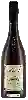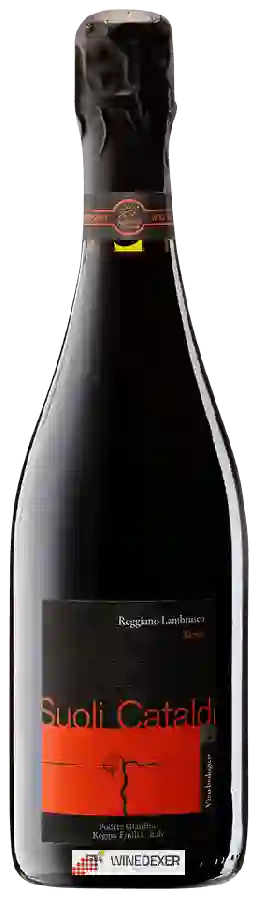
Winery Podere GiardinoSuoli Cataldi Reggiano Lambrusco Rosso
 Sparkling wine



This wine generally goes well with pork, poultry or rich fish (salmon, tuna etc).

Wine flavors and olphactive analysis


On the nose the Suoli Cataldi Reggiano Lambrusco Rosso of Winery Podere Giardino in the region of Emilia-Romagna often reveals types of flavors of earth, oak.
Food and wine pairings with Suoli Cataldi Reggiano Lambrusco Rosso
Pairings that work perfectly with Suoli Cataldi Reggiano Lambrusco Rosso



Original food and wine pairings with Suoli Cataldi Reggiano Lambrusco Rosso


The Suoli Cataldi Reggiano Lambrusco Rosso of Winery Podere Giardino matches generally quite well with dishes of pork, rich fish (salmon, tuna etc) or mature and hard cheese such as recipes of roast pork with prunes, christmas salad or cold vegetable cake.
Details and technical informations about Winery Podere Giardino's Suoli Cataldi Reggiano Lambrusco Rosso.
Discover the grape variety: Zalema
Simple, fresh whites best drunk young, with a pale golden robe, an airy palate with moderate acidity, and discreet signature aromas of citrus (lemon), green apple and floral notes. Also a base for fortified wines and Andalusian mistelles. A historic pillar of Huelva wines, also used for fortified wines and mistelles in south-west Spain. Native Spanish white grape of Andalusia, grown in Condado de Huelva.
Last vintages of this wine
The best vintages of Suoli Cataldi Reggiano Lambrusco Rosso from Winery Podere Giardino are 2014, 2012, 0
Informations about the Winery Podere Giardino
The Winery Podere Giardino is one of of the world's greatest estates. It offers 4 wines for sale in the of Reggiano to come and discover on site or to buy online.

The wine region of Reggiano
Historic heart of Lambrusco with Modena, Po Valley in Emilia-Romagna. Signature sparkling reds and rosés: Lambrusco Maestri, Marani, Salamino blend with Ancellotta (up to 15%, roundness and color). Generous wines with fine bubbles showing black cherry, blackberry, strawberry, violet and herbal hints, from secco to dolce, light tannins and tangy freshness — moderate alcohol. Historic partner of Emilian cuisine (Parmigiano, charcuterie, lasagne).
The wine region of Emilia-Romagna
Kingdom of Lambrusco: fresh, fruity sparkling reds (blackberry, cherry, violet), from gourmet dry to convivial off-dry, perfect with local charcuterie. World's best-selling sparkling wine on the Emilia side (Sorbara, Grasparossa, Salamino). East, Romagna: supple fruity Sangiovese, Albana (Italy's 1st white DOCG, 1987) ample and almondy. Also red Gutturnio and white Pignoletto.
The word of the wine: Part
Name of the barrel used in Burgundy (capacity of 228 litres).