The Winery Louis Tête of Beaujolais

Winery Louis Tête
The winery offers 79 different wines
3.6
Note - 1Note - 1Note - 1Note - 0.5Note - 0
Its wines get an average rating of 3.6.
It is ranked in the top 123 of the estates of Beaujolais.
It is located in Beaujolais

The Winery Louis Tête is one of the best wineries to follow in Beaujolais.. It offers 79 wines for sale in of Beaujolais to come and discover on site or to buy online.

Located in the heart of the prestigious Beaujolais wine region, the Louis Tête estate is inseparable from the history of French wine. Founded in 1900, this family estate has managed to preserve and pass on, from generation to generation, a wine tradition more than a century old. Nestled amid hilly, verdant vineyards, the Louis Tête estate spans over 35 hectares of 40 to 60-year-old vines. Its privileged geographical location, between the Beaujolais mountains to the north and the Saône plain to the south, gives the estate's wines a unique personality, a singular signature. The pink granite soils, typical of the region, are particularly conducive to the thriving of Gamay, the reigning grape variety of Beaujolais. The estate applies traditional agricultural methods, respecting the environment. The harvest is carried out by hand, obtained with respect for the terroirs and the people. Vineyard work follows the natural cycle of the seasons, without resorting to chemical treatments. This philosophy is reflected in Louis Tête wines, authentic reflections of their terroir. The Louis Tête estate's range is varied, ranging from Beaujolais Villages to the most renowned crus, such as Brouilly, Morgon or Fleurie. These wines fully express the uniqueness and finesse of the Gamay. They are recognized for their fruity aromas, great freshness, and finesse. Their aging potential is also worth noting, a challenge that few Beaujolais wines meet. A visit to the estate is a unique opportunity to discover the art of Beaujolais wine. The vaulted cellar, the old oak barrels, the endless vineyards, everything there is a hymn to the art of the vine and wine.
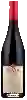
Top Winery Louis Tête wines

Looking for the best Winery Louis Tête wines in Beaujolais among all the wines in the region? Check out our tops of the best red, white or effervescent Winery Louis Tête wines. Also find some food and wine pairings that may be suitable with the wines from this area. Learn more about the region and the Winery Louis Tête wines with technical and enological descriptions.

The top red wines of Winery Louis Tête

Food and wine pairings with a red wine of Winery Louis Tête

How Winery Louis Tête wines pair with each other generally quite well with dishes of beef, lamb or game (deer, venison) such as recipes of braised beef with guinness, leg of lamb in a casserole or roast pork confit.

Organoleptic analysis of red wines of Winery Louis Tête

On the nose the red wine of Winery Louis Tête. often reveals types of flavors of cherry, blueberry or strawberries and sometimes also flavors of plum, raspberry or red cherry. In the mouth the red wine of Winery Louis Tête. is a with a nice freshness.

The best vintages in the red wines of Winery Louis Tête

  • 2008With an average score of 3.80/5
  • 2017With an average score of 3.74/5
  • 2019With an average score of 3.68/5
  • 2016With an average score of 3.64/5
  • 2015With an average score of 3.61/5
  • 2014With an average score of 3.59/5

The grape varieties most used in the red wines of Winery Louis Tête.

  • Gamay
  • Grenache
  • Gamay Noir
  • Pinot Noir
  • Shiraz/Syrah

Discovering the wine region of Beaujolais

Beaujolais is an important wine region in eastern France, famous for its vibrant, Fruity red wines made from Gamay. It is located immediately South of Burgundy, of which it is sometimes considered a Part, although it is in the administrative region of Rhône. The extensive plantings of Gamay in this region make Beaujolais one of the few regions in the world that is so concentrated on a single Grape variety. Pinot Noir is used in small quantities in red and rosé wines, but in the name of regional identity, it is being phased out and will only be allowed until the 2015 harvest.
Although best known for its red wines, the region also produces white Beaujolais Blanc, from Chardonnay and Aligote. These two white wine varieties are also sometimes used in local red wines, in which they can make up to 15% of the Final blend. There are several forms of Beaujolais red wine: standard Beaujolais (including Beaujolais Supérieur), Beaujolais Villages and the Young, characterful Beaujolais Nouveau. The highest quality wines of the region are those of the ten Beaujolais crus - ten wine regions Long recognized as the best in the region.
Discover the grape variety: Gamay noir

Gamay is a Burgundian grape variety that has existed since the 14th century. For fear of competition with the pinot noir of Burgundy, gamay was finally uprooted and planted in the Beaujolais region, from Mâcon to Lyon. These siliceous and granitic soils suit it perfectly, and it gives its best here. But it is also planted all over France, such as in Lorraine, in the Loire Valley, in Bugey, in Savoie and in Auvergne. Gamay is early and very productive and needs to be limited so that quality prevails over quantity. Short winter pruning of the shoots and high density of vines per hectare are the methods that allow it to produce very fruity, fresh and greedy red wines. Gamay is also very popular in red wine futures, and produces wines from the Beaujolais region with very interesting character and ageing potential. The AOCs Crémant-de-Bourgogne, Mâcon, Anjou, Touraine, Rosé de vallée de la Loire, Côtes-d'Auvergne, Saint-Pourçain, Bugey, Gaillac, Côtes du Luberon... and many vins de pays are proud of it. Today, about 36,000 hectares of Gamay are cultivated in France, including 22,000 hectares in Beaujolais.

The top pink wines of Winery Louis Tête

Food and wine pairings with a pink wine of Winery Louis Tête

How Winery Louis Tête wines pair with each other generally quite well with dishes of beef such as recipes of roast beef with garlic.

The grape varieties most used in the pink wines of Winery Louis Tête.

  • Gamay

The word of the wine: Hat

Solid part (marc), composed of pips and skins (sometimes of the stalk), which forms at the top of the tank during fermentation. The pigeage consists in breaking this cap to put back in suspension these elements and to favour the exchanges between the juice and the skins.

The top sparkling wines of Winery Louis Tête

Food and wine pairings with a sparkling wine of Winery Louis Tête

How Winery Louis Tête wines pair with each other generally quite well with dishes of shellfish, poultry or appetizers and snacks such as recipes of shrimp risotto with curry, chicken risotto with curry or fresh sardine rillettes.

The grape varieties most used in the sparkling wines of Winery Louis Tête.

  • Chardonnay
  • Pinot Noir
  • Aligoté
  • Gamay

Discover the grape variety: Chardonnay

The white Chardonnay is a grape variety that originated in France (Burgundy). It produces a variety of grape specially used for wine making. It is rare to find this grape to eat on our tables. This variety of grape is characterized by small bunches, and small grapes. White Chardonnay can be found in many vineyards: South West, Burgundy, Jura, Languedoc & Roussillon, Cognac, Bordeaux, Beaujolais, Savoie & Bugey, Loire Valley, Champagne, Rhone Valley, Armagnac, Lorraine, Alsace, Provence & Corsica.

Discover other wineries and winemakers neighboring the Winery Louis Tête

Planning a wine route in the of Beaujolais? Here are the wineries to visit and the winemakers to meet during your trip in search of wines similar to Winery Louis Tête.

Discover the grape variety: Aligoté

Aligoté is an ancient Burgundian grape variety (it has different names depending on the region in which it is grown: griset blanc in Beaune, giboudot blanc in the Chalonnais or troyen blanc in the Aube), mainly used in the production of Bourgogne-Aligoté, Bouzeron and Crémant-de-Bourgogne.aligoté is a medium-fine white grape variety, quite productive, which gives clear, acidic, fresh and light white wines. An anecdote often says that it was a member of the clergy named Kir who gave it its letters of nobility by adding it to blackcurrant cream to prepare an aperitif.produced on more than 1,600 hectares in Burgundy, aligoté has also been exported. It is also cultivated in Eastern Europe (Ukraine, Romania), California, Canada and Chile, representing more than 20,000 hectares in the world.