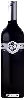
The Winery La Pauline of Vin de Pays of Pays d'Oc
Winery La Pauline
The winery offers 51 different wines
3.5


Note - 1Note - 1Note - 1Note - 0.5Note - 0
Its wines get an average rating of 3.5.
It is ranked in the top 1084 of the estates of Pays d'Oc.
It is located in Vin de Pays in the region of Pays d'Oc

The Winery La Pauline is one of the best wineries to follow in Vin de Pays.. It offers 51 wines for sale in of Vin de Pays to come and discover on site or to buy online.
Top Winery La Pauline wines

Looking for the best Winery La Pauline wines in Vin de Pays among all the wines in the region? Check out our tops of the best red, white or effervescent Winery La Pauline wines. Also find some food and wine pairings that may be suitable with the wines from this area. Learn more about the region and the Winery La Pauline wines with technical and enological descriptions.

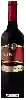
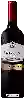
The top red wines of Winery La Pauline

Food and wine pairings with a red wine of Winery La Pauline

How Winery La Pauline wines pair with each other generally quite well with dishes of beef, pasta or veal such as recipes of kafta bil saniyeh (lebanese dish), pad thai or provencal veal tendrons.

Organoleptic analysis of red wines of Winery La Pauline

On the nose the red wine of Winery La Pauline. often reveals types of flavors of vanilla, cheese or non oak and sometimes also flavors of microbio, oak or spices. In the mouth the red wine of Winery La Pauline. is a powerful with a nice balance between acidity and tannins.
The best vintages in the red wines of Winery La Pauline

  • 2008With an average score of 3.57/5
  • 2011With an average score of 3.55/5
  • 2009With an average score of 3.52/5
  • 2015With an average score of 3.47/5
  • 2014With an average score of 3.47/5
  • 2016With an average score of 3.46/5

The grape varieties most used in the red wines of Winery La Pauline.
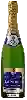
  • Merlot
  • Cabernet Sauvignon
  • Shiraz/Syrah
  • Grenache
  • Mourvedre
  • Petit Verdot

Discovering the wine region of Vin de Pays

Vin de Pays (VDP), the French national equivalent of PGI (Protected Geographical Indication) at the European level, is a quality category of French wines, positioned between Vin de Table (VDT) and Appellation d'Origine Contrôlée (AOC). This layer of the French appellation system was initially introduced in September 1968 by the INAO, the official appellation authority. It underwent several early revisions in the 1970s, followed by substantial changes in September 2000 and again in 2009, when all existing VDT titles were automatically registered with the European Union as PGI. Producers retain the choice of using either the VDP or PGI titles on their labels, or both - in the form "IGP-Vin de Pays".

There are now more than 150 VDP/IGP titles, mainly covering the southern third of France. The "Vin de Pays" level is intended to benefit both consumers and wine producers. It allows consumers to know clearly where a wine comes from, while producers are empowered to produce wine outside the constraints of traditional AOC laws. The most obvious freedoms are the higher yields allowed and a more comprehensive list of permitted Grape varieties.
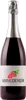
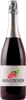
The top sparkling wines of Winery La Pauline

Food and wine pairings with a sparkling wine of Winery La Pauline

How Winery La Pauline wines pair with each other generally quite well with dishes of pork, rich fish (salmon, tuna etc) or vegetarian such as recipes of mushroom, bacon and gruyere quiche, sea bass in mustard and rosemary wrappers or magic cake cheese quiche.

The best vintages in the sparkling wines of Winery La Pauline

  • 2016With an average score of 4.10/5
  • 2014With an average score of 3.70/5
  • 2013With an average score of 3.50/5
  • 2012With an average score of 3.40/5

The grape varieties most used in the sparkling wines of Winery La Pauline.

  • Chardonnay
  • Mauzac Blanc
  • Cabernet Sauvignon
  • Merlot
  • Pinot Noir
  • Aligoté

Discover the grape variety: Petit Verdot

Petit Verdot noir is a grape variety that originated in France (southwest). It produces a variety of grape specially used for wine making. It is rare to find this grape to eat on our tables. This variety of grape is characterized by small bunches and small grapes. Petit Verdot noir can be found in several vineyards: South-West, Languedoc & Roussillon, Cognac, Bordeaux, Rhone valley, Provence & Corsica, Loire valley, Savoie & Bugey, Beaujolais, Armagnac.

The top white wines of Winery La Pauline

Food and wine pairings with a white wine of Winery La Pauline

How Winery La Pauline wines pair with each other generally quite well with dishes of pasta, vegetarian or poultry such as recipes of quiche with tartiflette, quiche without pastry, courgette and blue cheese or pasta carbonara.

Organoleptic analysis of white wines of Winery La Pauline

On the nose the white wine of Winery La Pauline. often reveals types of flavors of oaky, microbio or oak. In the mouth the white wine of Winery La Pauline. is a powerful.

The best vintages in the white wines of Winery La Pauline

  • 2019With an average score of 3.60/5
  • 2018With an average score of 3.59/5
  • 2013With an average score of 3.56/5
  • 2015With an average score of 3.55/5
  • 2017With an average score of 3.55/5
  • 2016With an average score of 3.43/5

The grape varieties most used in the white wines of Winery La Pauline.

  • Sauvignon Blanc
  • Chardonnay
  • Viognier
  • Grenache Blanc
  • Grenache
  • Colombard

The word of the wine: Alcoholic fermentation

Transformation of sugars into alcohol under the effect of yeast. These yeasts exist in their natural state in the vineyards and in the cellars. Artificial seeding with selected yeasts is however very often practiced.

The top pink wines of Winery La Pauline

Food and wine pairings with a pink wine of Winery La Pauline

How Winery La Pauline wines pair with each other generally quite well with dishes of pasta, vegetarian or appetizers and snacks such as recipes of fried rice noodles with chicken, light tuna-tomato quiche (without cream) or toast with foie gras and gingerbread.

The best vintages in the pink wines of Winery La Pauline

  • 2019With an average score of 3.70/5
  • 2018With an average score of 3.70/5
  • 2013With an average score of 3.60/5

The grape varieties most used in the pink wines of Winery La Pauline.

  • Shiraz/Syrah
  • Grenache

Discover the grape variety: Cabernet franc

Cabernet Franc is one of the oldest red grape varieties in Bordeaux. The Libourne region is its terroir where it develops best. The terroirs of Saint-Emilion and Fronsac allow it to mature and develop its best range of aromas. It is also the majority in many blends. The very famous Château Cheval Blanc, for example, uses 60% Cabernet Franc. The wines produced with Cabernet Franc are medium in colour with fine tannins and subtle aromas of small red fruits and spices. When blended with Merlot and Cabernet Sauvignon, it brings complexity and a bouquet of aromas to the wine. It produces fruity wines that can be drunk quite quickly, but whose great vintages can be kept for a long time. It is an earlier grape variety than Cabernet Sauvignon, which means that it is planted as far north as the Loire Valley. In Anjou, it is also used to make sweet rosé wines. Cabernet Franc is now used in some twenty countries in Europe and throughout the world.

Discover other wineries and winemakers neighboring the Winery La Pauline

Planning a wine route in the of Vin de Pays? Here are the wineries to visit and the winemakers to meet during your trip in search of wines similar to Winery La Pauline.

Discover the grape variety: Glera

It is said to be of Slovenian origin, where it is cultivated under the name of Prosekar, also known for a long time in Italy under the name of Glera. It should not be confused with prosecco lungo - although there is a family link - and prosecco nostrano, which is none other than Tuscany's malvasia. Note that Vitouska - another Italian grape variety - is the result of a natural intraspecific cross between Tuscan malvasia and Prosecco. Under the name of Glera, it is registered in the Official Catalogue of wine grape varieties list A. It can be found in practically all of the former Yugoslavia, and more surprisingly in Argentina, but is virtually unknown in France.