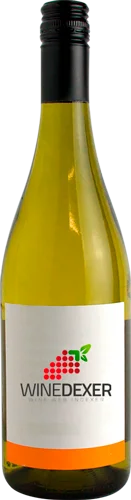
The La Cave de Geneve of Genève

La Cave de Geneve
The winery offers 55 different wines
3.6


Note - 1Note - 1Note - 1Note - 0.5Note - 0
Its wines get an average rating of 3.6.
This estate is part of the La Cave de Geneve.
It is ranked in the top 14 of the estates of Genève.
It is located in Genève

The La Cave de Geneve is one of the world's great estates. It offers 55 wines for sale in of Genève to come and discover on site or to buy online.
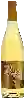
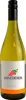
Top La Cave de Geneve wines

Looking for the best La Cave de Geneve wines in Genève among all the wines in the region? Check out our tops of the best red, white or effervescent La Cave de Geneve wines. Also find some food and wine pairings that may be suitable with the wines from this area. Learn more about the region and the La Cave de Geneve wines with technical and enological descriptions.

The top white wines of La Cave de Geneve

Food and wine pairings with a white wine of La Cave de Geneve

How La Cave de Geneve wines pair with each other generally quite well with dishes of poultry, lean fish or mild and soft cheese such as recipes of piperade, sliced marinated swordfish cooked a la plancha or veal cutlets parmigiana.

Organoleptic analysis of white wines of La Cave de Geneve

On the nose the white wine of La Cave de Geneve. often reveals types of flavors of earth, microbio or tree fruit and sometimes also flavors of citrus fruit. In the mouth the white wine of La Cave de Geneve. is a with a nice freshness.

The best vintages in the white wines of La Cave de Geneve

  • 2014With an average score of 3.60/5
  • 2017With an average score of 3.60/5
  • 2013With an average score of 3.55/5
  • 2008With an average score of 3.55/5
  • 0With an average score of 3.46/5
  • 2012With an average score of 3.41/5

The grape varieties most used in the white wines of La Cave de Geneve.

  • Chasselas
  • Chardonnay
  • Sauvignon Blanc
  • Viognier
  • Pinot Blanc
  • Riesling

Discovering the wine region of Genève

Geneva, at the western end of Lac Léman (Lake Geneva), is the second-largest city in Switzerland and the country's third-largest wine producing canton after Valais and Vaud. Although not famously associated with wine, the city and its environs are home to numerous Vineyards and wineries, some within just a few miles of the Center. At 1,400 hectares (3,500 acres), Geneva accounts for 10 percent of the country's vineyard area. Gamay is the predominant variety here, with the Swiss workhorse Chasselas (often labelled "Fendant") and Pinot Noir taking second and third place respectively.

Other popular regional grapes include the hardy, oft-blended combination of Gamaret and Garanoir as well as the more international Merlot and Chardonnay. The red-white split is 56 percent in favor of red. The canton is home to numerous (around 95) small, generally family-run, wineries often with a large number of Varietal wines (albeit in small quantities). While many producers are clustered around the larger viticultural areas of Dardagny, Satigny, Peissy, and Soral, wineries are dotted around the city, some a stone's throw from the French border nearby.

The region also boasts 22 Premier Cru appellations, including Coteau de Bossy, Grand Carraz and Rougemont. Broadly speaking, the vineyards around Geneva are separated into three officially named areas: the Right Bank (790 hectares/1,900 acres), known as Mandement, encompassing the large Satigny and Dardagny zones as well as vineyards further northeast in Collex-Bossy and Céligny (towards the wider Vaud area on the "right bank" of the lake); Entre Arve et Lac (283 hectares/699 acres), nominally on the Left Bank of the Rhône river and the lake, this encompasses the Southeastern quadrant of the canton (south of the lake and east of the Arve river that flows northwest into the Rhône, joining it in the city) out towards the French side of the lake; it forms a Rough triangle between the towns of Cologny, Anières and Jussy; Entre Arve et Rhône (270 hectares/660 acres), on the western side of the city, including the areas of Lully, Veyrier, Soral and Laconnex The region also counts just over 120 hectares (300 acres) of vineyard officially in France but worked by Genevan viticulturists for decades. These vineyards, in what is called the "zone franche" ("Open zone"), are appended to the Geneva appellation. The Climate in Geneva is moderated significantly by the presence of the lake, which prevents summer temperatures from rising dramatically and slows the effects of frost and snow in winter.

The top red wines of La Cave de Geneve

Food and wine pairings with a red wine of La Cave de Geneve

How La Cave de Geneve wines pair with each other generally quite well with dishes of beef, lamb or pork such as recipes of fast and, fried vegetables with merguez and chipo or sauté of pork with cider.

Organoleptic analysis of red wines of La Cave de Geneve

On the nose the red wine of La Cave de Geneve. often reveals types of flavors of red fruit, cheese or non oak and sometimes also flavors of earth, microbio or oak.

The best vintages in the red wines of La Cave de Geneve

  • 2018With an average score of 4.00/5
  • 2020With an average score of 3.90/5
  • 2017With an average score of 3.85/5
  • 2016With an average score of 3.82/5
  • 2019With an average score of 3.80/5
  • 2015With an average score of 3.70/5

The grape varieties most used in the red wines of La Cave de Geneve.

  • Gamay
  • Merlot
  • Gamaret
  • Cabernet Sauvignon
  • Cabernet Franc
  • Shiraz/Syrah

Discover the grape variety: Sauvignon blanc

Originally from Bordeaux, Sauvignon, or Sauvignon Blanc, is reputed to be one of the best French grape varieties for white wine. It is a white grape variety, not to be confused with Sauvignon Gris and its pale yellow color, or with Cabernet Sauvignon which produces red wines. Particularly famous thanks to Sancerre, Sauvignon Blanc is cultivated as far as New Zealand, where it produces great wines whose reputation is well established.

The top sweet wines of La Cave de Geneve

Food and wine pairings with a sweet wine of La Cave de Geneve

How La Cave de Geneve wines pair with each other generally quite well with dishes of rich fish (salmon, tuna etc), shellfish or spicy food such as recipes of half-cooked bluefin tuna, rougaille tomatoes (madagascar) or chicken tagine with olives and potatoes.

Organoleptic analysis of sweet wines of La Cave de Geneve

On the nose the sweet wine of La Cave de Geneve. often reveals types of flavors of apricot, tree fruit or citrus fruit.

The best vintages in the sweet wines of La Cave de Geneve

  • 2018With an average score of 4.50/5
  • 2017With an average score of 4.40/5
  • 2016With an average score of 4.10/5
  • 0With an average score of 3.72/5

The grape varieties most used in the sweet wines of La Cave de Geneve.

  • Pinot Gris
  • Gewürztraminer
  • Sauvignon Blanc
  • Muscatel

The word of the wine: Table wine

Everything that is not VQPRD (European designation for all appellation wines: quality wine produced in a specific region). In principle, the bottom of the ladder. But, as in Italy a decade ago (Vino da Tavola), this category is also a refuge for wines that are out of the ordinary, whose producers refuse to accept certain grape variety or vinification dictates.

The top sparkling wines of La Cave de Geneve

Food and wine pairings with a sparkling wine of La Cave de Geneve

How La Cave de Geneve wines pair with each other generally quite well with dishes such as recipes .

The best vintages in the sparkling wines of La Cave de Geneve

  • 0With an average score of 3.60/5
  • 2015With an average score of 3.50/5

The grape varieties most used in the sparkling wines of La Cave de Geneve.

  • Chardonnay

Discover the grape variety: Pinot gris

Pinot Gris is a grey grape variety mutated from Pinot Noir. It has its origins in Burgundy, where it is called pinot-beurot in reference to the colour of the grey robes worn by the monks of the region. Established in Alsace since the 17th century, pinot gris was called tokay until 2007. It is made up of bunches of small berries that vary in colour from pink to blue-grey. It is particularly well suited to the continental climate because it is resistant to the cold in winter and to spring frosts. This variety also likes dry limestone soils with plenty of sunshine in the summer. Pinot Gris is well suited to late harvesting or to the selection of noble grapes, depending on the year and the concentration of sugars in the berries. Pinot Gris wines are distinguished by their aromatic complexity of white fruits, mushrooms, honey, vanilla, cinnamon, etc., and their great finesse. In the Loire Valley, pinot gris is used in the Coteaux-d'Ancenis appellations. It gives dry or sweet wines with pear and peach aromas.

The top pink wines of La Cave de Geneve

Food and wine pairings with a pink wine of La Cave de Geneve

How La Cave de Geneve wines pair with each other generally quite well with dishes of beef, veal or pork such as recipes of chicken, beef and lamb couscous (morocco), country-style veal roulades with risotto or chinchards with white wine and grapes.

The best vintages in the pink wines of La Cave de Geneve

  • 0With an average score of 3.24/5

The grape varieties most used in the pink wines of La Cave de Geneve.

  • Gamay
  • Pinot Noir

The word of the wine: Bitter

Normal for certain young red wines rich in tannin, bitterness is in other cases a defect due to a bacterial disease.

Discover other wineries and winemakers neighboring the La Cave de Geneve

Planning a wine route in the of Genève? Here are the wineries to visit and the winemakers to meet during your trip in search of wines similar to La Cave de Geneve.

Discover the grape variety: Cabernet franc

Cabernet Franc is one of the oldest red grape varieties in Bordeaux. The Libourne region is its terroir where it develops best. The terroirs of Saint-Emilion and Fronsac allow it to mature and develop its best range of aromas. It is also the majority in many blends. The very famous Château Cheval Blanc, for example, uses 60% Cabernet Franc. The wines produced with Cabernet Franc are medium in colour with fine tannins and subtle aromas of small red fruits and spices. When blended with Merlot and Cabernet Sauvignon, it brings complexity and a bouquet of aromas to the wine. It produces fruity wines that can be drunk quite quickly, but whose great vintages can be kept for a long time. It is an earlier grape variety than Cabernet Sauvignon, which means that it is planted as far north as the Loire Valley. In Anjou, it is also used to make sweet rosé wines. Cabernet Franc is now used in some twenty countries in Europe and throughout the world.