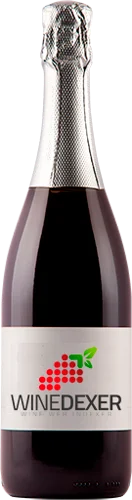
The Winery Émilie Laurance of Crémant de Loire of Loire Valley

The Winery Émilie Laurance is one of the world's great estates. It offers 4 wines for sale in of Crémant de Loire to come and discover on site or to buy online.
Looking for the best Winery Émilie Laurance wines in Crémant de Loire among all the wines in the region? Check out our tops of the best red, white or effervescent Winery Émilie Laurance wines. Also find some food and wine pairings that may be suitable with the wines from this area. Learn more about the region and the Winery Émilie Laurance wines with technical and enological descriptions.
How Winery Émilie Laurance wines pair with each other generally quite well with dishes of shellfish, poultry or appetizers and snacks such as recipes of pageot, quiche with bacon and gruyère cheese or prunes with bacon.
On the nose the sparkling wine of Winery Émilie Laurance. often reveals types of flavors of non oak, microbio or oak and sometimes also flavors of tree fruit, citrus fruit.
Crémant de Loire is the regional appellation for Sparkling wines from Anjou, Saumur and Touraine - the heart of France's Loire Valley wine region. Chenin Blanc is the main ingredient. A wide range of other traditional Loire grape varieties can be used. These include the obvious choices of Chardonnay and Pinot Noir, but also Cabernet Franc, Pineau d'Aunis, Grolleau Noir and even Cabernet Sauvignon.
The star grape of the upper Loire, Sauvignon Blanc, is a notable (and intentional) omission here. Despite its high Acidity, Loire Sauvignon is not considered well-suited to sparkling wine production. It is interesting to note, however, that this grape variety is not excluded from Bordeaux sparkling wines. A good Crémant de Loire has a tight, persistent effervescence that denotes a traditional method rather than Tank production, and a Complex, nutty, slightly honeyed Nose.
Planning a wine route in the of Crémant de Loire? Here are the wineries to visit and the winemakers to meet during your trip in search of wines similar to Winery Émilie Laurance.
American, resulting from a natural cross between taylor (Vitis Labrusca x Vitis Riparia) and Vitis Riparia, the seeds of the taylor then sown in 1869 by Otto Wasserzicher in Nauvoo, Illinois. Noah has been used extensively as a progenitor by hybridizers such as Baco, Bertille-Seyve, Castel, Gaillard and Seibel, the best known being baco blanc or baco 22A (folle blanche x Noah). In France, it is one of the six hybrids prohibited since 1935 (included in European regulations): clinton, herbemont, isabelle, jacquez, Noah and othello. Today, it has practically disappeared and can sometimes be found in private homes established in vineyards.