The Winery Monteclayr of Crémant de Loire of Loire Valley
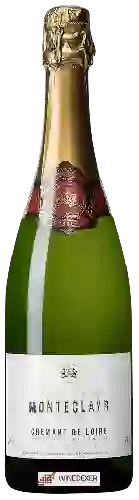
The Winery Monteclayr is one of the world's great estates. It offers 2 wines for sale in of Crémant de Loire to come and discover on site or to buy online.
Looking for the best Winery Monteclayr wines in Crémant de Loire among all the wines in the region? Check out our tops of the best red, white or effervescent Winery Monteclayr wines. Also find some food and wine pairings that may be suitable with the wines from this area. Learn more about the region and the Winery Monteclayr wines with technical and enological descriptions.
How Winery Monteclayr wines pair with each other generally quite well with dishes of shellfish, poultry or appetizers and snacks such as recipes of shrimp, coconut and ginger soup, turkey escalope with cream and shallots or emulsion of foie gras with pata negra.
Crémant de Loire is the regional appellation for Sparkling wines from Anjou, Saumur and Touraine - the heart of France's Loire Valley wine region. Chenin Blanc is the main ingredient. A wide range of other traditional Loire grape varieties can be used. These include the obvious choices of Chardonnay and Pinot Noir, but also Cabernet Franc, Pineau d'Aunis, Grolleau Noir and even Cabernet Sauvignon.
The star grape of the upper Loire, Sauvignon Blanc, is a notable (and intentional) omission here. Despite its high Acidity, Loire Sauvignon is not considered well-suited to sparkling wine production. It is interesting to note, however, that this grape variety is not excluded from Bordeaux sparkling wines. A good Crémant de Loire has a tight, persistent effervescence that denotes a traditional method rather than Tank production, and a Complex, nutty, slightly honeyed Nose.
Planning a wine route in the of Crémant de Loire? Here are the wineries to visit and the winemakers to meet during your trip in search of wines similar to Winery Monteclayr.
An ancient table grape of Spanish origin. Little known in France, it can still be found in Italy, Australia, the United States (California), Mexico where it is grown in pergolas, etc. It should not be confused with the molinara grown and known in Italy.

