The Winery 40 Knots of British Columbia
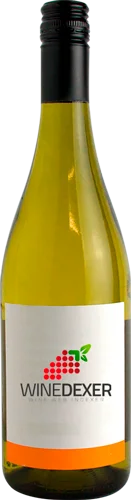
The Winery 40 Knots is one of the best wineries to follow in British Columbia.. It offers 30 wines for sale in of British Columbia to come and discover on site or to buy online.
Looking for the best Winery 40 Knots wines in British Columbia among all the wines in the region? Check out our tops of the best red, white or effervescent Winery 40 Knots wines. Also find some food and wine pairings that may be suitable with the wines from this area. Learn more about the region and the Winery 40 Knots wines with technical and enological descriptions.
How Winery 40 Knots wines pair with each other generally quite well with dishes of rich fish (salmon, tuna etc), shellfish or mature and hard cheese such as recipes of tuna flan with leek coulis, wok of shrimps with vegetables or savoy soup.
On the nose the white wine of Winery 40 Knots. often reveals types of flavors of oak, tree fruit or citrus fruit and sometimes also flavors of earth, tropical fruit or microbio. In the mouth the white wine of Winery 40 Knots. is a powerful with a nice freshness.
British Columbia is Canada's westernmost province, located on the edge of the Pacific Ocean. The diversity of landscapes here – from rainy islands to desert-like valley floors – means that a wide variety of Grapes are planted here. They include Chardonnay, Pinot Noir and Riesling, as well as Cabernet Sauvignon and Merlot.
While volumes are lower than those of the province of Ontario, British Columbia is home to a rapidly growing wine industry.
This is mostly located on the Southern edge of the province aLong the international border with the United States.
North to south, the province of British Columbia is longer than California and larger than Texas. However the entire wine industry occupies the southernmost 250 kilometers (150 miles) of the province, in a Select few regions where the macroClimate is favorable to premium viticulture.
The British Columbia wine authority recognizes Designated Viticultural Areas (DVAs) in the province:
Vancouver Island and the Gulf Islands have, as one would expect, the most maritime climates
Okanagan Valley and Similkameen Valley on the USA border, have climates which are more continental in character
Fraser Valley is located just west of Vancouver city and reaches inland from the coast, and transitions between the two climate types
In addition there are a number of regions were recognized as Geographic Indications in 2018.
They are often bracketed together under the "emerging" banner:
The Kootenays in the southwest corner of the province, where Pinot Noir is the main grape
Lillooet, in the Cariboo Chilcotin region and west of Kamloops, whose first Vineyard was planted in 2004
Shuswap, north of the Okanagan Valley, has around 40ha (100 acres) of vineyards, planted to cool climate varieties
Thompson Valley, inland and further north, is at the limit of cool climate winemaking. Riesling, Marquette, Maréchal Foch and Chardonnay are the main varieties
Most viticulture in British Columbia takes place in the Okanagan Valley, nestled between the Cascade and Columbia mountain ranges where Harsh weather systems from the west and north do not often reach. This long, narrow valley is considered to be Canada's only desert, and the Bordeaux varieties Cabernet Sauvignon and Merlot do well here, particularly in the south around Osoyoos. The region's few lakes serve to moderate temperatures here, and Warm days followed by cool nights give rise to a distinctively Bright style of wine.
How Winery 40 Knots wines pair with each other generally quite well with dishes of beef, veal or game (deer, venison) such as recipes of beef bourguignon with cookéo, sarthe pot or rabbit socks in gibelotte.
On the nose the red wine of Winery 40 Knots. often reveals types of flavors of red fruit, non oak or oak. In the mouth the red wine of Winery 40 Knots. is a with a nice freshness.
Pinot Gris is a grey grape variety mutated from Pinot Noir. It has its origins in Burgundy, where it is called pinot-beurot in reference to the colour of the grey robes worn by the monks of the region. Established in Alsace since the 17th century, pinot gris was called tokay until 2007. It is made up of bunches of small berries that vary in colour from pink to blue-grey. It is particularly well suited to the continental climate because it is resistant to the cold in winter and to spring frosts. This variety also likes dry limestone soils with plenty of sunshine in the summer. Pinot Gris is well suited to late harvesting or to the selection of noble grapes, depending on the year and the concentration of sugars in the berries. Pinot Gris wines are distinguished by their aromatic complexity of white fruits, mushrooms, honey, vanilla, cinnamon, etc., and their great finesse. In the Loire Valley, pinot gris is used in the Coteaux-d'Ancenis appellations. It gives dry or sweet wines with pear and peach aromas.
How Winery 40 Knots wines pair with each other generally quite well with dishes of beef, veal or pork such as recipes of pork tongue with bacon and onions, home-made coq au vin or white cabbage with bacon.
On the nose the pink wine of Winery 40 Knots. often reveals types of flavors of tree fruit, red fruit.
Said of an odor reminiscent of musk.
How Winery 40 Knots wines pair with each other generally quite well with dishes such as recipes .
An intraspecific cross between Müller-Thurgau and Siegerrebe obtained in 1948 by Hans Breider (1908-1960) at the Bavarian Research Station for Viticulture and Horticulture in Veitsnöchheim (Germany). Almost unknown in France, it can be found in Germany, Belgium, England, the United States and Canada. Its early maturity and muscatel taste have sometimes led to it being offered as a table grape on market stalls.
Planning a wine route in the of British Columbia? Here are the wineries to visit and the winemakers to meet during your trip in search of wines similar to Winery 40 Knots.
Auxerrois is a white grape variety native to Lorraine, which is also found in Alsace and in the Loire Valley, where it took off in 1950. Its name comes from the nurseries in Auxerre where it found refuge during the Second World War. Often called Pinot Auxerrois, it is part of the Moselle, Alsace and Côtes-de-Toul AOC grape varieties. Auxerrois should not be confused with côt or malbec, which are red grape varieties from the Cahors region and which may bear the same name. The bunches of Auxerrois are of medium size with small berries. It is a semi-late grape variety whose buds only come out when temperatures are well above 10°C. Auxerrois wines are characterized by finesse and acidity and subtle aromas of exotic fruits, fruits and white flowers. In France, it represents 1,600 hectares of production and some small parcels of Auxerrois are also present in Luxembourg, Germany, Canada and South Africa (2,300 hectares in total).