The Château Pech de Loup of Limoux of Languedoc-Roussillon
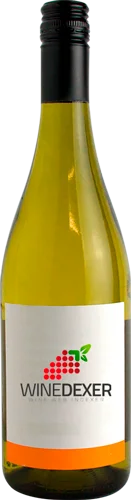
Château Pech de Loup
The winery offers 2 different wines
3.9


Note - 1Note - 1Note - 1Note - 1Note - 0
Its wines get an average rating of 3.9.
It is ranked in the top 204 of the estates of Languedoc-Roussillon.
It is located in Limoux in the region of Languedoc-Roussillon

The Château Pech de Loup is one of the best wineries to follow in Limoux.. It offers 2 wines for sale in of Limoux to come and discover on site or to buy online.
Top Château Pech de Loup wines

Looking for the best Château Pech de Loup wines in Limoux among all the wines in the region? Check out our tops of the best red, white or effervescent Château Pech de Loup wines. Also find some food and wine pairings that may be suitable with the wines from this area. Learn more about the region and the Château Pech de Loup wines with technical and enological descriptions.

The top white wines of Château Pech de Loup

Food and wine pairings with a white wine of Château Pech de Loup

How Château Pech de Loup wines pair with each other generally quite well with dishes of pasta, vegetarian or poultry such as recipes of pasta with goat cheese, thyme and bacon, tuna, pepper and tomato quiche or chicken wrap.

Organoleptic analysis of white wines of Château Pech de Loup

In the mouth the white wine of Château Pech de Loup. is a .

The best vintages in the white wines of Château Pech de Loup

  • 0With an average score of 4.10/5

Discovering the wine region of Limoux

Limoux is a relatively New appellation (created in 2003) in the eastern Part of the Aude region of Southern France, which applies to both red and white wines. The vineyards extend around the town that gave it its name, in the foothills of the Pyrenees east of the Languedoc-Roussillon/corbieres">Corbières and south of Carcassonne. Historically, this region is best known for its Sparkling wines, which are produced and sold under the appellations of Blanquette de Limoux and Crémant de Limoux. The vineyards here are higher and cooler than those of any other appellation in the Languedoc-Roussillon, and also further away from the moderating temperature influences of the Mediterranean.

This leads Limoux and its surroundings to produce a style of wine quite different from other appellations. This includes neighbours such as the Corbières. In Limoux Rouge, red wines are made primarily from Merlot (at least 50% of any AOC Limoux blend), supplemented by a wide range of other French red varieties. The blend must include three grape varieties, with the two most important accounting for no more than 90% of the total.

The top red wines of Château Pech de Loup

Food and wine pairings with a red wine of Château Pech de Loup

How Château Pech de Loup wines pair with each other generally quite well with dishes of beef, pasta or veal such as recipes of venison stew with red wine, pasta with parmesan cream and ham or roasted stuffed goose with mushroom sauce.

Organoleptic analysis of red wines of Château Pech de Loup

In the mouth the red wine of Château Pech de Loup. is a powerful with a nice balance between acidity and tannins.

The best vintages in the red wines of Château Pech de Loup

  • 0With an average score of 3.70/5

Discover the grape variety: Traminette

Interspecific crossing between 23416 Joannès Seyve (4.825 Bertille Seyve x 7053 Seibel) and the gewurztraminer obtained in 1965 by Herb Barrett of the University of Illinois (United States) and selected by the Experimental Station of Cornell University in Geneva (United States) In this country, it can be found in many wine-producing regions, as well as in Canada and Germany, but it is virtually unknown in France.

Discover other wineries and winemakers neighboring the Château Pech de Loup

Planning a wine route in the of Limoux? Here are the wineries to visit and the winemakers to meet during your trip in search of wines similar to Château Pech de Loup.

Discover the grape variety: Muscaris

An interspecific cross between Solaris and Muscat à petits grains blancs, obtained in Freiburg (Germany) in 1987 by Norbert Becker. It has the particularity of having only one gene for resistance to mildew and powdery mildew. Muscaris can be found in Germany, the Netherlands, Italy and France.
