The Winery Znovín Znojmo of Morava
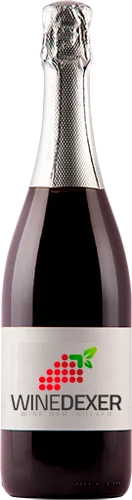
The Winery Znovín Znojmo is one of the world's great estates. It offers 147 wines for sale in of Morava to come and discover on site or to buy online.
Looking for the best Winery Znovín Znojmo wines in Morava among all the wines in the region? Check out our tops of the best red, white or effervescent Winery Znovín Znojmo wines. Also find some food and wine pairings that may be suitable with the wines from this area. Learn more about the region and the Winery Znovín Znojmo wines with technical and enological descriptions.
How Winery Znovín Znojmo wines pair with each other generally quite well with dishes such as recipes .
On the nose the sparkling wine of Winery Znovín Znojmo. often reveals types of flavors of non oak, oak or tree fruit.
Moravia, with roughly 95 percent of the nation's Vine plantings, is the engine room of the Czech Republic's wine industry. The Center of intensively farmed bulk-wine production is also showing great promise as a producer of quality white wines. This is largely thanks to its cool Climate, comparable in many ways to that in Nahe or Pfalz, the white-wine specialists a few hundred miles west in Germany. Moravian winelands enjoy a Vineyard year well suited to the production of Complex aromatics with good Acidity.
Moravia's climate is described by the Czech wine authorities as 'transient': widely continental but with occasional maritime influences when weather patterns blow in from the Atlantic. Brno, the largest Moravian city, is located almost perfectly at the heart of continental Europe, equidistant from the English Channel and the Black Sea. Its continental position and the local topography mean it is relatively Dry (average annual rainfall amounts to little more than 20 inches/50cm) and sunny (2244 sunshine hours on average each year).
As a result of this mild, Bright growing season, aromatic whites such as the Loire Valley's Sauvignon Blanc and the Alsatian trio of Pinot Gris, Gewurztraminer and Riesling are able to ripen slowly and completely.
The grapes develop high levels of flavonoids while retaining the pronounced, crisp acidity which makes them so refreshing. Moravia's position on the 49th parallel puts it at the same latitude as northern Alsace, as well as Champagne and the German regions mentioned above. Its first foray onto the international wine market has shown it capable of taking on these celebrated heavyweights of the white-wine world.
Although still a small part of the overall wine scene, red wine is improving in Moravia, mostly due to technological advances in winemaking rather than any climatic change or newly discovered terroirs.
How Winery Znovín Znojmo wines pair with each other generally quite well with dishes of shellfish, spicy food or poultry such as recipes of natural breton lobster, chicken tagine with apricots or spinach and hard-boiled eggs with béchamel sauce.
On the nose the sweet wine of Winery Znovín Znojmo. often reveals types of flavors of vegetal, oak or black fruit and sometimes also flavors of red fruit, earth or tree fruit.
How Winery Znovín Znojmo wines pair with each other generally quite well with dishes of beef, lamb or spicy food such as recipes of beef pot au feu (grandma's style), chicken with merguez and tomatoes or crab matoutou.
On the nose the red wine of Winery Znovín Znojmo. often reveals types of flavors of oak, black fruit or red fruit and sometimes also flavors of non oak, earth or tree fruit.
Often followed by a name that allows for recognition and identification, the word "cuvée" designates a specific wine within the production of a winemaker. This wine is characterized by a specific grape variety, a type of maturation and an organoleptic profile. All the vintages of a domain constitute a range.
How Winery Znovín Znojmo wines pair with each other generally quite well with dishes of pork, rich fish (salmon, tuna etc) or vegetarian such as recipes of simple pork roast, fish balls or cream and tuna quiche.
On the nose the white wine of Winery Znovín Znojmo. often reveals types of flavors of microbio, oak or tree fruit and sometimes also flavors of earth, tropical fruit or citrus fruit.
Müller-Thurgau shows the character of its noble origins. This Swiss white grape variety is a cross between the royal madeleine and the riesling. The idea that the latter was crossed with the sylvaner is irrelevant. The variety can be recognized by its vigorous character and its semi-erect habit. Preferring rich soils and short prunings, the plant sees its buds open quite early. The buds are cottony and soft green in color. The slightly embossed and tormented blade, with 5 to 7 lobes, makes it possible to distinguish the adult leaves. The clusters appear compact, pyramidal or cylindrical in shape and small to medium in size. The flavour of the Müller-Turgau berries is reminiscent of Muscat. The juicy and crunchy pulp is revealed under a greyish skin. When ripe, the fruit has a mottled shell on a golden yellow background. Switzerland prefers to extract the juice from this variety. The wine made from it is rather heavy and does not keep well.
How Winery Znovín Znojmo wines pair with each other generally quite well with dishes of beef, lamb or spicy food such as recipes of beef tongue with mushrooms, chiche kebab in armenian or pho soup.
On the nose the pink wine of Winery Znovín Znojmo. often reveals types of flavors of citrus fruit.
Negociant-distributor. In Champagne, a company that buys finished wines in bottles that are dressed under a brand name with the merchant's own labels.
Planning a wine route in the of Morava? Here are the wineries to visit and the winemakers to meet during your trip in search of wines similar to Winery Znovín Znojmo.
Intraspecific crossing between frankenthal and riesling obtained in Germany in 1929 by August Karl Herold (1902/1973). In 1951 and by crossing it with the sylvaner, we obtained the juwel. It should be noted that there is a mutation of Kerner, discovered in 1974 and bearing the name of kernling, with grapes of pink-grey to red-grey colour at full maturity. Kerner can be found in Germany, Belgium, Slovenia, Austria, Switzerland, Italy, South Africa, Australia, the United States, Canada, Japan... practically unknown in France except in a few Moselle vineyards.