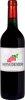
Winery Le DominicainCuvée Augustin Hanicotte Banyuls
 Natural sweet wine
This wine generally goes well with beef, lamb or mature and hard cheese.
Food and wine pairings with Cuvée Augustin Hanicotte Banyuls
Pairings that work perfectly with Cuvée Augustin Hanicotte Banyuls



Original food and wine pairings with Cuvée Augustin Hanicotte Banyuls

The Cuvée Augustin Hanicotte Banyuls of Winery Le Dominicain matches generally quite well with dishes of mature and hard cheese, blue cheese or aperitif such as recipes of salted cake with bacon, comté and onion, steak with bresse bleu cheese or kale chips.
Details and technical informations about Winery Le Dominicain's Cuvée Augustin Hanicotte Banyuls.
Discover the grape variety: Verdejo
An ancient grape variety that has been cultivated for a long time, mainly in the Rueda region of northwestern Spain. D.N.A. tests show that it is the result of a natural cross between Savagnin and Castellana Blanco. It should not be confused with the Verdelho, which is very well known in Portugal, and the Verdelho Branco, which is almost more widespread. The Verdejo is registered in the Official Catalogue of wine grape varieties list A. It can also be found in the United States (Virginia, California, etc.), Australia, Portugal, etc., but is practically unknown in France.
Informations about the Winery Le Dominicain
The Winery Le Dominicain is one of of the world's great estates. It offers 26 wines for sale in the of Banyuls to come and discover on site or to buy online.

The wine region of Banyuls
Banyuls wines come from the South-eastern Part of Roussillon, in the south of France, in the lower Pyrenees, a few kilometres from the Spanish border. These naturally Sweet wines are consumed both as an aperitif and as a dessert. They come in a wide range of hues, from GoldenGreen (Banyuls Blanc) to Amber (Banyuls Ambré) to the intense garnet of the standard Banyuls Rouge. Unusually among the natural sweet wines of France, all Banyuls wines are made primarily from Grenache grapes of various colors.
The wine region of Languedoc-Roussillon
Languedoc (formerly Coteaux du Languedoc) is a key appellation used in the Languedoc-Roussillon wine region of southern France. It covers Dry table wines of all three colors (red, white and rosé) from the entire region, but leaves Sweet and Sparkling wines to other more specialized appellations. About 75% of all Languedoc wines are red, with the remaining 25% split roughly down the middle between whites and rosés. The appellation covers most of the Languedoc region and almost a third of all the vineyards in France.
The word of the wine: Defect
Characteristic of a wine that is either aromatically deviant or unbalanced on the palate due to an excess or a lack of one or more flavors.