The Winery Landais of Tursan of South West
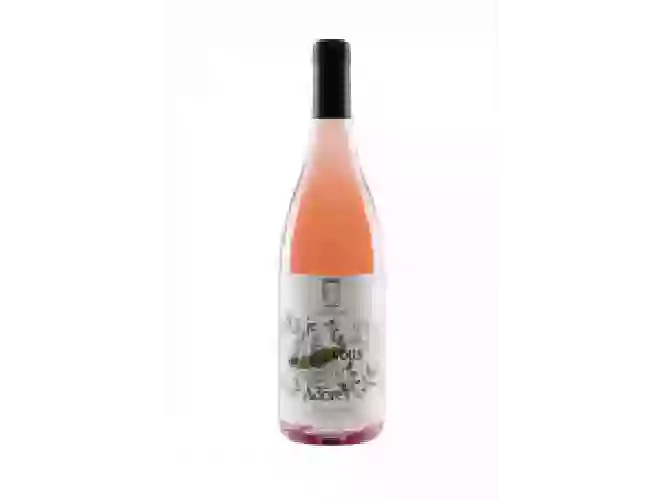
Winery Landais
The winery offers 108 different wines
3.3


Note - 1Note - 1Note - 1Note - 0Note - 0
Its wines get an average rating of 3.3.
It is ranked in the top 1 of the estates of South West.
It is located in Tursan in the region of South West
Find the Winery Landais on Facebook

The Winery Landais is one of the largest wineries in the world. It offers 108 wines for sale in of Tursan to come and discover on site or to buy online.

Top Winery Landais wines

Looking for the best Winery Landais wines in Tursan among all the wines in the region? Check out our tops of the best red, white or effervescent Winery Landais wines. Also find some food and wine pairings that may be suitable with the wines from this area. Learn more about the region and the Winery Landais wines with technical and enological descriptions.

The top sweet wines of Winery Landais

Food and wine pairings with a sweet wine of Winery Landais

How Winery Landais wines pair with each other generally quite well with dishes of rich fish (salmon, tuna etc), shellfish or sweet desserts such as recipes of smoked salmon and herb sandwich cakes, panga curry or real chocolate cake.

The best vintages in the sweet wines of Winery Landais

  • 2016With an average score of 3.73/5
  • 2017With an average score of 3.70/5
  • 2018With an average score of 3.50/5
  • 0With an average score of 3.38/5
  • 2008With an average score of 2.80/5

The grape varieties most used in the sweet wines of Winery Landais.

  • Gros Manseng
  • Tannat
  • Petit Manseng
  • Sauvignon Blanc
  • Sémillon
  • Arriloba

Discovering the wine region of Tursan

Tursan is one of the lesser-known AOCs of southwest France, located in the southeast corner of the Landes department. The name Tursan is mostly used for light, Fruity red and rosé wines, mainly from Cabernet Franc and Tannat, but a small proportion of Complex and Aromatic white wines are also produced here, mainly from Baroque and Gros Manseng. The Vineyards covered by the AOC lie on the western edge of a cluster of better known appellations: Armagnac, Madiran and Côtes de Gascogne IGP, among others. The River Adour forms the northern boundary, while the southern boundary of the AOC is formed by the departmental boundary of the Landes itself.

Unlike other areas of southern France, the vineyards of Tursan are fragmented: maize is much more important to the local economy, and the vines are found among the maize fields on the region's low, rolling hillsides. The proximity of the Atlantic Ocean - only 70 km away - contributes to the oceanic influence of the Tursan vineyards. Rainfall levels are relatively high, especially in the western parts of the region, and the vineyards are generally located on well-drained slopes to negate the worst effects. Winds from the east bring heat as well as drying influences, and summers can be hot, with Long, Warm autumns that allow the grapes to remain on the vine until they can be harvested at perfect maturity.

The top red wines of Winery Landais

Food and wine pairings with a red wine of Winery Landais

How Winery Landais wines pair with each other generally quite well with dishes of beef, spicy food or mature and hard cheese such as recipes of alsatian bäckeoffe, chicken massala or savoyard crozet gratin.

The best vintages in the red wines of Winery Landais

  • 2017With an average score of 3.62/5
  • 2016With an average score of 3.42/5
  • 2019With an average score of 3.40/5
  • 0With an average score of 3.40/5
  • 2015With an average score of 3.31/5
  • 2013With an average score of 3.20/5

The grape varieties most used in the red wines of Winery Landais.

  • Tannat
  • Cabernet Franc
  • Cabernet Sauvignon
  • Fer Servadou
  • Malbec

Discover the grape variety: Baroque

From a morphological point of view, Baroque seems to have common origins with Tannat. Still called Blanc Bordelais, this white grape variety is distinguished essentially by the characteristics of its leaves. Those that are still young are both yellowish and downy. Their bumps have a somewhat bronzed appearance. The adult leaves have angular teeth. The leaves are not very three-lobed and have a pubescent, downy blade. The Baroque is grown in the Adour basin, mainly in Tursan and in certain vineyards in the Gers. Its production area is therefore not very large. This grape variety manages to resist oidium, unlike other varieties, and its harvest must be well done and free of rot. The harvest must be well done and free of rot, which leads to a better result and a more successful wine production. Moreover, the development of Baroque must be slowed down in time, bearing in mind that this type of grape variety only matures about twenty days after Chasselas.

The top white wines of Winery Landais

Food and wine pairings with a white wine of Winery Landais

How Winery Landais wines pair with each other generally quite well with dishes of rich fish (salmon, tuna etc), shellfish or vegetarian such as recipes of skate with vinegar and capers, mussels with cream supers or quiche without pastry.

Organoleptic analysis of white wines of Winery Landais

On the nose the white wine of Winery Landais. often reveals types of flavors of tree fruit.

The best vintages in the white wines of Winery Landais

  • 2018With an average score of 3.70/5
  • 2016With an average score of 3.49/5
  • 2011With an average score of 3.33/5
  • 2014With an average score of 3.31/5
  • 2017With an average score of 3.20/5
  • 2012With an average score of 3.20/5

The grape varieties most used in the white wines of Winery Landais.

  • Baroque
  • Sauvignon Blanc
  • Gros Manseng
  • Manseng
  • Petit Manseng
  • Colombard

The word of the wine: Hairy

A sensual and complete wine that leaves a sensation of balance and fullness in the mouth.

The top pink wines of Winery Landais

Food and wine pairings with a pink wine of Winery Landais

How Winery Landais wines pair with each other generally quite well with dishes of beef, lamb or pork such as recipes of beef tongue in hot sauce, doner kebab or caramelized pork ribs.

The best vintages in the pink wines of Winery Landais

  • 0With an average score of 3.70/5
  • 2010With an average score of 3.65/5
  • 2018With an average score of 3.60/5
  • 2015With an average score of 3.48/5
  • 2019With an average score of 3.30/5
  • 2011With an average score of 3.20/5

The grape varieties most used in the pink wines of Winery Landais.

  • Cabernet Sauvignon
  • Cabernet Franc
  • Tannat
  • Fer Servadou
  • Mourvedre
  • Shiraz/Syrah

Discover the grape variety: Mourvèdre

Mourvèdre noir is a grape variety originating from Spain. It produces a variety of grape specially used for wine making. It is rare to find this grape to eat on our tables. This variety of grape is characterized by medium to large bunches, and grapes of medium size. Mourvèdre noir can be found in several vineyards: South-West, Cognac, Bordeaux, Provence & Corsica, Rhône valley, Languedoc & Roussillon, Loire valley, Savoie & Bugey, Beaujolais.

Discover other wineries and winemakers neighboring the Winery Landais

Planning a wine route in the of Tursan? Here are the wineries to visit and the winemakers to meet during your trip in search of wines similar to Winery Landais.

Discover the grape variety: Cabernet franc

Cabernet Franc is one of the oldest red grape varieties in Bordeaux. The Libourne region is its terroir where it develops best. The terroirs of Saint-Emilion and Fronsac allow it to mature and develop its best range of aromas. It is also the majority in many blends. The very famous Château Cheval Blanc, for example, uses 60% Cabernet Franc. The wines produced with Cabernet Franc are medium in colour with fine tannins and subtle aromas of small red fruits and spices. When blended with Merlot and Cabernet Sauvignon, it brings complexity and a bouquet of aromas to the wine. It produces fruity wines that can be drunk quite quickly, but whose great vintages can be kept for a long time. It is an earlier grape variety than Cabernet Sauvignon, which means that it is planted as far north as the Loire Valley. In Anjou, it is also used to make sweet rosé wines. Cabernet Franc is now used in some twenty countries in Europe and throughout the world.
