The Château d'Estoublon of Provence
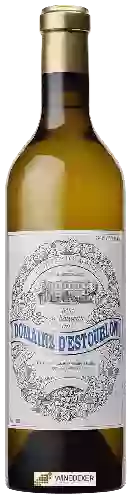
The Château d'Estoublon is one of the largest wineries in the world. It offers 15 wines for sale in of Provence to come and discover on site or to buy online.
Looking for the best Château d'Estoublon wines in Provence among all the wines in the region? Check out our tops of the best red, white or effervescent Château d'Estoublon wines. Also find some food and wine pairings that may be suitable with the wines from this area. Learn more about the region and the Château d'Estoublon wines with technical and enological descriptions.
How Château d'Estoublon wines pair with each other generally quite well with dishes of pork, rich fish (salmon, tuna etc) or shellfish such as recipes of creole chipolatas, salmon cannelloni or parsley knives.
On the nose the white wine of Château d'Estoublon. often reveals types of flavors of peach, butter or minerality and sometimes also flavors of honey, non oak or earth.
Provence is a wine region in the far southeast of France, best known for the quality (and quantity) of its rosé wines and for its Warm, mild Climate. The modernization that is taking place in many of the traditional wine regions of southern France has not yet taken place to the same extent in Provence, but there are Clear signs of change. The region's Grape varieties, in particular, have come under scrutiny in recent decades. Traditional varieties such as Carignan, Barbaroux (Barbarossa from Sardinia) and Calitor are being replaced by more commercially viable varieties such as Grenache, Syrah and even Cabernet Sauvignon.
The term "Varietal improvers" is gaining ground in Provence, as it is in the neighbouring Languedoc-Roussillon. The most successful local varieties, Mourvèdre, Tibouren and Vermentino (known locally as Rolle), have remained in favor, proving their value in Provence wines, in red, rosé and white respectively. The Vineyards of Provence cover an area of France's southeastern coastline that measures about 200 kilometers from east to west. In this definitely Mediterranean climate - no Provencal vineyard is more than 55 km from the Mediterranean - the vines enjoy about 3,000 hours of sunshine a year, as well as an average annual temperature of 14.
5°C.
How Château d'Estoublon wines pair with each other generally quite well with dishes of beef, lamb or game (deer, venison) such as recipes of greek moussaka, trapper's barbecue or real paella recipe from valencia.
On the nose the red wine of Château d'Estoublon. often reveals types of flavors of black fruits, non oak or earth and sometimes also flavors of oak, spices or black fruit.
Marsanne is a white grape variety that originated in Montélimar in the Drôme, several centuries ago. Marsanne is also found in Cassis, Savoie, Languedoc-Roussillon and Saint-Péray in the Ardèche, where it produces remarkable sparkling wines. The warm, sunny climate of the Rhone Valley, Languedoc-Roussillon and Provence, as well as the dry, stony soil, are ideal conditions for its development. Its bunches are quite large and provide small, juicy berries that are sensitive to grey rot and strong winds. These two grape varieties complement each other perfectly: together they give light wines with little acidity, aromas of yellow fruit, white fruit and flowers with notes of honey and liquorice. This is for example what the appellations Saint-Péray, Hermitage, Crozes-Hermitage, Saint-Joseph, Côtes-du-Vallée du Rhône, Corbières, or Cassis express... which represent about 700 hectares.
How Château d'Estoublon wines pair with each other generally quite well with dishes of beef, lamb or spicy food such as recipes of pork tongue with bacon and onions, thiebou yappe from senegal (rice with lamb) or lamb tagine with prunes.
On the nose the pink wine of Château d'Estoublon. often reveals types of flavors of earth, microbio or tree fruit and sometimes also flavors of citrus fruit, red fruit or floral. In the mouth the pink wine of Château d'Estoublon. is a with a nice freshness.
Phase of the vegetative cycle of the vine following flowering and corresponding to the formation of the grape berry.
How Château d'Estoublon wines pair with each other generally quite well with dishes of spicy food or sweet desserts such as recipes of chicken curry with coconut milk and cashew nuts or ultra-fast and yet so light....
Bourboulenc is mainly grown in the southern part of France. It is a white grape variety that ripens quite late. It can only be harvested around 25 September and for an average of only one month. Bourboulenc is particularly fond of low-lying, but at the same time warm and dry locations. The aroma of this grape variety is not very pronounced, but it has a certain exotic fruit and floral aroma such as broom. The result is a low alcohol wine with subtle and fleeting aromas. Blanquette, bourboulanc, bourboulenque, doucillon, clairette dorée and clairette blanche are all names that can designate bourboulenc. This grape variety is very sensitive to diseases common to all vine plants such as magnesium deficiency, mildew and oidium. Bourboulenc can be used as a table grape. Most French people keep the bunches until Christmas in order to present them on the festive table as desserts.
Planning a wine route in the of Provence? Here are the wineries to visit and the winemakers to meet during your trip in search of wines similar to Château d'Estoublon.
Cinsaut noir is a grape variety that originated in France (Provence). It produces a variety of grape specially used for wine making. It is rare to find this grape to eat on our tables. This variety of grape is characterized by large bunches and large grapes. Cinsaut noir can be found in several vineyards: South-West, Cognac, Bordeaux, Provence & Corsica, Rhône valley, Languedoc & Roussillon, Loire valley, Savoie & Bugey, Beaujolais, Armagnac.