The Domaine Carterole of Banyuls of Languedoc-Roussillon
The Domaine Carterole is one of the world's great estates. It offers 8 wines for sale in of Banyuls to come and discover on site or to buy online.

Looking for the best Domaine Carterole wines in Banyuls among all the wines in the region? Check out our tops of the best red, white or effervescent Domaine Carterole wines. Also find some food and wine pairings that may be suitable with the wines from this area. Learn more about the region and the Domaine Carterole wines with technical and enological descriptions.
How Domaine Carterole wines pair with each other generally quite well with dishes of beef, pasta or veal such as recipes of romazava (madagascar), chinese noodles with vegetables and spices or veal shank in a pot au feu with star anise.
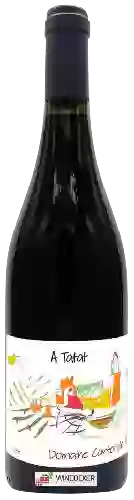
In the mouth the red wine of Domaine Carterole. is a powerful with a nice balance between acidity and tannins.
Banyuls wines come from the South-eastern Part of Roussillon, in the south of France, in the lower Pyrenees, a few kilometres from the Spanish border. These naturally Sweet wines are consumed both as an aperitif and as a dessert. They come in a wide range of hues, from GoldenGreen (Banyuls Blanc) to Amber (Banyuls Ambré) to the intense garnet of the standard Banyuls Rouge. Unusually among the natural sweet wines of France, all Banyuls wines are made primarily from Grenache grapes of various colors.
Muscat grapes (the mainstay of southern French sweet wines) are allowed, but only in very small proportions. Dark-skinned Grenache Noir is by far the dominant and preferred variety in Banyuls - it must make up at least 50% of the blend for red Banyuls (75% for Grand Cru wines). Pink-skinned Grenache Gris comes next, followed by Grenache Blanc and a host of other southern French varieties, including Mourvèdre, Carignan, Macabeu and Tourbat. As a sweet red wine made from Grenache, Banyuls is comparable to Maury, from the northern Roussillon, and Rasteau, from the southern Rhone Valley.
How Domaine Carterole wines pair with each other generally quite well with dishes of pasta, vegetarian or poultry such as recipes of shrimp marinade, nanie's diced ham quiche or coconut chicken curry in thermomix.
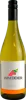
On the nose the white wine of Domaine Carterole. often reveals types of flavors of orange, citrus fruit.
Roussane is a white grape variety, planted on an area of more than 700 ha. Originally from Montélimar, it is also found in Savoie, Languedoc and Roussillon, and grows very well in calcareous, poor, stony soil. It prefers to be pruned short. Roussane is also called fromenteau, barbin or bergeron. The young leaves are bubbled with fine down. When adult, they become thicker. It flowers in June and matures in mid-September. The grapes are cylindrical in shape, the berries are small and turn red when ripe, and the wine produced from pure Roussane is of extraordinary quality. It has a delicate aroma reminiscent of coffee, honeysuckle, iris and peony. The taste of this wine improves with age. It is part of the blend of the appellations Vin-de-Savoie, Côtes-du-Vallée du Rhône or Châteauneuf-du-Pape.
How Domaine Carterole wines pair with each other generally quite well with dishes of pasta, vegetarian or appetizers and snacks such as recipes of pasta with tuna, garlic and lemon cream, mushroom, bacon and gruyere quiche or beetroot chips.
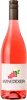
In the mouth the pink wine of Domaine Carterole. is a with a nice freshness.
Cellar in which are kept bottles that retrace the history of a domain, a vintage, an exceptional wine, etc., and which constitute a collection. It is also said of a place that offers a very wide choice of wines served by the glass. The oenotheques are more and more widespread in the living rooms opened to the public.
Planning a wine route in the of Banyuls? Here are the wineries to visit and the winemakers to meet during your trip in search of wines similar to Domaine Carterole.
Mainly cultivated in the Languedoc region, carignan originates from Spain. Because of its very resistant branches, it is often called hardwood. Its bunches are quite large. They are compact and winged with a lignified stalk. The berries are spherical in shape and take on a bluish-black colour. Carignan has a total of 25 approved clones, the best known of which are 274, 65 and 9. The carignan buds at the beginning of June and is protected from spring frosts. It does not reach maturity until the third period. Also, this grape variety needs warmth and sunshine. It appreciates dry and not very fertile soils. Carignan vines can live for more than 100 years. Those that are more than 30 years old produce a better wine. This wine is well coloured. It is generous and powerful at the same time. Pepper, cherry, blackberry, banana, raspberry, almond, prune and violet are some of the aromas that this grape variety gives off.