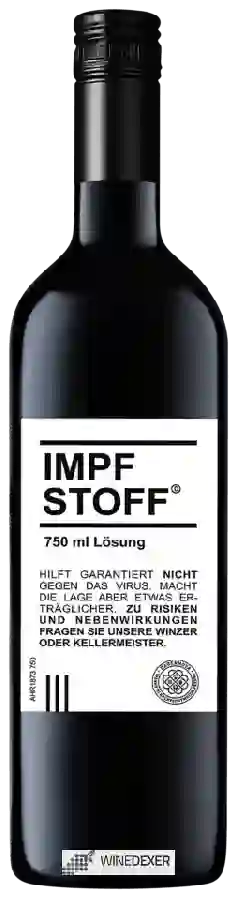
Winery DagernovaImpfstoff
 Red wine


In the mouth this red wine is a with a nice freshness.
This wine generally goes well with poultry, beef or veal.

Taste structure of the Impfstoff from the Winery Dagernova
Light | Bold | |
Smooth | Tannic | |
Dry | Sweet | |
Soft | Acidic |
In the mouth the Impfstoff of Winery Dagernova in the region of Ahr is a with a nice freshness.
Food and wine pairings with Impfstoff
Pairings that work perfectly with Impfstoff



Original food and wine pairings with Impfstoff

The Impfstoff of Winery Dagernova matches generally quite well with dishes of beef, veal or game (deer, venison) such as recipes of stuffed peppers, grenadins of veal with ceps or rabbit legs with mushrooms.
Details and technical informations about Winery Dagernova's Impfstoff.
Discover the grape variety: Saint Pépin
Aromatic, fruity whites with a pale golden robe, a supple palate with preserved acidity, featuring aromas of white flowers, white-fleshed fruits (apple, pear) and light muscat notes. Extremely cold-hardy. Grown in the northern United States (Minnesota, Wisconsin) and Canada for rigorous continental viticultural climates. American white hybrid variety obtained in 1987 by Elmer Swenson in Minnesota.
Last vintages of this wine
The best vintages of Impfstoff from Winery Dagernova are 2018, 0
Informations about the Winery Dagernova
The Winery Dagernova is one of of the world's great estates. It offers 90 wines for sale in the of Ahr to come and discover on site or to buy online.

The wine region of Ahr
Small German valley south of Bonn, the country's largest contiguous single red-grape zone. Signature Spatburgunder (Pinot Noir) (>60%): elegant, structured reds with signature notes of cherry, raspberry, wild strawberry, undergrowth and sweet spice, silky tannins and taut freshness — Burgundian style in an improbable climate. Also early Fruhburgunder, fleshier. ~560 ha on steep slopes over schist and slate, sheltered temperate microclimate.
The word of the wine: Cinsault
Cinsault is a southern black grape variety that can be found in the blends of most Mediterranean appellations, but most often as an accessory grape variety. It is undoubtedly most present in certain rosé wines (in Corbières, Côtes-de-Provence, etc.): it gives these wines highly appreciated aromas of strawberry, peach and raspberry. In vin de pays (IGP), it is often vinified on its own, usually as a rosé.