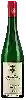
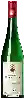
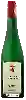
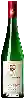
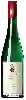
The Weingut Schloss Proschwitz of Sachsen

The Weingut Schloss Proschwitz is one of the largest wineries in the world. It offers 54 wines for sale in of Sachsen to come and discover on site or to buy online.
Looking for the best Weingut Schloss Proschwitz wines in Sachsen among all the wines in the region? Check out our tops of the best red, white or effervescent Weingut Schloss Proschwitz wines. Also find some food and wine pairings that may be suitable with the wines from this area. Learn more about the region and the Weingut Schloss Proschwitz wines with technical and enological descriptions.
How Weingut Schloss Proschwitz wines pair with each other generally quite well with dishes of pork, shellfish or spicy food such as recipes of rabbit stew the old fashioned way, tagliatelle with shrimps or lamb shoulder confit.
On the nose the white wine of Weingut Schloss Proschwitz. often reveals types of flavors of grapefruit, lemon or earth and sometimes also flavors of vegetal, tree fruit or spices. In the mouth the white wine of Weingut Schloss Proschwitz. is a with a nice freshness.
Sachsen (Saxony) in eastern Germany is one of the world's Northernmost wine regions, located at a latitude of 51 degrees north. The roughly 493 hectares (1,218ac) of vines in the region are planted aLong a 25 mile (40km) stretch of the Elbe river valley, from Pillnitz near the city of Dresden, in a north-easterly direction to Diesbar-Seusslitz, just downstream of the city of Meissen.
Despite its northerly location, Sachsen has a long history of viticulture, with the earliest documents of wine-growing around Meissen dating to 1161. Since Germany's reunification in 1990, great enthusiasm has gone into building and developing the Sachsen wine industry; there are many part-time growers and an enthusiastic local market.
Investment is needed to boost quality however, and with yields roughly half that of other German wine regions, investors' enthusiasm has not matched that of the growers.
Sachsen's Climate is cold-moderate continental with an annual mean temperature of 10° celsius (50°F). The average temperature in January is -0. 5° celsius (31°F) and in July it is 18° celsius (64°F).
However, winter temperatures can drop as low as -28° celsius (18°F).
Sachsen's wines are also influenced by the soils and geology of the Elbe Valley. Carboniferous granite, and feldspar with some mica and quartz are found, as is sandstone. This is often is overlayered by loess, clay and sand deposits.
How Weingut Schloss Proschwitz wines pair with each other generally quite well with dishes of pasta, veal or pork such as recipes of saffron pasta with prawns, veal tagine with carrots or vegetable planter.
On the nose the red wine of Weingut Schloss Proschwitz. often reveals types of flavors of earth, red fruit or non oak and sometimes also flavors of oak, spices or microbio. In the mouth the red wine of Weingut Schloss Proschwitz. is a with a nice freshness.
Pinot Blanc is a grape variety that originated in Burgundy, mutated from Pinot Gris. Today, it is grown in Alsace where it is called klevner when blended with auxerrois. The continental climate, with its cold winters and hot summers, is particularly suited to pinot blanc. It is resistant to frost in winter and in summer, the roots draw the minerals it needs from the warm soil. Its bunches are made up of small berries with thick skins and melting pulp that produce fruity, spicy wines, balanced between acidity and alcohol. pinot blanc is also used for crémants and sparkling wines. Pinot Blanc is also used for Crémant and sparkling wines. It is widely grown in Italy, where it covers almost 7,000 hectares, and is also found in Germany, Austria, Canada and South Africa.
How Weingut Schloss Proschwitz wines pair with each other generally quite well with dishes of veal, pork or game (deer, venison) such as recipes of veal paupiettes with cider, salted lentils or old-fashioned venison stew.
White, chalky deposits that occur as a result of precipitation inside bottles and are often considered by consumers as a defect. They are in fact tartaric salts formed by tartaric acid, potassium and calcium naturally present in the wine. This deposit does not alter the quality of the wine and can be eliminated by a simple decanting.
How Weingut Schloss Proschwitz wines pair with each other generally quite well with dishes such as recipes .
A complex interspecific cross between the diana (sylvaner x Müller-Thurgau) and the chambourcin obtained in Germany in 1967 by Gerhardt Alleweldt. It can be found in Quebec (Canada), Belgium and Switzerland, but is little known in France. It should be noted that Regent, a monogenic variety, which is nevertheless resistant to certain cryptogamic diseases, was "bypassed" in 2010 by a less resistant strain of mildew, which was also the case for bianca.
How Weingut Schloss Proschwitz wines pair with each other generally quite well with dishes such as recipes .
A cavalier and folkloric way of opening a bottle of champagne by breaking the neck with a sharp blow given with the top of the blade of a sabre.
Planning a wine route in the of Sachsen? Here are the wineries to visit and the winemakers to meet during your trip in search of wines similar to Weingut Schloss Proschwitz.
Pinot noir is a grape variety that originated in France (Burgundy). It produces a variety of grape specially used for wine making. It is rare to find this grape to eat on our tables. This variety of grape is characterized by small bunches, and small grapes. Pinot noir can be found in many vineyards: Burgundy, Alsace, Jura, South-West, Languedoc & Roussillon, Cognac, Bordeaux, Savoie & Bugey, Loire Valley, Champagne, Armagnac, Lorraine, Beaujolais, Rhône Valley, Provence & Corsica.