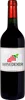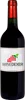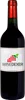
Weingut Schloss ProschwitzKloster Heilig Kreuz Spätburgunder
 Red wine


In the mouth this red wine is a with a nice freshness.
This wine generally goes well with poultry, beef or veal.
The Kloster Heilig Kreuz Spätburgunder of the Weingut Schloss Proschwitz is in the top 90 of wines of Sachsen.
Taste structure of the Kloster Heilig Kreuz Spätburgunder from the Weingut Schloss Proschwitz
Light | Bold | |
Smooth | Tannic | |
Dry | Sweet | |
Soft | Acidic |
In the mouth the Kloster Heilig Kreuz Spätburgunder of Weingut Schloss Proschwitz in the region of Sachsen is a with a nice freshness.
Food and wine pairings with Kloster Heilig Kreuz Spätburgunder
Pairings that work perfectly with Kloster Heilig Kreuz Spätburgunder



Original food and wine pairings with Kloster Heilig Kreuz Spätburgunder

The Kloster Heilig Kreuz Spätburgunder of Weingut Schloss Proschwitz matches generally quite well with dishes of beef, veal or game (deer, venison) such as recipes of braised beef with carrots, oven-baked veal cutlets or rabbit in white wine (casserole).
Details and technical informations about Weingut Schloss Proschwitz's Kloster Heilig Kreuz Spätburgunder.
Discover the grape variety: Oberlin noir
Interspecific crossing between riparia Millardet and gamay obtained by Philip Christian Oberlin (1831-1915) who also created in 1897 the Oberlin Viticultural Institute in Colmar (Haut Rhin). This direct-producing hybrid was widely multiplied in the northeast region of France, from Alsace to Burgundy, also in the Loire Valley and in the Centre where our photographs were taken. Today, Oberlin noir is practically no longer cultivated, but a few vines exist here and there, producing very pleasant, albeit atypical, wines. It is nevertheless registered in the Official Catalogue of Vine Varieties, list A1. - Synonymy: 595 Oberlin (for all the synonyms of the grape varieties, click here!).
Last vintages of this wine

The best vintages of Kloster Heilig Kreuz Spätburgunder from Weingut Schloss Proschwitz are 0, 2016
Informations about the Weingut Schloss Proschwitz
The Weingut Schloss Proschwitz is one of of the world's great estates. It offers 49 wines for sale in the of Sachsen to come and discover on site or to buy online.

The wine region of Sachsen
Sachsen (Saxony) in eastern Germany is one of the world's Northernmost wine regions, located at a latitude of 51 degrees north. The roughly 493 hectares (1,218ac) of vines in the region are planted aLong a 25 mile (40km) stretch of the Elbe river valley, from Pillnitz near the city of Dresden, in a north-easterly direction to Diesbar-Seusslitz, just downstream of the city of Meissen. Despite its northerly location, Sachsen has a long history of viticulture, with the earliest documents of wine-growing around Meissen dating to 1161. Since Germany's reunification in 1990, great enthusiasm has gone into building and developing the Sachsen wine industry; there are many part-time growers and an enthusiastic local market.
The word of the wine: Gourmet
Unproductive shoot growing on the trunk of the vine.