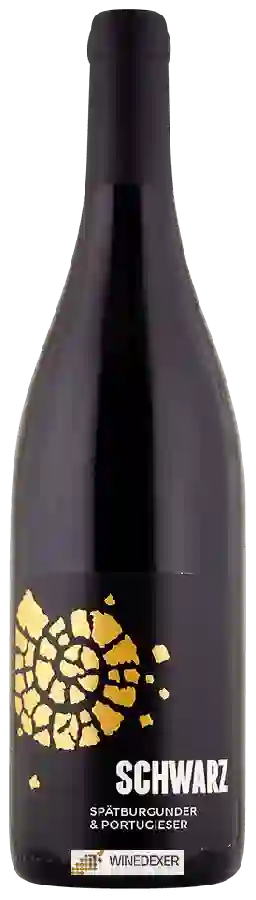
Winery Martin SchwarzSpätburgunder - Portugieser
 Red wine


This wine generally goes well with vegetarian
The Spätburgunder - Portugieser of the Winery Martin Schwarz is in the top 10 of wines of Sachsen.
Food and wine pairings with Spätburgunder - Portugieser
Pairings that work perfectly with Spätburgunder - Portugieser

Original food and wine pairings with Spätburgunder - Portugieser
The Spätburgunder - Portugieser of Winery Martin Schwarz matches generally quite well with dishes of vegetarian such as recipes of goat cheese and bacon quiche.
Details and technical informations about Winery Martin Schwarz's Spätburgunder - Portugieser.
Discover the grape variety: Blanqueiron
Blanqueiron blanc is a grape variety that originated in . It produces a variety of grape specially used for wine making. It is rare to find this grape to eat on our tables. Blanqueiron blanc is found in the vineyards of Provence and Corsica.
Last vintages of this wine

The best vintages of Spätburgunder - Portugieser from Winery Martin Schwarz are 2014, 0, 2011, 2015
Informations about the Winery Martin Schwarz
The Winery Martin Schwarz is one of of the world's greatest estates. It offers 18 wines for sale in the of Sachsen to come and discover on site or to buy online.

The wine region of Sachsen
Sachsen (Saxony) in eastern Germany is one of the world's Northernmost wine regions, located at a latitude of 51 degrees north. The roughly 493 hectares (1,218ac) of vines in the region are planted aLong a 25 mile (40km) stretch of the Elbe river valley, from Pillnitz near the city of Dresden, in a north-easterly direction to Diesbar-Seusslitz, just downstream of the city of Meissen. Despite its northerly location, Sachsen has a long history of viticulture, with the earliest documents of wine-growing around Meissen dating to 1161. Since Germany's reunification in 1990, great enthusiasm has gone into building and developing the Sachsen wine industry; there are many part-time growers and an enthusiastic local market.
The word of the wine: Chaptalization
The addition of sugar at the time of fermentation of the must, an ancient practice, but theorized by Jean-Antoine Chaptal at the dawn of the 19th century. The sugar is transformed into alcohol and allows the natural degree of the wine to be raised in a weak or cold year, or - more questionably - when the winegrower has a harvest that is too large to obtain good maturity.