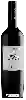
Winery San ValentinoBacaia Rebola
 Red wine



In the mouth this red wine is a powerful.
This wine generally goes well with beef, game (deer, venison) or lamb.

Taste structure of the Bacaia Rebola from the Winery San Valentino
Light | Bold | |
Smooth | Tannic | |
Dry | Sweet | |
Soft | Acidic |
In the mouth the Bacaia Rebola of Winery San Valentino in the region of Emilia-Romagna is a powerful.
Food and wine pairings with Bacaia Rebola
Pairings that work perfectly with Bacaia Rebola



Original food and wine pairings with Bacaia Rebola

The Bacaia Rebola of Winery San Valentino matches generally quite well with dishes of beef, pasta or lamb such as recipes of spaghetti bolognese, seafood lasagna or blanquette of lamb.
Details and technical informations about Winery San Valentino's Bacaia Rebola.
Discover the grape variety: Roi des blancs
Simple, fresh dry whites with a pale golden colour, a supple palate with moderate acidity and understated aromas of citrus and white flowers. Discreet rustic profile. Preserved in a few ampelographic collections for its heritage value; belongs to the old varieties whose commercial diffusion has almost disappeared and which are studied for their genetic and historical interest. Rare, poorly documented white variety cultivated in negligible quantities.
Last vintages of this wine
The best vintages of Bacaia Rebola from Winery San Valentino are 0
Informations about the Winery San Valentino
The Winery San Valentino is one of of the world's great estates. It offers 32 wines for sale in the of Emilia-Romagna to come and discover on site or to buy online.

The wine region of Emilia-Romagna
Kingdom of Lambrusco: fresh, fruity sparkling reds (blackberry, cherry, violet), from gourmet dry to convivial off-dry, perfect with local charcuterie. World's best-selling sparkling wine on the Emilia side (Sorbara, Grasparossa, Salamino). East, Romagna: supple fruity Sangiovese, Albana (Italy's 1st white DOCG, 1987) ample and almondy. Also red Gutturnio and white Pignoletto.
The word of the wine: Apyrene
Seedless grape.