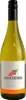
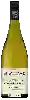
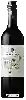
The Winery McWilliam's of Australie du Sud-Est
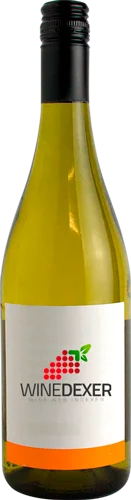
The Winery McWilliam's is one of the world's great estates. It offers 250 wines for sale in of Australie du Sud-Est to come and discover on site or to buy online.
Looking for the best Winery McWilliam's wines in Australie du Sud-Est among all the wines in the region? Check out our tops of the best red, white or effervescent Winery McWilliam's wines. Also find some food and wine pairings that may be suitable with the wines from this area. Learn more about the region and the Winery McWilliam's wines with technical and enological descriptions.
How Winery McWilliam's wines pair with each other generally quite well with dishes of rich fish (salmon, tuna etc), shellfish or sweet desserts such as recipes of quick salmon skewers, seafood lasagna or very simple muffins.
On the nose the white wine of Winery McWilliam's. often reveals types of flavors of grapefruit, citrus or butter and sometimes also flavors of lemon, toasty or nutty. In the mouth the white wine of Winery McWilliam's. is a powerful with a nice freshness.
South East Australia is a geographical indication (GI) covering the entire south-eastern third of Australia. The western boundary of this area extends 2,000 kilometres (1,250 miles) across the Australian continent from the Pacific coast of Queensland to the Southern Ocean coast of South Australia. This vast wine 'super zone' effectively encompasses all the major Australian wine regions outside Western Australia. Rainforest, mountain ranges, scrubland, desert and Dry riverbeds occupy the majority of the land in the South East Australian area.
Only in the cooler coastal areas do vineyards play a significant role in the landscape. The GI covers the states of New South Wales, Victoria and Tasmania in their entirety, as well as the south-eastern halves of Queensland and South Australia. The sheer Size of this area - and the diversity of its climates, topography and latitudes - makes it a GI of rather limited significance. Even the largest AVAs in the United States do not represent half of the area called South Eastern Australia.
How Winery McWilliam's wines pair with each other generally quite well with dishes of beef, lamb or game (deer, venison) such as recipes of thai beef skewers, grilled leg of lamb marinated in aromatic oil or vermicelli sautéed with peking duck.
On the nose the red wine of Winery McWilliam's. often reveals types of flavors of red fruit, black fruit or spices and sometimes also flavors of oak, non oak or microbio. In the mouth the red wine of Winery McWilliam's. is a powerful with a nice balance between acidity and tannins.
Pinot grigio is a grey grape variety mutated from Pinot Noir. It has its origins in Burgundy, where it is called pinot-beurot in reference to the colour of the grey robes worn by the monks of the region. Established in Alsace since the 17th century, pinot grigio was called tokay until 2007. It is made up of bunches of small berries that vary in colour from pink to blue-grey. It is particularly well suited to the continental climate because it is resistant to the cold in winter and to spring frosts. This variety also likes dry limestone soils with plenty of sunshine in the summer. pinot grigio is well suited to late harvesting or to the selection of noble grapes, depending on the year and the concentration of sugars in the berries. Pinot grigio wines are distinguished by their aromatic complexity of white fruits, mushrooms, honey, vanilla, cinnamon, etc., and their great finesse. In the Loire Valley, pinot grigio is used in the Coteaux-d'Ancenis appellations. It gives dry or sweet wines with pear and peach aromas.
How Winery McWilliam's wines pair with each other generally quite well with dishes of veal, pork or game (deer, venison) such as recipes of roast pork with prunes, stuffed tomatoes with thermomix or blanquette of rabbit with riesling and chanterelles.
On the nose the sparkling wine of Winery McWilliam's. often reveals types of flavors of microbio, tree fruit.
A white grape variety cultivated since antiquity on the shores of the Mediterranean, it is considered the noblest of the muscats. It is mainly used to make sweet wines, often from mutage. In France, it is the sole variety used in many natural sweet wines: muscat-de-frontignan, muscat-de-mireval, muscat-de-lunel, muscat-de-saint-jean-de-minervois, muscat-de-beaumes-de-venise, muscat-du-cap-corse. Combined with Muscat d'Alexandrie, it gives Muscat-de-Rivesaltes. It is also used to make sparkling white wines (clairette-de-die; moscato d'asti and asti spumante in Italy) and dry wines (alsace-muscat). Powerfully aromatic and complex, its wines evoke fresh grapes, roses, exotic fruits, citrus fruits and spices.
How Winery McWilliam's wines pair with each other generally quite well with dishes of beef, mature and hard cheese or rich fish (salmon, tuna etc) such as recipes of spaghetti squash bolognese style, vegetable soup with savoy cheese or barbecued mackerel papillotes.
On the nose the natural sweet wine of Winery McWilliam's. often reveals types of flavors of oak, non oak or microbio and sometimes also flavors of dried fruit, earth.
How Winery McWilliam's wines pair with each other generally quite well with dishes of sweet desserts such as recipes of tarte tatin.
See sauvignon.
Planning a wine route in the of Australie du Sud-Est? Here are the wineries to visit and the winemakers to meet during your trip in search of wines similar to Winery McWilliam's.
Colombard is one of the oldest grape varieties in the Charentes. This golden white grape variety is a cross between Chenin and Gouais. The young leaves of colombard are yellow with bronze patches. The adult leaves may be three-lobed or whole, depending on the variety. Its branches are cottony. The bunches of this variety are thick and cylindrical. Its elliptical berries are medium-sized. They change color until they ripen, ranging from greenish white to golden yellow. Colombard is associated with an average budding. It is particularly susceptible to leafhoppers, grape worms, mites, mildew, powdery mildew and gray mold. It is also sensitive to water stress, but is not very sensitive to wind. It ripens late in the second half of the year. There are a dozen approved clones of Colombard, the best known of which are 608, 607 and 606. This variety produces a full-bodied, fine white wine. Aromas of lime, nectarine, boxwood, citrus and exotic fruits are released.