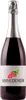
The Maison Angelot of Bugey of Savoie

The Maison Angelot is one of the largest wineries in the world. It offers 22 wines for sale in of Bugey to come and discover on site or to buy online.
Looking for the best Maison Angelot wines in Bugey among all the wines in the region? Check out our tops of the best red, white or effervescent Maison Angelot wines. Also find some food and wine pairings that may be suitable with the wines from this area. Learn more about the region and the Maison Angelot wines with technical and enological descriptions.
How Maison Angelot wines pair with each other generally quite well with dishes of veal, pork or game (deer, venison) such as recipes of breaded veal cutlets, chicken blanquette or rabbit, cabbage, bacon.
Bugey is a wine region in the Ain department of eastern France. The Bugey appellation covers red, white, rosé and Sparkling wines from a range of Grape varieties. The more specific Roussette du Bugey appellation applies to the Rich white wines produced in the region from the Altesse grape. The area covers the Southern limits of the Jura mountain range, which also includes the Jura wine region to the North.
The Rhône River loops around the southern end of Bugey, before flowing south to join the famous Rhône vineyards. Lyon is some 50 kilometres to the west, and the Alpine vineyards of Savoy are directly to the east. Although not technically linked to French wine law, Bugey is often grouped with Savoie. They are close both geographically and in terms of the styles of wine produced.
How Maison Angelot wines pair with each other generally quite well with dishes of pork, rich fish (salmon, tuna etc) or vegetarian such as recipes of sausages with kale, mackerel fillets (quick bake) or goat cheese and bacon quiche.
The white Chardonnay is a grape variety that originated in France (Burgundy). It produces a variety of grape specially used for wine making. It is rare to find this grape to eat on our tables. This variety of grape is characterized by small bunches, and small grapes. White Chardonnay can be found in many vineyards: South West, Burgundy, Jura, Languedoc & Roussillon, Cognac, Bordeaux, Beaujolais, Savoie & Bugey, Loire Valley, Champagne, Rhone Valley, Armagnac, Lorraine, Alsace, Provence & Corsica.
How Maison Angelot wines pair with each other generally quite well with dishes of beef, veal or pork such as recipes of melt-in-the-mouth pork tenderloin casserole, grenadins of veal with ceps or gratin of fresh chard (green and ribs).
On the nose the red wine of Maison Angelot. often reveals types of flavors of red fruit, strawberries or raspberry and sometimes also flavors of non oak, earth or oak.
Said of a wine that, beyond balance, presents qualities of charm and harmony, without the slightest heaviness.
How Maison Angelot wines pair with each other generally quite well with dishes such as recipes .
Cultivated for a very long time in Savoie, it is not the black form of mondeuse blanche and Mondeuse grise is a natural mutation of mondeuse noire. According to Thierry Lacombe (I.N.R.A./Montpellier), the latter is the result of a natural intraspecific crossing between the black tressot and the white mondeuse. Mondeuse grise and Mondeuse noire are both registered in the official catalogue of wine grape varieties, list A1.
How Maison Angelot wines pair with each other generally quite well with dishes such as recipes .
First impressions perceived after the wine is put in the mouth.
Planning a wine route in the of Bugey? Here are the wineries to visit and the winemakers to meet during your trip in search of wines similar to Maison Angelot.
Aligoté is an ancient Burgundian grape variety (it has different names depending on the region in which it is grown: griset blanc in Beaune, giboudot blanc in the Chalonnais or troyen blanc in the Aube), mainly used in the production of Bourgogne-Aligoté, Bouzeron and Crémant-de-Bourgogne.aligoté is a medium-fine white grape variety, quite productive, which gives clear, acidic, fresh and light white wines. An anecdote often says that it was a member of the clergy named Kir who gave it its letters of nobility by adding it to blackcurrant cream to prepare an aperitif.produced on more than 1,600 hectares in Burgundy, aligoté has also been exported. It is also cultivated in Eastern Europe (Ukraine, Romania), California, Canada and Chile, representing more than 20,000 hectares in the world.