The Winery Kloster Pforta of Saale-Unstrut
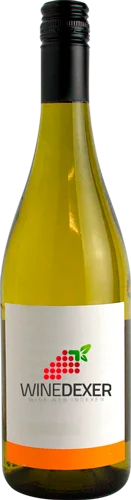
The Winery Kloster Pforta is one of the world's great estates. It offers 66 wines for sale in of Saale-Unstrut to come and discover on site or to buy online.
Looking for the best Winery Kloster Pforta wines in Saale-Unstrut among all the wines in the region? Check out our tops of the best red, white or effervescent Winery Kloster Pforta wines. Also find some food and wine pairings that may be suitable with the wines from this area. Learn more about the region and the Winery Kloster Pforta wines with technical and enological descriptions.
How Winery Kloster Pforta wines pair with each other generally quite well with dishes of pork, rich fish (salmon, tuna etc) or shellfish such as recipes of chicken ballotine with ham and mushrooms, mackerel with quick mustard or pasta shells.
On the nose the white wine of Winery Kloster Pforta. often reveals types of flavors of vegetal, earth or tree fruit and sometimes also flavors of tropical fruit. In the mouth the white wine of Winery Kloster Pforta. is a powerful with a nice freshness.
Saale-Unstrut is the northernmost of Germany's 13 wine-growing regions. At 51 degrees northern latitude, it is one of the most northerly wine regions in the world. It takes its name from the two rivers on the banks of which the Vines of the region grow, and is composed of three non-contiguous Parts located mainly in the federal state of Saxony-Anhalt, with around 650 hectares (1600 acres) of Vineyards, often terraced, on South and south-west-facing slopes along the narrow river valleys. A smaller area of 20 hectares (50 acres) is located in the state of Thüringen and a block of just 7 hectares (17 acres) in Brandenburg.
Two towns within the region, Freyburg and Karsdorf, each have one vineyard which has been accorded Grosse Lage status.
Wine has been grown here for more than 1000 years. The Cistercian monks founded the Pforta Abbey in approximately 1100 AD and established the Pfortenser Köppelberg vineyard, which still exists today. The wine industry in this part of Germany had a Hard time during the post-war communist era, but since reunification quality has improved, and the area under vine has expanded slightly.
Saale-Unstrut enjoys plenty of sunshine and has one of the lowest rainfalls of any German wine-growing region. Soils are mainly sedimentary with shell, limestone and sandstone predominating. Despite these favorable conditions, the region's northern Climate is uncompromising, and even when yields are kept low, Spätlese or Auslese wines can only be produced during the warmest of years.
Müller-Thurgau is the most widely planted variety in the Saale-Unstrut region, accounting for around 20 percent of the total vineyard area.
How Winery Kloster Pforta wines pair with each other generally quite well with dishes such as recipes .
How Winery Kloster Pforta wines pair with each other generally quite well with dishes of lamb, pork or mature and hard cheese such as recipes of tunisian macaroni, guinea fowl with cabbage or goose eggs in salad.
In the mouth the red wine of Winery Kloster Pforta. is a with a nice freshness.
Refers to a non-sparkling wine.
How Winery Kloster Pforta wines pair with each other generally quite well with dishes of pork, rich fish (salmon, tuna etc) or spicy food such as recipes of new york hot dog, spaghetti with tuna (real italian recipe) or fish with madras curry and coconut milk.
Intraspecific crossing between the saint laurent and the limberger realized in 1922 and in Austria by Fritz Zweigelt (1888/1964) who named it rotburger. Very well known in Austria, it can be found in most Eastern countries, Japan, Germany, Great Britain, the Netherlands, Belgium, Switzerland, Italy, Canada, the United States, etc. In France, it is not very well known and yet this variety has interesting qualities when vinified as a single variety for both red and rosé wines. - Synonyms: rotburger, klosterneuburger, zweigelt blau, blauer-zweigelt in Germany, zweigeltrebe in Austria, Great Britain and the Czech Republic, blauer zwelgetrabe in Hungary, etc. (for all the synonyms of the grape varieties, click here !)
Planning a wine route in the of Saale-Unstrut? Here are the wineries to visit and the winemakers to meet during your trip in search of wines similar to Winery Kloster Pforta.
Auxerrois is a white grape variety native to Lorraine, which is also found in Alsace and in the Loire Valley, where it took off in 1950. Its name comes from the nurseries in Auxerre where it found refuge during the Second World War. Often called Pinot Auxerrois, it is part of the Moselle, Alsace and Côtes-de-Toul AOC grape varieties. Auxerrois should not be confused with côt or malbec, which are red grape varieties from the Cahors region and which may bear the same name. The bunches of Auxerrois are of medium size with small berries. It is a semi-late grape variety whose buds only come out when temperatures are well above 10°C. Auxerrois wines are characterized by finesse and acidity and subtle aromas of exotic fruits, fruits and white flowers. In France, it represents 1,600 hectares of production and some small parcels of Auxerrois are also present in Luxembourg, Germany, Canada and South Africa (2,300 hectares in total).