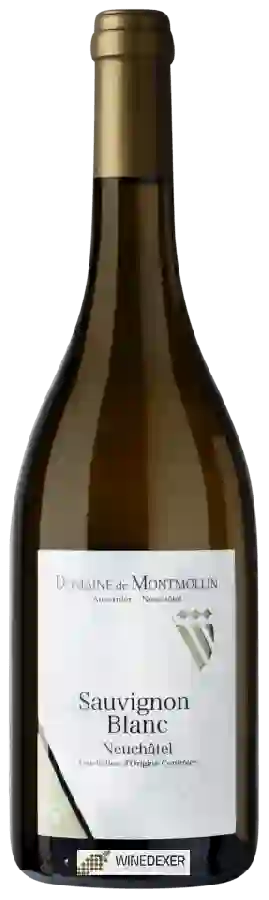
Domaine de MontmollinSauvignon Blanc
 White wine



This wine generally goes well with vegetarian, rich fish (salmon, tuna etc) or shellfish.
Food and wine pairings with Sauvignon Blanc
Pairings that work perfectly with Sauvignon Blanc



Original food and wine pairings with Sauvignon Blanc
The Sauvignon Blanc of Domaine de Montmollin matches generally quite well with dishes of rich fish (salmon, tuna etc), shellfish or vegetarian such as recipes of tuna gratin, shrimp curry and coconut (thailand) or vegan leek and tofu quiche.
Details and technical informations about Domaine de Montmollin's Sauvignon Blanc.
Discover the grape variety: Abouriou
Abouriou noir is a grape variety that originated in France (Lot-et-Garonne). It produces a variety of grape specially used for wine making. It is rare to find this grape to eat on our tables. This variety of grape is characterized by medium-sized bunches and medium-sized grapes. The Abouriou noir can be found in several vineyards: South-West, Cognac, Bordeaux, Loire Valley, Rhone Valley, Provence & Corsica, Armagnac, Languedoc & Roussillon.
Last vintages of this wine
The best vintages of Sauvignon Blanc from Domaine de Montmollin are 2018, 0, 2015, 2016
Informations about the Domaine de Montmollin
The Domaine de Montmollin is one of of the world's greatest estates. It offers 46 wines for sale in the of Neuchâtel to come and discover on site or to buy online.

The wine region of Neuchâtel
Neuchatel is one of the smaller wine regions of Switzerland, located in the French-speaking western half of the country, North of the much larger Vaud area. Much like its neighbour, Chasselas dominates white plantings here, however Pinot Noir is more significant here, as is the reputation of Neuchatel's rosés. The region is generally referred to as the 'Three Lakes' as the region - and the four AOCs within it - are found on the relatively low-lying, flatter land, centered around the lakes of Morat, Bienne and Neuchatel. The region also covers three neighbouring Swiss cantons.
The word of the wine: Passerillage
Concentration of the grape by drying out, under the influence of wind or sun, as opposed to botrytisation, which is the concentration obtained by the development of the "noble rot" for which Botrytis cinerea is responsible. The word is mainly used for sweet wines.