The Clos des Cyprès of Valais

The Clos des Cyprès is one of the best wineries to follow in Valais.. It offers 21 wines for sale in of Valais to come and discover on site or to buy online.
Looking for the best Clos des Cyprès wines in Valais among all the wines in the region? Check out our tops of the best red, white or effervescent Clos des Cyprès wines. Also find some food and wine pairings that may be suitable with the wines from this area. Learn more about the region and the Clos des Cyprès wines with technical and enological descriptions.
How Clos des Cyprès wines pair with each other generally quite well with dishes of pork, rich fish (salmon, tuna etc) or vegetarian such as recipes of sausages with kale, mackerel fillets (quick bake) or magic cake cheese quiche.
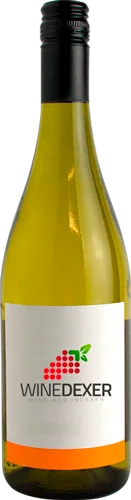
In the mouth the white wine of Clos des Cyprès. is a powerful with a nice freshness.
The Valais is the largest wine region and appellation in Switzerland, responsible for around one third of the country's total wine production. The main Vineyard area covers the southeast-facing slopes of the dramatic Rhône river valley as the glacial waters run southwest between Leuk (Loeche in French) and Fully. The river changes direction at Martigny and then runs northwest to exit the valley and empty into Lac Léman (Lake Geneva).
Vineyard area here comes to around 4,800 hectares (11,800 acres) and is generally located on (often steep) slopes and terraces between the flat, fertile, Heavy soils at the bottom of the valley - often given over to fruit production, industry and urban development - and the bare rock of the mountainside that towers above.
The Valais Terroir is one of the world's most dramatic. The valley benefits from its sheltered position below the high alpine peaks, with the most obvious bonus being the fohn wind, which keeps the area unusually Warm and Dry considering its altitude (most vines grow here at between 460 and 760m - 1500-2500ft).
The fohn effect is also enjoyed by Ticino, although there, mountain weather systems bring sporadic, heavy rainfall.
Vertiginous alpine topography also gives the vines in Valais the advantage of emphasized vineyard orientation and many are planted on steep gradients of up to 90% (42 degrees).
This steepness, although making it markedly harder to manage and harvest the vines, brings the significant benefits of excellent drainage and increased exposure to sunlight.
Production is centered around the towns and villages that run aLong the 50km (30 mile) section of the valley from Martigny in the southwest to Leuk, northeast. It is not unusual to see labels mention both variety and town, such as "Amigne de Vétroz" or "Fendant de Sion".
This commune-based labelling convention is a reasonably widespread Swiss quirk as most appellations in the country follow broad, cantonal boundaries yet allow the name of the commune (sometimes even cadastral names and "lieu-dits") on the label.
How Clos des Cyprès wines pair with each other generally quite well with dishes of beef, pork or game (deer, venison) such as recipes of braised beef with carrots, old-fashioned pork roll or rabbit provencale (mario style).
In the mouth the red wine of Clos des Cyprès. is a with a nice freshness.
An interspecific cross between Riesling and FR 589-54 (Seyve-Villard 12481 x (pinot gris or rülander x chasselas or gutedel)) obtained in Germany in 1968 by Johannes Zimmermann. It has the particularity of having only one gene for resistance to mildew and powdery mildew. This variety can be found in Germany, Belgium, Switzerland, the Netherlands, etc. In France, it is practically unknown. Note that the "Johanniter" grape variety is a protected trademark.
Planning a wine route in the of Valais? Here are the wineries to visit and the winemakers to meet during your trip in search of wines similar to Clos des Cyprès.
Pinot Gris is a grey grape variety mutated from Pinot Noir. It has its origins in Burgundy, where it is called pinot-beurot in reference to the colour of the grey robes worn by the monks of the region. Established in Alsace since the 17th century, pinot gris was called tokay until 2007. It is made up of bunches of small berries that vary in colour from pink to blue-grey. It is particularly well suited to the continental climate because it is resistant to the cold in winter and to spring frosts. This variety also likes dry limestone soils with plenty of sunshine in the summer. Pinot Gris is well suited to late harvesting or to the selection of noble grapes, depending on the year and the concentration of sugars in the berries. Pinot Gris wines are distinguished by their aromatic complexity of white fruits, mushrooms, honey, vanilla, cinnamon, etc., and their great finesse. In the Loire Valley, pinot gris is used in the Coteaux-d'Ancenis appellations. It gives dry or sweet wines with pear and peach aromas.