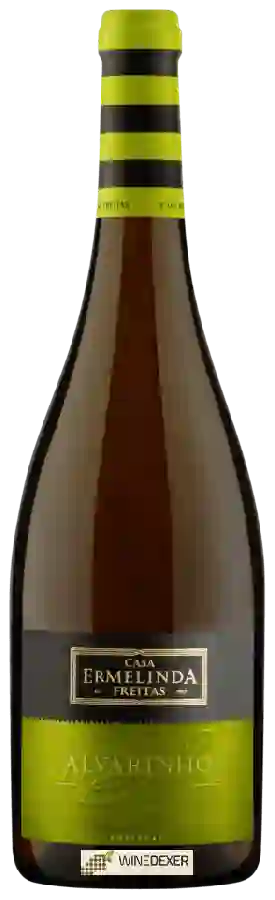
Winery Casa Ermelinda FreitasAlvarinho
 White wine



In the mouth this white wine is a powerful.
This wine generally goes well with pork, lean fish or shellfish.
Taste structure of the Alvarinho from the Winery Casa Ermelinda Freitas
Light | Bold | |
Dry | Sweet | |
Soft | Acidic |
In the mouth the Alvarinho of Winery Casa Ermelinda Freitas in the region of Península de Setúbal is a powerful.
Wine flavors and olphactive analysis

On the nose the Alvarinho of Winery Casa Ermelinda Freitas in the region of Península de Setúbal often reveals types of flavors of tree fruit, citrus fruit or tropical fruit.
Food and wine pairings with Alvarinho
Pairings that work perfectly with Alvarinho



Original food and wine pairings with Alvarinho

The Alvarinho of Winery Casa Ermelinda Freitas matches generally quite well with dishes of pasta, pork or shellfish such as recipes of italian pasta salad, capellini with prosciutto or mie goreng.
Details and technical informations about Winery Casa Ermelinda Freitas's Alvarinho.
Discover the grape variety: Alvarinho
The white Alvarinho is a grape variety originating from Spain. It produces a variety of grape specially used for the elaboration of wine. It is rare to find this grape to eat on our tables. This variety of grape is characterized by small bunches and small grapes. The white Alvarinho can be found cultivated in these vineyards: South-West, Cognac, Bordeaux, Languedoc & Roussillon, Rhone Valley.
Last vintages of this wine
The best vintages of Alvarinho from Winery Casa Ermelinda Freitas are 2018, 2016, 2017, 2014 and 0.
Informations about the Winery Casa Ermelinda Freitas
The Winery Casa Ermelinda Freitas is one of of the world's great estates. It offers 106 wines for sale in the of Península de Setúbal to come and discover on site or to buy online.

The wine region of Península de Setúbal
Setúbal Peninsula (also known as Península de Setúbal) is the Portuguese wine region immediately southeast of Lisbon, across the Tejo estuary. The Terroir in the area ranges from sandy coastal plains to the craggy, limestone-rich Serra Arribida hills. The area is known for its Dry red wines made from Castelão, and for its fortified wines and Sweet Moscatel de Setúbal. The wines produced here are made under three titles: two DOCs, Palmela and Setúbal, and one IGP.
The word of the wine: Malolactic fermentation
Called second fermentation or malo for short. It is the degradation (under the effect of bacteria) of the malic acid naturally present in the wine into milder, less aggressive lactic acid. Some producers or wineries refuse this operation by "blocking the malo" (by cold and adding SO2) to keep a maximum of acidity which carries the aromas and accentuates the sensation of freshness.