The Winery Villa Santo Stefano of Tuscany
Winery Villa Santo Stefano
The winery offers 6 different wines
3.9


Note - 1Note - 1Note - 1Note - 1Note - 0
Its wines get an average rating of 3.9.
It is ranked in the top 1171 of the estates of Tuscany.
It is located in Tuscany
Find the Winery Villa Santo Stefano on Facebook

The Winery Villa Santo Stefano is one of the best wineries to follow in Toscane.. It offers 6 wines for sale in of Tuscany to come and discover on site or to buy online.


Top Winery Villa Santo Stefano wines

Looking for the best Winery Villa Santo Stefano wines in Tuscany among all the wines in the region? Check out our tops of the best red, white or effervescent Winery Villa Santo Stefano wines. Also find some food and wine pairings that may be suitable with the wines from this area. Learn more about the region and the Winery Villa Santo Stefano wines with technical and enological descriptions.

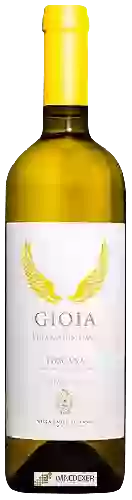
The top white wines of Winery Villa Santo Stefano

Food and wine pairings with a white wine of Winery Villa Santo Stefano

How Winery Villa Santo Stefano wines pair with each other generally quite well with dishes of pasta, vegetarian or appetizers and snacks such as recipes of shrimp marinade, quiche with leeks and fresh salmon from flo or steamed carrots with saffron.

Organoleptic analysis of white wines of Winery Villa Santo Stefano

In the mouth the white wine of Winery Villa Santo Stefano. is a with a nice freshness.

The best vintages in the white wines of Winery Villa Santo Stefano

  • 2018With an average score of 3.70/5
  • 0With an average score of 3.60/5
  • 2017With an average score of 3.40/5

The grape varieties most used in the white wines of Winery Villa Santo Stefano.

  • Vermentino

Discovering the wine region of Tuscany

Tuscany is one of the most famous and prolific wine regions in Europe. It is best known for its Dry red wines made from Sangiovese grapes, which dominate production. These include Chianti, Brunello di Montalcino and Vino Nobile di Montepulciano. The region's Vin Santo is also highly prized, as are its passito dessert wines, though these are produced in comparatively tiny quantities.

Dry whites are probably less familiar to most consumers - except perhaps Vernaccia di San Gimignano. Located in Central Italy, Tuscany borders Liguria and Emilia-Romagna to the North, Umbria and Marche to the east and Lazio to the South. Its western border is formed by the Tyrrhenian Sea. The picturesque rolling hills, medieval villages and cypress-lined avenues attract tourists and help promote the wines.

The top red wines of Winery Villa Santo Stefano

Food and wine pairings with a red wine of Winery Villa Santo Stefano

How Winery Villa Santo Stefano wines pair with each other generally quite well with dishes of beef, lamb or veal such as recipes of monkfish (anglerfish) à la sétoise, roast lamb with thyme or deer stew.

Organoleptic analysis of red wines of Winery Villa Santo Stefano

On the nose the red wine of Winery Villa Santo Stefano. often reveals types of flavors of non oak, earth or oak and sometimes also flavors of spices, red fruit or black fruit. In the mouth the red wine of Winery Villa Santo Stefano. is a powerful with a nice balance between acidity and tannins.

The best vintages in the red wines of Winery Villa Santo Stefano

  • 2021With an average score of 4.30/5
  • 2014With an average score of 4.30/5
  • 2020With an average score of 4.20/5
  • 2018With an average score of 4.20/5
  • 2019With an average score of 4.10/5
  • 2011With an average score of 4.10/5

The grape varieties most used in the red wines of Winery Villa Santo Stefano.

  • Cabernet Sauvignon
  • Merlot
  • Petit Verdot
  • Cabernet Franc
  • Sangiovese
  • Canaiolo Blanco

Discover the grape variety: Ciliegiolo

It is believed to be of Spanish origin. Today it is very present in Tuscany and in many other Italian regions where it is often blended with sangiovese to produce the famous Chianti. According to recent genetic analysis, it is the father of the said sangiovese, its mother being an almost unknown variety called calabrese di Montenuovo. - Synonymy: ciliegino, ciregiuolo or cireguoli, aleatico di spagna (for all the synonyms of the grape varieties, click here!). - Description: medium to large bunches, cylindrical-conical, winged, compact, strong medium-sized stalks with very little lignification; medium-sized, round berries, skin of medium thickness, very bluish-black with sometimes purplish reflections, juicy pulp. - Production potential: buds early in the year, only a few days after Chasselas. It is particularly fond of not too poor hillside soils. Vigorous, productive and regular, it should however be pruned in relation to the fact that its base eyes are not very fertile. Sensitive to wind, mildew, powdery mildew, acid rot and grey rot. Resistant to drought. Ripening 2nd period late. - Wine type/flavours: gives a full and supple wine with soft tannins, rich in alcohol, of a more or less dark ruby colour with in some cases purplish tints. Aromas of cinnamon, cherry, blueberry, spicy notes, plum, fresh grapes, liquorice, tobacco, vanilla, ... .

The top pink wines of Winery Villa Santo Stefano

Food and wine pairings with a pink wine of Winery Villa Santo Stefano

How Winery Villa Santo Stefano wines pair with each other generally quite well with dishes of beef, veal or pork such as recipes of beef with dark beer, vital tone / vitello tonnato (italy) or ham and cheese omelette.

The best vintages in the pink wines of Winery Villa Santo Stefano

  • 0With an average score of 3.80/5

The grape varieties most used in the pink wines of Winery Villa Santo Stefano.

  • Merlot
  • Sangiovese

The word of the wine: Hard

A harsh, biting wine, characterized by an excess of tannins and acidity. It is often said of young wines that lack smoothness.

Discover other wineries and winemakers neighboring the Winery Villa Santo Stefano

Planning a wine route in the of Tuscany? Here are the wineries to visit and the winemakers to meet during your trip in search of wines similar to Winery Villa Santo Stefano.

Discover the grape variety: Cabernet franc

Cabernet Franc is one of the oldest red grape varieties in Bordeaux. The Libourne region is its terroir where it develops best. The terroirs of Saint-Emilion and Fronsac allow it to mature and develop its best range of aromas. It is also the majority in many blends. The very famous Château Cheval Blanc, for example, uses 60% Cabernet Franc. The wines produced with Cabernet Franc are medium in colour with fine tannins and subtle aromas of small red fruits and spices. When blended with Merlot and Cabernet Sauvignon, it brings complexity and a bouquet of aromas to the wine. It produces fruity wines that can be drunk quite quickly, but whose great vintages can be kept for a long time. It is an earlier grape variety than Cabernet Sauvignon, which means that it is planted as far north as the Loire Valley. In Anjou, it is also used to make sweet rosé wines. Cabernet Franc is now used in some twenty countries in Europe and throughout the world.