The La Maison du Moulin of Vaud

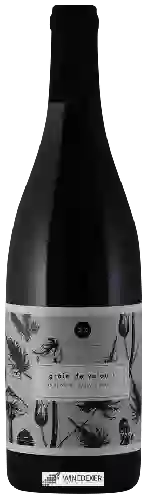
The La Maison du Moulin is one of the world's great estates. It offers 52 wines for sale in of Vaud to come and discover on site or to buy online.
Looking for the best La Maison du Moulin wines in Vaud among all the wines in the region? Check out our tops of the best red, white or effervescent La Maison du Moulin wines. Also find some food and wine pairings that may be suitable with the wines from this area. Learn more about the region and the La Maison du Moulin wines with technical and enological descriptions.
How La Maison du Moulin wines pair with each other generally quite well with dishes of beef, veal or pork such as recipes of caramelized beef with onions, gizzards in sauce or salted lentils.
On the nose the red wine of La Maison du Moulin. often reveals types of flavors of cherry, oak or spices and sometimes also flavors of red fruit, black fruit. In the mouth the red wine of La Maison du Moulin. is a with a nice freshness.
Vaud is Switzerland's second-largest wine region, located in the French-speaking southwest. The region - which is also one of 26 cantons in the country - is best known for its crisp, white Fendant wines (the national name for the Chasselas variety) and its stunning lakeside landscapes.
Both of these reach their zenith in the grand crus of Lavaux/dezaley">Dezaley and Calamin. These famous Lavaux Vineyard terraces, which rise steeply up above Lake Geneva (Lac Léman), are considered of such importance that they are now enjoy protected status as a UNESCO World Heritage Site.
The main Vaud vineyard area arches broadly around Lake Geneva from La Côte, west of Lausanne, via Lavaux (between Lausanne and Montreux to the east) to Chablais, which runs from the lake's edge into the steep-sided Rhone river valley - the gateway to the Valais.
North of the lake are a handful of satellite viticultural areas around Lake Neuchâtel, bordering the Neuchatel - Three Lakes area, and along the banks of the Orbe river - grouped into the Côtes de l'Orbe and BonvillarsAOC/AOPs.
Vaud is thus flanked by three key Swiss wine regions: Geneva (at the end of the lake to the southwest), Neuchâtel (to the north) and Valais (to the southeast). Just across the Jura Mountains, which form the canton's western edge (the Swiss border with France) is the French portion of the Jura.
Unusually among Swiss wine regions, Vaud produces more white wine than red. Two-thirds of production here is to white wine with the lion's share given over to Fendant/Chasselas, covering just over 2,200 hectares (5,400 acres) in the canton - 60 percent of its area.
Other than Chasselas, Pinot Noir and Gamay are the next in line in terms of vineyard area, making up just over 20 percent of vineyard area together. Of the two, Pinot Noir is the more popular, boasting 480 hectares (1,100 acres) compared to Gamay's 350 (860 acres).
How La Maison du Moulin wines pair with each other generally quite well with dishes of poultry, lean fish or mild and soft cheese such as recipes of chicken waterzooi with blanche de hoegaarden and pink pepper, monkfish, prawn and apple skewers or chicken burger.
On the nose the white wine of La Maison du Moulin. often reveals types of flavors of citrus, earth or citrus fruit and sometimes also flavors of tropical fruit. In the mouth the white wine of La Maison du Moulin. is a with a nice freshness.
Originally from Bordeaux, Sauvignon, or Sauvignon Blanc, is reputed to be one of the best French grape varieties for white wine. It is a white grape variety, not to be confused with Sauvignon Gris and its pale yellow color, or with Cabernet Sauvignon which produces red wines. Particularly famous thanks to Sancerre, Sauvignon Blanc is cultivated as far as New Zealand, where it produces great wines whose reputation is well established.
How La Maison du Moulin wines pair with each other generally quite well with dishes of beef such as recipes of beef with balsamic sauce.
Strictly speaking, the notion of terroir corresponds to the geological characteristics of a vineyard. However, when we talk about terroir, we take into account the soil, the climate (even the microclimate), the flora, the fauna, and the human factor that characterizes the practices that make up the art of the craft.
Planning a wine route in the of Vaud? Here are the wineries to visit and the winemakers to meet during your trip in search of wines similar to La Maison du Moulin.
Cabernet Franc is one of the oldest red grape varieties in Bordeaux. The Libourne region is its terroir where it develops best. The terroirs of Saint-Emilion and Fronsac allow it to mature and develop its best range of aromas. It is also the majority in many blends. The very famous Château Cheval Blanc, for example, uses 60% Cabernet Franc. The wines produced with Cabernet Franc are medium in colour with fine tannins and subtle aromas of small red fruits and spices. When blended with Merlot and Cabernet Sauvignon, it brings complexity and a bouquet of aromas to the wine. It produces fruity wines that can be drunk quite quickly, but whose great vintages can be kept for a long time. It is an earlier grape variety than Cabernet Sauvignon, which means that it is planted as far north as the Loire Valley. In Anjou, it is also used to make sweet rosé wines. Cabernet Franc is now used in some twenty countries in Europe and throughout the world.