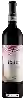
Winery La CalcinaraTerra Calcinara Riserva
 Red wine


In the mouth this red wine is a powerful with a nice freshness.
This wine generally goes well with poultry, beef or veal.
Taste structure of the Terra Calcinara Riserva from the Winery La Calcinara
Light | Bold | |
Smooth | Tannic | |
Dry | Sweet | |
Soft | Acidic |
In the mouth the Terra Calcinara Riserva of Winery La Calcinara in the region of Marche is a powerful with a nice freshness.
Wine flavors and olphactive analysis

Food and wine pairings with Terra Calcinara Riserva
Pairings that work perfectly with Terra Calcinara Riserva



Original food and wine pairings with Terra Calcinara Riserva

The Terra Calcinara Riserva of Winery La Calcinara matches generally quite well with dishes of beef, pasta or veal such as recipes of vegetable noddles, simple chinese noodle soup or pork tenderloin with chorizo and peppers.
Details and technical informations about Winery La Calcinara's Terra Calcinara Riserva.
Discover the grape variety: Vidal blanc
An interspecific cross obtained by Jean-Louis Vidal, between Ugni Blanc and 4986 Seibel or Golden Ray, its foliage reminiscent of that of Ugni Blanc. It can be found in the United States and Canada, but is little known in France.
Last vintages of this wine

The best vintages of Terra Calcinara Riserva from Winery La Calcinara are 2016, 2015, 2014, 2013
Informations about the Winery La Calcinara
The Winery La Calcinara is one of of the world's greatest estates. It offers 6 wines for sale in the of Marche to come and discover on site or to buy online.

The wine region of Marche
Marche (or Le Marche; pronounced Mar-kay) is a region in eastern CentralItaly. It is most associated with white wines made from Trebbiano and Verdicchio grapes. Marche occupies a roughly triangular area. Its longer sides are formed by the Apennine Mountains to the west and the Adriatic Sea to the east.
The word of the wine: Bleeding
Old practice for red wines. As soon as the vat is filled with grapes, the tap is opened. A sweet but clear juice escapes from the vat (it can also be used to make rosé). The colour and density of the juice is enhanced, but it should not be overdone. Rarely more than 10% of the volume of a vat, otherwise you risk losing fruit and bringing in bitterness.