The Winery François Crochet of Sancerre of Loire Valley
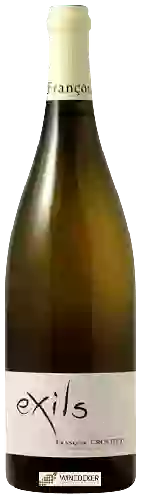
The Winery François Crochet is one of the world's great estates. It offers 14 wines for sale in of Sancerre to come and discover on site or to buy online.
Looking for the best Winery François Crochet wines in Sancerre among all the wines in the region? Check out our tops of the best red, white or effervescent Winery François Crochet wines. Also find some food and wine pairings that may be suitable with the wines from this area. Learn more about the region and the Winery François Crochet wines with technical and enological descriptions.
How Winery François Crochet wines pair with each other generally quite well with dishes of pork, shellfish or spicy food such as recipes of sloth pork loin, catalan zarzuela or cambodian amok.
On the nose the white wine of Winery François Crochet. often reveals types of flavors of citrus, earth or citrus fruit and sometimes also flavors of grapefruit, pear or tree fruit. In the mouth the white wine of Winery François Crochet. is a with a nice freshness.
The wine region of Sancerre is located in the region of Haute Loire of Loire Valley of France. Wineries and vineyards like the Domaine Edmond Vatan or the Domaine Jean-Paul Balland produce mainly wines white, red and pink. The most planted grape varieties in the region of Sancerre are Pinot noir, Chenin blanc and Chardonnay, they are then used in wines in blends or as a single variety. On the nose of Sancerre often reveals types of flavors of pineapple, wood smoke or jasmine and sometimes also flavors of fennel, pink grapefruit or green bell pepper.
In the mouth of Sancerre is a with a nice freshness. We currently count 447 estates and châteaux in the of Sancerre, producing 1671 different wines in conventional, organic and biodynamic agriculture. The wines of Sancerre go well with generally quite well with dishes of pork, shellfish or spicy food.
How Winery François Crochet wines pair with each other generally quite well with dishes of veal, game (deer, venison) or poultry such as recipes of fillet of beef with morels, duck stew with cahors wine or cheeseburger.
On the nose the red wine of Winery François Crochet. often reveals types of flavors of tropical, citrus or apples and sometimes also flavors of lime, pear or honey. In the mouth the red wine of Winery François Crochet. is a with a nice freshness.
Originally from Bordeaux, Sauvignon, or Sauvignon Blanc, is reputed to be one of the best French grape varieties for white wine. It is a white grape variety, not to be confused with Sauvignon Gris and its pale yellow color, or with Cabernet Sauvignon which produces red wines. Particularly famous thanks to Sancerre, Sauvignon Blanc is cultivated as far as New Zealand, where it produces great wines whose reputation is well established.
How Winery François Crochet wines pair with each other generally quite well with dishes of veal, pork or game (deer, venison) such as recipes of flights in the wind à la provençale, magic cake cheese quiche or duck breast with goat cheese and local ham.
On the nose the pink wine of Winery François Crochet. often reveals types of flavors of citrus fruit.
There are generally four so-called fundamental flavours: acidity, bitterness, sweetness and saltiness. The first three are considered to be the building blocks of the structure of wines. They are perceived by the taste buds that cover the surface of the tongue.
Planning a wine route in the of Sancerre? Here are the wineries to visit and the winemakers to meet during your trip in search of wines similar to Winery François Crochet.
Pinot noir is an important red grape variety in Burgundy and Champagne, and its reputation is well known! Great wines such as the Domaine de la Romanée Conti elaborate their wines from this famous grape variety, and make it a great variety. When properly vinified, pinot noit produces red wines of great finesse, with a wide range of aromas depending on its advancement (fruit, undergrowth, leather). it is also the only red grape variety authorized in Alsace. Pinot Noir is not easily cultivated beyond our borders, although it has enjoyed some success in Oregon, the United States, Australia and New Zealand.